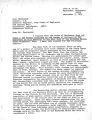
| OCR Text |
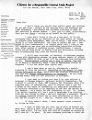
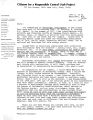
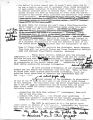
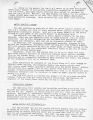
Show of'why uri£at£i.p° ^ V * 0 } 6 r e s o^ce and to the larger issues oi why it is there. Not understanding this perspective and th* S U L Q U a l J t i e ? involved> t h i s Public has no basis on which to make adequate piece meal decisions on wildlife issues? ?^ESuJELSLUE^A T > R A N G E WILDLIFE RESOURCES AND MANAGEMENT: CUP IMPACTS IN THE BROAD PERSPECTIVE OF GRADUAL ATTRITION OF WILDLIFE RESOURCES • I consider the Uinta Range to be a significant unreplaceable and relatively unrecognized national resource for the spectrum of many wildlife species native to our country. In relation to its size, the Uintas has provided enormous wildlife diversity and is, in fact, an oasis for mountain forest wildlife in the semi-desert lands surrounding it. A number of its species have long disappeared from midwest and eastern United States areas. And while grizzly bear,- gray wolf, wolverine, bison, river otter, Rocky Mountain sheep, Canada lynx, Peregrine falcon, osprey, Bald Kafie iV no^l o nfe f inhabit the Range, or maintain a precarious hold, the potential habitat remains. Pending some land use changes such as sheep grazing, and greater emphasis on wildlife management/ some species could be restored. * *~A ~*v v. Species more tolerant of human activity remain and others such as elk and Shiras moose have moved south from Wyoming and adapted to this mountain forest land. The 500 lakes countless wetlands and potholes, the high grassy cirque basins ' above some 2J major streams, and the sequences of meadows bordering h^h??^ H? a l l , ; l e y a t i o n s and throughout the Range provide broad 7 n I diversity in combination with a vegetative spectrum between 7,000 feet (semi-desert) to 11,500 feet (tundra) elevation. Eleven peaks are over 13,000 feet high. n The gradual attrition of some wildlife species has resulted from many causes: finding a local market for lodgepole pine and stagnant" poles; construction of and upgrading malor road access*; vast area clear cuts and at non-generating high tteV»4 ?" si!res; greatly increased outdoor recreation and use of the Uintas since World War II, foot and motorized; inadequate management of wildlife resources due to inadequate wildlife and fisheries staffs, inadequate funds for management and on-site research, inadequate input and consideration of input into timber and recreation uses; emphasis on developed recreation, particularly on southeast slopes, into critical habitat sites; suppression oi lire. Anticipating extensive logging, once roadless areas were released from wilderness consideration, and shorter timber rotations, the Wasatch Forest biologist contracted habitat type studies on the North Slope with Utah State University.** The three year study concentrated on small animal, small bird, and elk meadow habitat related to logging,and plant succession. *At one time a major road was to intersect Range and connect North and South slopes **"Ecological Relationships Between Predominate Terrestrial Vertebrate Fauna and Selected Habitat Types of the Coniferous Forest in the Barometer Watershed" - David Winn, PhD. candidate study /T7fc-'77 |