| OCR Text |
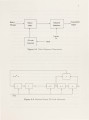
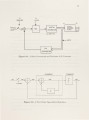
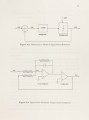
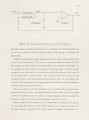
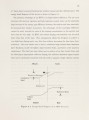
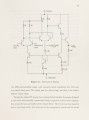
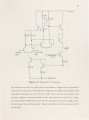
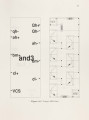
Show On of the disadvantag s of th HBT proc ss that wa u d i tba th r 1 only one type of transistor (n-p-n) available for us in d sign; th r for th gan1 that can be achieved in an amplifier is limited, because passiv loads hav to b used instead of active loads. The other restriction of the proc ss on th d sign of analog components was the power supply which is restricted to an 8.0V rang . The reference voltages available are -3.4V, -5.2V and -6.2V, and after consid rabl deliberation and DC analysis of the opa1np and comparator circuits, -5.2V was chosen as the reference voltage. 5.1 Opamp The integrator in the forward path of the sigma-delta modulator serves to accumulate the large quantization errors that result from the use of two-level quantizer and force their average to zero. The closer this integrator is to its ideal performance, the better is the performance of the sigma-delta modulator. The errors resulting from the finite gain and bandwidth, as well as those due to nonlinearities deviate the integrator from its ideal performance. Higher gain in the forward path of the modulator causes greater attenuation of the quantization noise, and hence the opamp to be used in the integrator should have a very high gain. The unity-gain bandwidth of the operational amplifier must be at least an order of magnitude greater than the sampling rate. Another important requirement for the integrator is that the settling process be linear. From the above discussion it is clear that the opamp required for this purpose needs to have a high gain and very high slew rate, besides stability. Most modern opamps use both n-p-n and p-n-p transistors in their design. Therefore this opamp had to be modeled on a very old Texas Instruments GeneralPurpose Operational Amplifier(J-LA702M), which has high-gain, wide bandwidth, with differential inputs and single-ended emitter-follower output. The schematic of the opamp is shown in Figure 5.1. DC analysis was performed on the circuit to fix the resistance values and adjust the output stage to give a common mode output of -5.2V which is equal to the reference voltage being used. This opamp has |