| OCR Text |
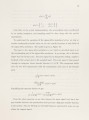
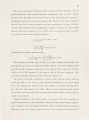
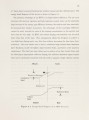
Show CHAPTER 4 HETEROJUNCTION BIPOLAR TRANSISTORS The heterojunction bipolar transistor was first proposed by H. Kraemer in 1957[16]. Heterojunction bipolar transistors are one of the most mature of a new generation of III-V semiconductor transistors which rely on the use of heterojunctions for their operation. The heterojunctions in these devices are formed between semiconductors of different compositions and bandgaps, e.g., GaAs/ AlGaAs and InGaAs/InP. This is in contrast to conventional Silicon and Gallium Arsenide based field effect and bipolar devices which utilize junctions between like materials, e.g., n and p type silicon in bipolar transistors. Heterojunction bipolar transistors offer potential advantages in microwave and high speed digital integrated circuit applications over the homojunction devices presently in use. When a wide-band-gap emitter and low-band-gap base would provide band offsets at the heterointerface, it would favor injection of electrons, in an n-p-n transistor, into the base while retarding the hole injection into the emitter, even when the base is heavily doped for low base resistance and the emitter is lightly doped. Thus HBT would have high emitter injection efficiency whereas the parasitic resistances and capacitances would be lower than for a conventional homojunction bipolar transistor. 4.1 HBT Device Physics The n-type emitter in an HBT is formed in the wide-band-gap AlGaAs whereas the p-type base is formed in the lower band gap GaAs. The n-type collector is also formed in GaAs. To facilitate the formation of ohmic contacts, a heavily doped |