| OCR Text |
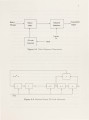
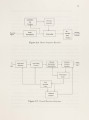
Show I 1 wh l r c iv r syst 111. Both th s 01npon nt w r d sign in H T t hn l gy whil th r rnaining cornponents will b design d in MO . 2.3 Operation of DSSS Systems Direct sequence signals are generated by rnodulating a carrier with a od s quence as mentioned in the previous section. In a direct sequence system th incoming information signal is digitized and modulo 2 added to a higher speed cod sequence. The combined information and code then are used to suppressed-carrier modulate an RF carrier[23]. Since the high speed code sequence dominates the modulating function, it determines the RF signal bandwidth, and gives rise to the spread spectrum signal. In a direct sequence spread spectrum system, the information is embedded by sequence inversion modulation(phase shift key of the pseudonoise carrier). Other methods of embedding the information sent into the overall spread spectrum waveforrn exist(such as carrier frequency modulation), but the most often used method is that of inverting the code sequence with the information to be sent. In a direct sequence system the modulated code sequence directly modulates the carrier. 2.4 NBI Rejection in DSSS Systems A direct sequence spread spectrum system possesses a certain amount of narrow band interference immunity inherently(lO]. The NBI rejection capabilities of direct sequence spread spectrum systems result from the spreading and despreading operations. The despreading operation in the direct sequence spread spectrum receiver is identical to the spreading operation in the transmitter and acts to spread the spectrum of any incoming signals that are uncorrelated with the PN signal. Therefore, the narrow band interference signals entering the receiver are spread to a bandwidth of the PN signal, while the desired direct sequence spread spectrum signal is collapsed from the bandwidth of the PN signal to the original message bandwidth. A big percentage of the interference power can be rejected by lowpass filtering, while keeping the despread message signal intact. The ratio of the spread bandwidth, to the original message bandwidth, is known as the processing gain |