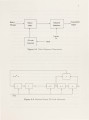
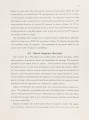
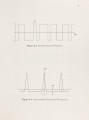
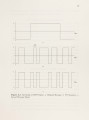
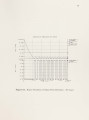
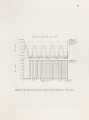
| OCR Text |
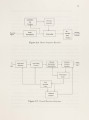
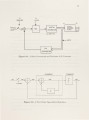
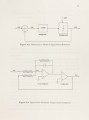
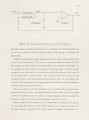
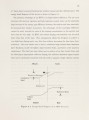
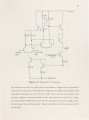
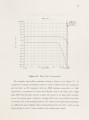
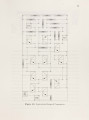
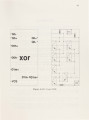
Show kn wn a a tin1 hip. Th total p riod consists of N tim hip . Wh n th is g n rat d by a maximal linear PN code g nerator, th valu of N i 2n-1 wh r n is the nutnb r of stages in the cod generator. An important r a on for u ing shift regist r codes is that they have very desirabl auto orr lation prop rti s. Th autocorrelation function of a typical PN sequence is shown in Figur 2.4. If N is tnade very large, the autocorrelation function will be very small between the p aks. Another reason for using shift register codes is that the period of the PN sequence can easily be made very large. The spreading of the message can be achieved using a simple Mod 2 adder[lO), which is nothing but an XOR. The waveforms in Figure 2.5 illustrate the spreading of a waveform using PN sequence. The modulation of the spread signal on the carrier can be either biphase or quadriphase. 2.2 Direct Sequence Receiver The receiver for a PN signal must perform three distinct functions: detect signal presence, despread the signal, and demodulate the message. The detection operation can be either active or passive. Active methods involve searching for the signal presence in both time and frequency, and tracking the sequence after it has been acquired. Passive methods require only that the signal be searched for in frequency, since the passive system will respond to the signal whenever it occurs. Active methods are preferred when the sequence is very long or when the processing gain is very large, whereas passive methods are preferred when the sequence is short. Sometimes both the approaches are combined in a single receiver. Figure 2.6 illustrates the essential parts of a conventional direct-sequence receiver. The despreader accomplishes the task of multiplying the incoming signal with a locally generated PN sequence. When these are aligned in time, the output is simply the message, which is at a much lower frequency and thus can be filtered in a narrow band filter. Figure 2. 7 contains the overall system that we propose to build. The sigmadelta modulator along with the despreading circuitry forms the front end of the |