| OCR Text |
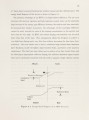
Show 2 density, a low oll ctor-to-bas junction apacitan , and ad . ir d 1 v 1 f 11 t r breakdown voltage. Th carrier transport processes 111 an HBT structur an b und rsto d by looking at an n-p-n structure. The carrier transport in this structur begins with electron injection from the n-type emitter to the p+ base region under the application of a forward bias across the emitter-base junction. The injected electrons are transported across the base region by drift and diffusion processes, and ar collected by the reverse-biased base-collector junction across which a high electric field exists. In this transport process electrons are stored in the base region, due to their finite effective velocity. The electrons are minority carriers in the p+ type base region and they recombine with the 1najority holes and the resultant current flows in to the base terminal. Within the emitter-base junction, due to the application of a forward bias voltage, electron and hole concentrations are enhanced beyond their thermal equilibrium values due to the establishinent of a thermodynamic equilibrium. Consequently, these electrons and holes undergo a process known as the depletion layer recombination. Thus a fraction of electrons intended for injection into the base is lost here. There is a third component of the electron recombination current that arises due to a high surface recombination velocity at the surface of the base, between the emitter and the base metallizations. The transport of the electrons across the collector-base space-charge region takes place due the high-field electron saturation velocity. This also requires a sustaining 1ninimum electron concentration that varies with the collector current density. The displacement current flow, through the emitter-base and collector-base space-charge regions, can be accounted for by the depletion layer capacitance of the respective regions. The operation of an HBT is hence very similar to a conventional Bipolar transistor, except for its high emitter efficiency and low parasitic resistances, which enables high speed switching. |