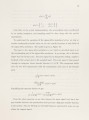
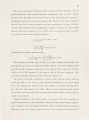
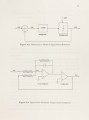
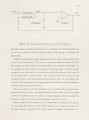
| OCR Text |
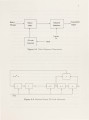
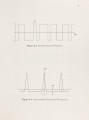
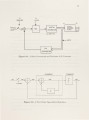
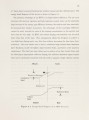
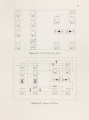
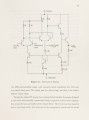
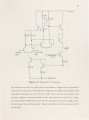
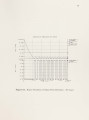
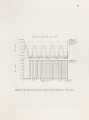
Show 2 Th abov igma-d lta modulator mod 1 a urn an id al int grat r. u ~ r practi al purpos s using an ideal int grator onfiguration do n t w rk. Thi i b cause of the DC offset in the opamp which caus saturation f th pamp by harging th capacitance across the opamp at DC. Hence w us a lossy int grator instead, which has a shunt resistance across the capacitanc , to by-pass th offs t current. The schematic of this configuration is shown in Figur 3.4. Th trans£ r function of the lossy integrator is 1/(1+sCR). The above equations can b modifi d to include the new transfer function as follows. 1 (1 + sCR) e(n) + q(n) = y(n) _v(: .........;n) :.........;-_y---=-(n ---=-) + q( n) = y ( n) (1 + sCR) Simplifying the equation further we get 1 (1 + sCR) (2 + sCR) v(n) + (2 + sCR) q(n) = y(n) This equation still shows that v( n) has a low pass transfer function while the quantization noise q( n) has a high pass transfer function. The above equations hold good for the RC integrator solution that was adopted later because the Transfer function of the RC integrator is the same as that of the lossy integrator. The schematic of the RC integrator circuit is shown in Figure 3.5. The output of the ~~ modulator is a string of high and low values, with the nutnber of high or low values in any interval proportional to the input signal level. The frequency at which the low values appear is inversely proportional to how close the input signal is to o volts. Hence an input signal hovering around zero produces an output that has an approximately equal number of high and low values in any interval. Negative feedback of the output sample is a means for the ~~ modulator to regulate the behavior of the accumulator. Therefore if the output signal is high for many samples in a row, the negative feedback will eventually drag the accumulator below zero, and a low output sample will occur. The accuracy of representation of |