| OCR Text |
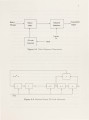
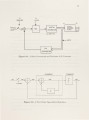
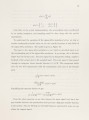
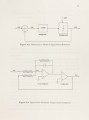
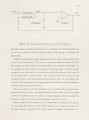
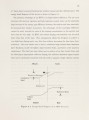
Show n x(n) = l:: e(i) i=O y(n) = { ~J x(n) > 0 } x(n) < 0 lJ Note that, in the actual implementation, the accumulation step is p rform d by an analog integrator, and sampling would be done along with the one-bit quantization. To understand the operation of the sigma-delta modulator better, we look at another mathematical model where we use the transfer functions of each block of the sigma-delta modulator. The model is given in Figure 3.3. The input to the sigma-delta modulator is v( n) which as described above is at the oversampling rate of the sigma-delta modulator. In my design, this is 20 times higher than the Nyquist rate. The error signal e( n) is obtained by adding a negative feedback of the output y( n) to the sampled input. This error signal is then passed through an integrator whose transfer function is 1/ sC R. The comparator which does the two level quantization adds the quantization noise q( n) in the forward path. 1 sCRe(n) + q(n) = y(n) v(n)-y(n) ( )- () sCR + q n - y n Simplifying the equation further we get 1 sCR (1 + sCR) v(n) + (1 + sCR) q(n) = y(n) From the above equation we see that whereas the input signal v( n) has a low pass transfer function, the quantization noise q( n) has a high pass transfer function in the system. Thus by filtering out the high frequency quantization noise, we can obtain the original signal. |