| OCR Text |
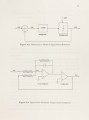
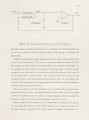
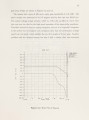
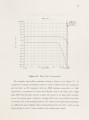
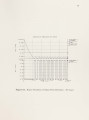
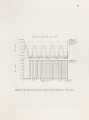
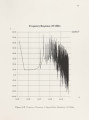
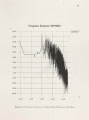
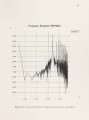
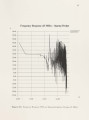
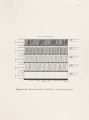
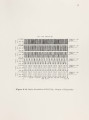
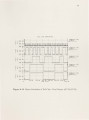
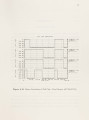
Show 21 th p rf nnan . f th . sy t 111 using 111 r quantizati n bit i in g n ral inf ri r t th perforn1an of a syst m using 1 ss r quantizati n bits. Thi b havi r r sul . dir tly from th fact that th oversampling rat is xpon ntially d p nd nt n N. A high r ov rsampling rat 1nust b downsampled by a larg r fa t r t produ a digital approximation at the chip rate. Also there is mor sampling jitt rand adds to the syste1n noise. Though decimation filtering removes most of th quantization noise above baseband, it cannot remove all of it, and downsampling by a larg r factor has the effect of aliasing more of this residual noise into baseband. Auoth r observation is that when N is reduced to really low values, the performance of th system is degraded. One of the reasons for this is that there is less precision in the representation of the digital signals in the system. Another reason for degradation in performance as N is reduced is that the input to the ~~ modulator is not oversampled at a high enough rate. The effect of this is that much of the quantization noise on the ~~ modulated signal is at frequencies in the baseband of the desired chip stream and cannot be filtered out by decimation filtering. Therefore for any system, the effects of variations in N along with PG and SIR must be evaluated to determine the optimal number of quantization bits for the system. Another important factor to be considered is setting the step size of the one-bit quantizer correctly. Although the step size must be large enough to keep the ~~ modulator out of saturation, it is clear that with noise present, it is not optimal to set 6 equal to the highest expected amplitude of the input signal. Setting 6 too low has the adverse effect of saturating the modulator. Saturation occurs when the feedback signal cannot affect the polarity of the signal e( n). This occurs any time the input signal has amplitudes outside the range of 6 and which occur frequently. However setting the value of delta too high also degrades the performance of the A/D converter. One of the reasons for this is that less efficient use is made of the quantization levels. Another reason for the decreasing performance as 6 gets large is that the magnitude of the high-frequency quantization noise is increased. When the ~~ output signal is decimated, this translates into more noise aliased into baseband and a larger degradation in system performance. This means that |