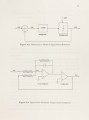
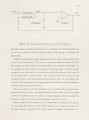
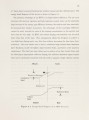
| OCR Text |
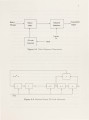
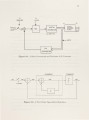
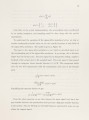
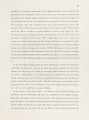
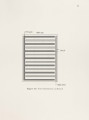
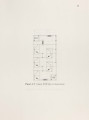
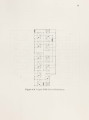
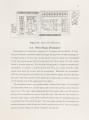
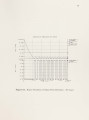
Show 17 In th figur , wh n N= l , the coars stimat and Dl nv rt r hav r olution. Th loop with N = 1 is nothing but a sig1na-d Ita 1nodulat r, th t nn for syst ms that produ e a clocked bit whose av rag valu t ra k an anal g in1 ut. Though sig1na-d Ita n1odulators need a much high r sampling rat th y ar m r widely used for IC fabrication processes. This is because they obtain r solution by interpolating linearly between two saturation levels, and do not r quir an array of precision binary elements for the D I A conversion element in the feedback loop. The sigma-delta AID converters have the further advantage of pot ntial unlimited signal to noise ratio, as the oversampling factor increases, while the multi-bit oversampling converters depend on the input-output accuracy of the D I A converter for their linearity. Though their resolution can be improved by oversampling, their large-signal linearity which relates to maximum SNR, is set by component matching in the D I A converter, like conventional AID circuits. 3.2 Operation of a Sigma-Delta Modulator The mathematical model of a basic sigma-delta modulator[! 0] is shown in Figure 3.2. The input signal to the sigma-delta modulator, v(t), is sampled at a rate of liT samples per second to yield v(n), where n =tiT. The sampling period Tis chosen so that v(n) is sampled at a rate much higher than the Nyquist rate. According to the sampling theorem, we know that a band-limited signal of finite energy, which has no frequency components higher than W hertz, may be completely recovered from a knowledge of its samples taken at the rate of 2W per second. This rate is known as the Nyquist rate. Hence to recover the whole signal without distortion, we require that the oversampling rate is much higher than the Nyquist rate. The output signal of the first-order ~~ modulator, y( n), is fed back and subtracted from the input signal to produce the error signal e( n). e(n) = v(n)- y(n) The signal e(n) is accumulated to obtain x(n), which is limited to produce the output sample y(n). |