| OCR Text |
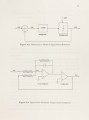
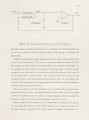
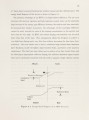
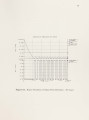
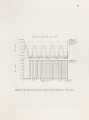
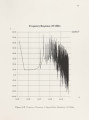
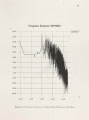
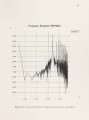
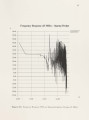
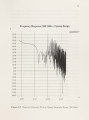
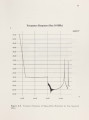
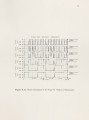
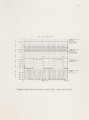
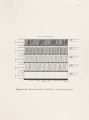
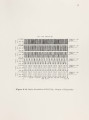
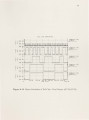
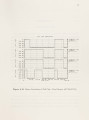
Show inusoidal ton . Also th output sp tra show that th quantizati n n i Ill h sigma-d lta modulator is k pt at high frequ n i s with r p t t th input Th sigma-delta modulators therefore produc a signal consi ting f th original input signal and the noise resulting from quantization. This quantizati n n IS is kept at frequencies higher than baseband as long as th sampling rat high enough. 3.3 Effect of Various Parameters on DSSS Performance The purpose of the A/D converter in a DSSS receiver is to produce an N-bit approximation of the down-converter signal at the chip rate. An N-bit approximation can be obtained by decimating the output of the ~~ modulator by a factor of K, where To produce a digital signal at the chip rate, the ~~ modulator must sample its input signal at a rate K times higher than the chip rate. The input signal is therefore sampled at a rate t = nT, where T = Tc/ K. Hence this oversampling rate depends on the number of bits of precision desired at the output of the A/D converter. The performance of the direct sequence spread spectrum system depends on the SIR (signal to interference ratio), the number of quantization bits and the processing gain[lO). As the SIR decreases, the performance of the system degrades. Increasing the processing gain has the effect of improving system performance for lower values of SIR. For a fixed processing gain and signal to interference ratio, the performance of the system using a ~~ modulator converter is never as good as the performance of the system using an ideal quantization for analog to digital conversion. This is because oversampling and ~~ modulation add a certain amount of noise to the signal at the output of the analog to digital converter. In general, the use of~~ A/D conversion in the DSSS receiver adds approximately one or two dB of performance degradation to the system. Also for any given PG and SIR, |