| OCR Text |
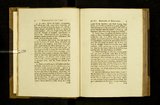
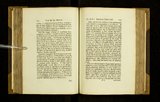
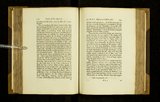
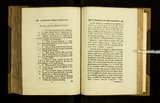
Show ")4. Ext7x;:ixn//iuiz (/1312 Franklin [‘rfoz'c [/53 4. 12'. Certainly he can demand nothing, where he does no terviec. Q.) Suppoti: a pcrfon, being far from home, finds a letter in a pol't-otiice directed to him, and he lives in a place to which the polt generally goes, and the letter is dircc‘tcd to that place; will the poll-matter dclivcr him the letter, without his paying the portage receivable at the place to which the letter is directed. fl. Yes; the oflice cannot demand poflagc for a letter that it does not carry, or farther than it does carryit. Q. Are not ferrymen in America obliged, by act ofparliamcnt, to carry over the polls with- out pay .P [Az D.T.] IIozgfl'q/‘Co/‘m/zo/zr in 1766. 2013 ed upon for that purpofe, in the uthal conflitutional manner; and I had the honour of com- lnunicatingr this inf‘truction to that honourable gentleman then minifl‘er'. Q \Vould they do this For aBrzl‘fl concern; as fuppote a "(11‘ in tome part of Europe, (lid not aloft Elwin? that A. Yes, {or any thing that concerned the gene'al inter-tilt. They confider themfelves as part or the \‘vhole. 7 mt is the ufual conflitutional manner of calling on the colonies for aids? A. A letter from the fecretary oft'tate. A. Yes. 2; Is not this a tax on the ferrymen ? A. They do not confider it as fuch, as they have an advantage from perfons travelling with the pof't 9". Q If the Stamp-Aft {hould be repealed, and the crown {hould makea requifition to the colonies for a {um of money, would they grant it? A. I believe they would. .Q.' Why do you think {0? d. I can {peak for the colony I live in; I had it in z'fiirufizim from the atTembly to affure the miniflry, that as they always had done, f0 they thould always think it their duty, t0 grant f_uch aids to the crown as were {uitable to their lecumflances and abilities; whenever call- * [ I take the following to be the hillory of this tranfiftion. Until 1763, and the years following, whenever Great Britain wanted lhpphes directly from the colonies, the fecretary otiflate, in his Majclly's name, fen: them a letter of requifition, in which the occafion for the {applies was exprefled; and the colonies; returned a fire 3W! the mode ot‘levying which 1/qu wholly pl'ClIDl ibcd. At this period, a chancellor of the exchequer, (Mr. George Grenville) tleps forth and fays to the houfe of commons-~ll'ir mu/I‘ («l/for "inner/Mm 11m calm/er in 1/55 quay oft: tux; --- and to the colony-agents, raw-ire In your flrvez'al (1/13/1231; and tr/l 1/2"", {f [/ng r/zfliztr (z (I'M/y 11pm ilamps, ant/prfm‘ wry of/Jr‘r met/7m] qfr'aiflug 1/53 manlyIlrmzfiilvrr, [flu/cl] humIent, [:roryidtdrlw amount by Ant mi/Zd. ‘ That is,' ohferved the colonies, when commenting upon his terms, ‘ it" we will not tax oul‘lel\'es, ‘ a: cue may I)! n'iru‘i‘rd, the parliament will tax us.'--l)r Franklin's inflruc‘lions, {pol-:en of above, related to this gracious option.---As the colonies could not choofe ‘ anal/m- tax,' "hile they dil‘clainted ever} tax ; the parliament pulled the StampiAtt. It {eems that the only partcf the otterwlrch bore a thew of Favour, was the grant of the mat-'2 rf /r-v}i/1g,--flntl this was the only Circum- fiance which was 210! new. See Mr. Mauduit's account of Mr. Grenville's conference with the agents, continued by the agents for Georgia. and Virginia; and * [The feveral perfons travelling together, make one trouble. 13-] C Mr. Burke's {pooch in 1774,, p. 55. 13.] Is |