| Title |
Topaz Oral History Project research files: Published articles (1920s-1980s) |
| Creator |
Oka, Naoki; Rhoads, Esther B.; Sugimoto, Howard H.; Taylor, Sandra C.; Helmer, Delta |
| Contributor |
Taylor, Sandra C. |
| Publisher |
Digitized by J. Willard Marriott Library, University of Utah |
| Date |
1928; 1972; 1984; 1986 |
| Date Digital |
2014-03-25 |
| Access Rights |
I acknowledge and agree that all information I obtain as a result of accessing any oral history provided by the University of Utah's Marriott Library shall be used only for historical or scholarly or academic research purposes, and not for commercial purposes. I understand that any other use of the materials is not authorized by the University of Utah and may exceed the scope of permission granted to the University of Utah by the interviewer or interviewee. I may request permission for other uses, in writing to Special Collections at the Marriott Library, which the University of Utah may choose grant, in its sole discretion. I agree to defend, indemnify and hold the University of Utah and its Marriott Library harmless for and against any actions or claims that relate to my improper use of materials provided by the University of Utah. |
| Spatial Coverage |
Topaz Camp, Millard County, Utah, United States, http://sws.geonames.org/5548582/ |
| Subject |
Japanese Americans--Forced removal and internment, 1942-1945; Central Utah Relocation Center |
| Description |
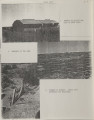
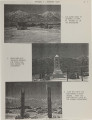
Copies of articles and book chapters about the Japanese-American evacuation of World War II and the Topaz and other internment camps; also a typescript school essay including photos |
| Collection Number and Name |
1002; Topaz Oral Histories |
| Table of Contents |
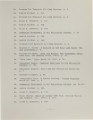
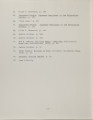
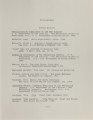
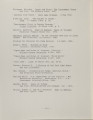
Educating the second generation Japanese, by Naoki Oka (typescript, 23 pages, English transcript of a Japanese article from The New World (Shin-Sekai), published in 17 installments from July 29, 1928 to August 14, 1928); My experience with the wartime relocation of Japanese, by Esther B. Rhoads, with a bibliographical essay by Howard H. Sugimoto (from East Across the Pacific: historical & sociological studies of Japanese immigration & assimilation, edited by Hilary Conroy and T. Scott Miyakawa, 1972, pages 127 - 150); Japanese Americans and Keetley Farms: Utah's relocation colony, by Sandra C. Taylor (from Utah Historical Quarterly, vol. 54, no. 4 (Fall 1986), pages 328 - 343 (last pages missing); Life in Japanese-American internment camps, by Delta Helmer (Typescript, 44 pages, a senior term paper for Mr. Cook, December 5, 1984) |
| Type |
Text |
| Genre |
oral histories (literary works) |
| Format |
application/pdf |
| Language |
eng |
| Rights |
 |
| Relation |
http://archiveswest.orbiscascade.org/ark:/80444/xv97265 |
| Scanning Technician |
Matt Wilkinson |
| Conversion Specifications |
Original scanned with Kirtas 2400 and saved as 400 ppi uncompressed TIFF. PDF generated by Adobe Acrobat Pro 9 for CONTENTdm display |
| ARK |
ark:/87278/s67s94tf |
| Topic |
Japanese Americans; Evacuation and relocation of Japanese Americans (United States : 1942-1945); Central Utah Relocation Center |
| Relation is Part of |
Mitsugi M. Kasai Memorial Japanese American Archive |
| Setname |
uum_toh |
| ID |
1043641 |
| Reference URL |
https://collections.lib.utah.edu/ark:/87278/s67s94tf |
| Title |
Page 66 |
| Format |
application/pdf |
| Setname |
uum_toh |
| ID |
1043598 |
| OCR Text |
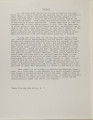
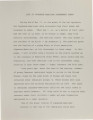
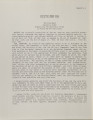
Show PREFACE At the time when the · United States of America entered World War II, there lived on the western rim of our continent a small group of quiet, hard-working and thrifty people; as a group they had been living in the Pacific coastal region for upward of 50 years. They comprised only one-tenth of 1 percent of the Nation's total population. Indeed they were so few, so concentrated in that narrow coastal strip, that few Americans in other parts of the United States had ever encountered o~e of them or had ever given any thought to this small .segment of the population--until the surprise attack upon Pearl Harbor by Japan suddenly and spuriously identified this minute orientalAmerican minority with the enemy whose ancestry it shared. During the first year of the war this West Coast minority, consisting of approximately 110,000 people ranging from 90-year-old immigrants who had lived here for perhaps 60 years to third-generation citizens in arms, was excluded from home and source of livelihood by a series of military orders which were issued under authority conferred by the President of the United States. These wartime mass exclusion orders affected only. persons of Japanese ancestry. Without being charged with any specific crime, without hearings, those people were evacuated under military guard to isolated barrack camps in the interior, where the majority of them lived as wards of the Government for nearly 3 years. After January 2, 1945, the effective date of the rescission of the exclusion orders, all except the comparatively small number of evacuees who had lost faith ip American democracy and so wished to repatriate or expatriate to Japan were permitted to return to the Pacific Coast. This report is an attempt to explain how American democracy, at a time when it was engaged in a death struggle against the forces of totalitarianism across the seas, came to deal in this manner with one of its own minorities, a minority composed of two-thirds citizens by birth and one-third aliens denied naturalization under the law of our country. Taken from Wartime Exile, p. 1. |
| Reference URL |
https://collections.lib.utah.edu/ark:/87278/s67s94tf/1043598 |