| Title |
Topaz Oral History Project research files: Published articles (1920s-1980s) |
| Creator |
Oka, Naoki; Rhoads, Esther B.; Sugimoto, Howard H.; Taylor, Sandra C.; Helmer, Delta |
| Contributor |
Taylor, Sandra C. |
| Publisher |
Digitized by J. Willard Marriott Library, University of Utah |
| Date |
1928; 1972; 1984; 1986 |
| Date Digital |
2014-03-25 |
| Access Rights |
I acknowledge and agree that all information I obtain as a result of accessing any oral history provided by the University of Utah's Marriott Library shall be used only for historical or scholarly or academic research purposes, and not for commercial purposes. I understand that any other use of the materials is not authorized by the University of Utah and may exceed the scope of permission granted to the University of Utah by the interviewer or interviewee. I may request permission for other uses, in writing to Special Collections at the Marriott Library, which the University of Utah may choose grant, in its sole discretion. I agree to defend, indemnify and hold the University of Utah and its Marriott Library harmless for and against any actions or claims that relate to my improper use of materials provided by the University of Utah. |
| Spatial Coverage |
Topaz Camp, Millard County, Utah, United States, http://sws.geonames.org/5548582/ |
| Subject |
Japanese Americans--Forced removal and internment, 1942-1945; Central Utah Relocation Center |
| Description |
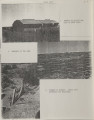
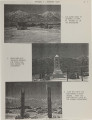
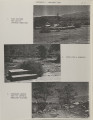
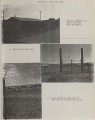
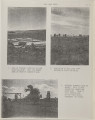
Copies of articles and book chapters about the Japanese-American evacuation of World War II and the Topaz and other internment camps; also a typescript school essay including photos |
| Collection Number and Name |
1002; Topaz Oral Histories |
| Table of Contents |
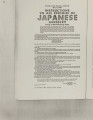
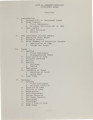
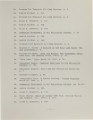
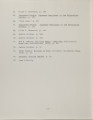
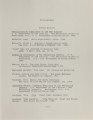
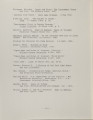
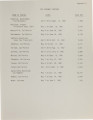
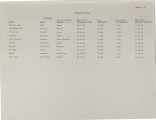
Educating the second generation Japanese, by Naoki Oka (typescript, 23 pages, English transcript of a Japanese article from The New World (Shin-Sekai), published in 17 installments from July 29, 1928 to August 14, 1928); My experience with the wartime relocation of Japanese, by Esther B. Rhoads, with a bibliographical essay by Howard H. Sugimoto (from East Across the Pacific: historical & sociological studies of Japanese immigration & assimilation, edited by Hilary Conroy and T. Scott Miyakawa, 1972, pages 127 - 150); Japanese Americans and Keetley Farms: Utah's relocation colony, by Sandra C. Taylor (from Utah Historical Quarterly, vol. 54, no. 4 (Fall 1986), pages 328 - 343 (last pages missing); Life in Japanese-American internment camps, by Delta Helmer (Typescript, 44 pages, a senior term paper for Mr. Cook, December 5, 1984) |
| Type |
Text |
| Genre |
oral histories (literary works) |
| Format |
application/pdf |
| Language |
eng |
| Rights |
 |
| Relation |
http://archiveswest.orbiscascade.org/ark:/80444/xv97265 |
| Scanning Technician |
Matt Wilkinson |
| Conversion Specifications |
Original scanned with Kirtas 2400 and saved as 400 ppi uncompressed TIFF. PDF generated by Adobe Acrobat Pro 9 for CONTENTdm display |
| ARK |
ark:/87278/s67s94tf |
| Topic |
Japanese Americans; Evacuation and relocation of Japanese Americans (United States : 1942-1945); Central Utah Relocation Center |
| Relation is Part of |
Mitsugi M. Kasai Memorial Japanese American Archive |
| Setname |
uum_toh |
| ID |
1043641 |
| Reference URL |
https://collections.lib.utah.edu/ark:/87278/s67s94tf |
| Title |
Page 4 |
| Format |
application/pdf |
| Setname |
uum_toh |
| ID |
1043536 |
| OCR Text |
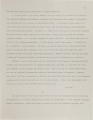
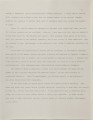
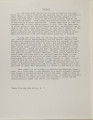
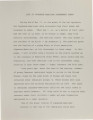
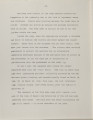
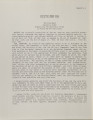
Show 4 Th e :.1 t my L lov d f llow countrym n now living in the United States n r·n fif y, n w r b :Jinnin h r 1 m n s from th m abou growing old. s 01 :::s uen f thi:::s r liz tion, they h ve started building and dedicating Bu dhist temple 11 over to leave for posterity. Furthermore, since they invest all their ho es in their Nisei children, nd consider the problems of the Nisei most import nt, " isei Education" s become their watchword. Thus, recently we have seen Japanese langu ge schools cropping up everywhere, like mushrooms after rain. I think the non-Japanese in the community must stare in wonder at all of this. (7/30/28) III This might very well be called one of the Seven Wonders of the United States, since it is unlikely that such a phenomenon has ever existed in the case of other immigrant groups in America. Considering this, could our fellow countrymen really be proud of these developments? And is our way of thinking truly sound? Let us look back to see whether we can be proud of the thirty-year history of immigration and settlement of the Japanese and whether it can be considered a success, generally. It is open to serious doubts. While immigrants from other countries were diligently endeavoring to gain a foothold in America, our fellow contrymen were still boasting about their home country, often ignoring facts in their bluster. While other immigrants were rising from the ranks of poor laborers to join that of landowners, establishing a foundation for the good life for themselves and their progeny, our countrymen, unwilling. to part with the idea that they were working temporarily away from home, did not try to Americanize themselves. Instead, they spent their time indulging in trifling pastimes such as drinking and gambling, while neglecting to make long- range plans. And many of those who did manage to save some money, sent it back home to Japan or returned, forthwith, to Japan themselves. |
| Reference URL |
https://collections.lib.utah.edu/ark:/87278/s67s94tf/1043536 |