| Title |
Topaz Oral History Project research files: Published articles (1920s-1980s) |
| Creator |
Oka, Naoki; Rhoads, Esther B.; Sugimoto, Howard H.; Taylor, Sandra C.; Helmer, Delta |
| Contributor |
Taylor, Sandra C. |
| Publisher |
Digitized by J. Willard Marriott Library, University of Utah |
| Date |
1928; 1972; 1984; 1986 |
| Date Digital |
2014-03-25 |
| Access Rights |
I acknowledge and agree that all information I obtain as a result of accessing any oral history provided by the University of Utah's Marriott Library shall be used only for historical or scholarly or academic research purposes, and not for commercial purposes. I understand that any other use of the materials is not authorized by the University of Utah and may exceed the scope of permission granted to the University of Utah by the interviewer or interviewee. I may request permission for other uses, in writing to Special Collections at the Marriott Library, which the University of Utah may choose grant, in its sole discretion. I agree to defend, indemnify and hold the University of Utah and its Marriott Library harmless for and against any actions or claims that relate to my improper use of materials provided by the University of Utah. |
| Spatial Coverage |
Topaz Camp, Millard County, Utah, United States, http://sws.geonames.org/5548582/ |
| Subject |
Japanese Americans--Forced removal and internment, 1942-1945; Central Utah Relocation Center |
| Description |
Copies of articles and book chapters about the Japanese-American evacuation of World War II and the Topaz and other internment camps; also a typescript school essay including photos |
| Collection Number and Name |
1002; Topaz Oral Histories |
| Table of Contents |
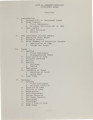
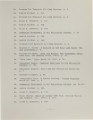
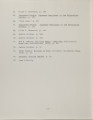
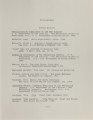
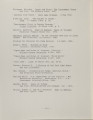
Educating the second generation Japanese, by Naoki Oka (typescript, 23 pages, English transcript of a Japanese article from The New World (Shin-Sekai), published in 17 installments from July 29, 1928 to August 14, 1928); My experience with the wartime relocation of Japanese, by Esther B. Rhoads, with a bibliographical essay by Howard H. Sugimoto (from East Across the Pacific: historical & sociological studies of Japanese immigration & assimilation, edited by Hilary Conroy and T. Scott Miyakawa, 1972, pages 127 - 150); Japanese Americans and Keetley Farms: Utah's relocation colony, by Sandra C. Taylor (from Utah Historical Quarterly, vol. 54, no. 4 (Fall 1986), pages 328 - 343 (last pages missing); Life in Japanese-American internment camps, by Delta Helmer (Typescript, 44 pages, a senior term paper for Mr. Cook, December 5, 1984) |
| Type |
Text |
| Genre |
oral histories (literary works) |
| Format |
application/pdf |
| Language |
eng |
| Rights |
 |
| Relation |
http://archiveswest.orbiscascade.org/ark:/80444/xv97265 |
| Scanning Technician |
Matt Wilkinson |
| Conversion Specifications |
Original scanned with Kirtas 2400 and saved as 400 ppi uncompressed TIFF. PDF generated by Adobe Acrobat Pro 9 for CONTENTdm display |
| ARK |
ark:/87278/s67s94tf |
| Topic |
Japanese Americans; Evacuation and relocation of Japanese Americans (United States : 1942-1945); Central Utah Relocation Center |
| Relation is Part of |
Mitsugi M. Kasai Memorial Japanese American Archive |
| Setname |
uum_toh |
| ID |
1043641 |
| Reference URL |
https://collections.lib.utah.edu/ark:/87278/s67s94tf |
| Title |
Page 60 |
| Format |
application/pdf |
| Setname |
uum_toh |
| ID |
1043592 |
| OCR Text |
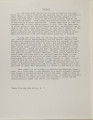
Show Keetley Farms 339 effort do not truly understand the situation .... They are not only willing, but eager to help." The article stressed that the migrants had come at their own expense, and it concluded by emphasizing Fisher's view that local residents had received them favorably. 33 It appeared that the tide had turned, and Keetley's new residents had been accepted. Within the next few months relations continued to improve. The Park City Record reported that Fisher had addressed the local Kiwanis Club in late May-an indication that he had not been ostracized for his Japanese initiative. Fisher proudly told the gathering that the Salt Lake YMCA had commended him for the fine work he was doing with "these people" and hoped he would continue since "proper understanding" was most necessary. The mayor of Keetley told the Kiwanians that the Japanese were certainly better off producing food than they would be "if herded in a concentration camp ... costing taxpayers a thousand dollars a day."34 A month later the Park City paper carried a story from the Salt Lake Telegram which, it said, had run nearly a page of illustrations on the activities at Keetley, including pictures of Fred Wada with the superintendent of the New Park Mining company. The Telegram reported that the new residents had had no trouble with their neighbors, who had gradually accepted them. The Japanese Americans hoped to pay off their lease and to show a profit; their children, meanwhile, planned to enter the local schools in the fall. A flag flying at Keetley junction proclaimed the group's motto: "Food for Freedom. " 35 · The Japanese first busied themselves repairing the abandoned buildings in which they resided. Once the spring snow began to melt they cleared the sagebrush from the land, dug out the rocks by hand, and then began to plant a large truck garden with lettuce and strawberries. They raised chickens (which they quickly ate) and pigs and goats. The two experienced farmers among them directed the work. But the season was short; snow fell again on September 9.36 AI though the farmers toiled seven days a week, there were other activities too. The first thing they had built was a large Japanese bath for the tub Wada had hauled from California. The women knitted ''Park City Record, April 16, 1942. H Park City Record, May 21, 1942 . .ss Park City Record, June 25, 1942. 36 Tsujimoto, "Letter to Ophelia;" Oral History, Fred lsamu Wada, p. 68. |
| Reference URL |
https://collections.lib.utah.edu/ark:/87278/s67s94tf/1043592 |