| Title |
Topaz Oral History Project research files: Published articles (1920s-1980s) |
| Creator |
Oka, Naoki; Rhoads, Esther B.; Sugimoto, Howard H.; Taylor, Sandra C.; Helmer, Delta |
| Contributor |
Taylor, Sandra C. |
| Publisher |
Digitized by J. Willard Marriott Library, University of Utah |
| Date |
1928; 1972; 1984; 1986 |
| Date Digital |
2014-03-25 |
| Access Rights |
I acknowledge and agree that all information I obtain as a result of accessing any oral history provided by the University of Utah's Marriott Library shall be used only for historical or scholarly or academic research purposes, and not for commercial purposes. I understand that any other use of the materials is not authorized by the University of Utah and may exceed the scope of permission granted to the University of Utah by the interviewer or interviewee. I may request permission for other uses, in writing to Special Collections at the Marriott Library, which the University of Utah may choose grant, in its sole discretion. I agree to defend, indemnify and hold the University of Utah and its Marriott Library harmless for and against any actions or claims that relate to my improper use of materials provided by the University of Utah. |
| Spatial Coverage |
Topaz Camp, Millard County, Utah, United States, http://sws.geonames.org/5548582/ |
| Subject |
Japanese Americans--Forced removal and internment, 1942-1945; Central Utah Relocation Center |
| Description |
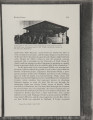
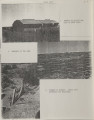
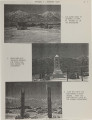
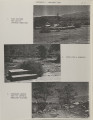
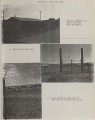
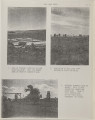
Copies of articles and book chapters about the Japanese-American evacuation of World War II and the Topaz and other internment camps; also a typescript school essay including photos |
| Collection Number and Name |
1002; Topaz Oral Histories |
| Table of Contents |
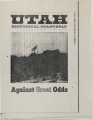
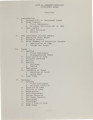
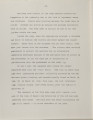
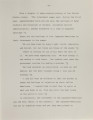
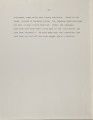
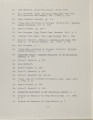
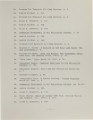
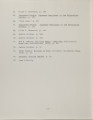
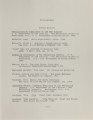
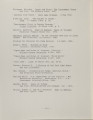
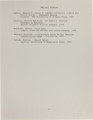
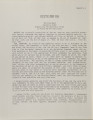
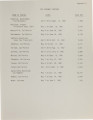
Educating the second generation Japanese, by Naoki Oka (typescript, 23 pages, English transcript of a Japanese article from The New World (Shin-Sekai), published in 17 installments from July 29, 1928 to August 14, 1928); My experience with the wartime relocation of Japanese, by Esther B. Rhoads, with a bibliographical essay by Howard H. Sugimoto (from East Across the Pacific: historical & sociological studies of Japanese immigration & assimilation, edited by Hilary Conroy and T. Scott Miyakawa, 1972, pages 127 - 150); Japanese Americans and Keetley Farms: Utah's relocation colony, by Sandra C. Taylor (from Utah Historical Quarterly, vol. 54, no. 4 (Fall 1986), pages 328 - 343 (last pages missing); Life in Japanese-American internment camps, by Delta Helmer (Typescript, 44 pages, a senior term paper for Mr. Cook, December 5, 1984) |
| Type |
Text |
| Genre |
oral histories (literary works) |
| Format |
application/pdf |
| Language |
eng |
| Rights |
 |
| Relation |
http://archiveswest.orbiscascade.org/ark:/80444/xv97265 |
| Scanning Technician |
Matt Wilkinson |
| Conversion Specifications |
Original scanned with Kirtas 2400 and saved as 400 ppi uncompressed TIFF. PDF generated by Adobe Acrobat Pro 9 for CONTENTdm display |
| ARK |
ark:/87278/s67s94tf |
| Topic |
Japanese Americans; Evacuation and relocation of Japanese Americans (United States : 1942-1945); Central Utah Relocation Center |
| Relation is Part of |
Mitsugi M. Kasai Memorial Japanese American Archive |
| Setname |
uum_toh |
| ID |
1043641 |
| Reference URL |
https://collections.lib.utah.edu/ark:/87278/s67s94tf |
| Title |
Page 7 |
| Format |
application/pdf |
| Setname |
uum_toh |
| ID |
1043539 |
| OCR Text |
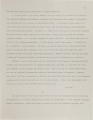
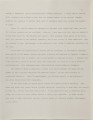
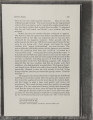
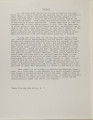
Show 7 On the other hand, if parents plan to return to Japan eventually with their children, it is understandable that they might want to educate their children to the Japanese way in s t ead aE encouraging them to become too Americanized. However, because they themselves have this particular need, they should not try to convince others to do the same. The United States is the native birthplace of the Nisei, and education can be obtained easily here. Even for the Issei, America is far easier to live in than is Japan. Inasmuch as the general trend of the Japanese seems to be moving towards settling here permanently, it seems to me to be unwise to advance a Japanese-style education at a public institution such as the Japanese language school. One should, incidentally, bear in mind that settling here permanently serves to fulfill both the idea of America serving as an outlet for Japan's increasing population overflow and the more general purpose of expanding our presence abroad. Those who want to educate their children Japanese-style should find means to accomplish that in their own homes, privately. We must always be very conscious of whatever negative effects that a "Japanese-style" education for our children might have on the American public, for in the future, those effects might fall upon Japanese-American citizens who have made the determination to live here. (8/1/28) v Otherwise, anti-Japanese sentiment may become increasingly intense and may even lead to an actual movement to deprive citizens of Japanese extraction the right to citizenship, though such a thing would be nearly impossible to attain. If this should happen, however, it would greatly hinder attempts to expand the presence of Japanese people abroad. |
| Reference URL |
https://collections.lib.utah.edu/ark:/87278/s67s94tf/1043539 |