| OCR Text |
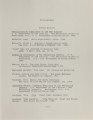
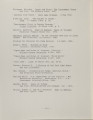
Show !merica the House of Representatives >erty of the evacuees and after :luded provision for paying a ~re inadequate for anyone with >urance policies and mortgages. ?faults. !Vacuees was scheduled during iplomats and treaty merchants ~i tsui and the Mitsubishi) and 1ey were taken via the Swedish 1bique) where they were exs from East Asia. Evacuees who • late in the war, preparatory to ly deported. American citizenship and prefJuired to accompany their par-jAPANESE ese Americans and Japanese ld War II has troubled many s, concerned with the moral heir government toward the valuable for examining this ment also published a series I resettlement period, which difficulties the government ::>blems as they arose. _nder supervision of the War :i with the detention and the r examine the entire under' the WRA Program treats the tion and detention and the >ns. The Evacuated People-A re than a hundred statistical :he evacuee population dur ·rnmenl in the War Relocation I administration in the ten 'panese Americans in the Relo- The Wartime Relocation of japanese I 141 calion Centers deals with the life of the evacuees at work and at play, problems of social adjustment, and the beginning of relocation to various cities and areas of the country. The Relocation Program covers the work of the WRA from the time of forced removal, through the period of detention, and on to the resettlement phase of the evacuation. Other useful pamphlets in this series are: Administrative Highlights of !he WRA Program; Wartime Handling of Evacuee Properly; Wartime Exile-The Exclusion of !he japanese Americans from the West Coast, and WRA-A Story of Human Conservation, which contains an appendix on relocation areas and their population figures. Related to these works is People in Motion: The Postwar Adjustment of !he Evacuated japanese Americans, produced' by the War Agency Liquidation Unit, the successor to the War Relocation Authority. People in Molion is the story of the resettlement and readjustment of the evacuees in their new surroundings in the postwar period. Impounded People was also published by the University of ~~rizona Press (Tucson) in 1969, as was WRA Director Dillon Myer's account, Uprooted Americans, in 1971. The report of the Tolan Hearings, which was partly responsible for setting the official mood for the evacuation, is found in National Defense Migration, Hearings before the Selecl Commilfee Investigating Interstate Migration, Fourth Interim Report, (House of Representatives, 77th Congress, 2nd Session, Report No. 2124, parts 29, 30, and 31, 1942). Appended to the report are copies of the executive orders -and pr()clamations which created the authority and organization charged with the removal of Japanese and Japanese Americans from the West Coast Military Areas. Three books are especially recommended for reminiscences of life in pre-war Japanese society and for glimpses of evacuee camp life as seen through the eyes of participants: Mine Okubo's Citizen 12660 (New York: Columbia University Press, 1946) depicts the period of evacuation and the relocation in a series of revealing pictorial sketches with accompanying captions. In a similar vein, Monica Sene's Nisei Daughter (Boston: Little, Brown and Company, 1953) and Daisuke Kitagawa's Issei and Nisei: The Internment Years (New York: The Seabury Press, 1967) portray scenes day by day through the evacuation, relocation, and resettlement phases. These books sympathetically treat the evacuees' doubts and worries which arose from the shock of their economic losses and uncertain future, compounded by rapidly deteriorating family ties and divided loyalties. Both works are autobiographical in approach. The earlier pages are devoted to the authors' views of pre-war Japanese society, followed by an account of their personal experiences among the Japanese and Japa- |