| Title |
Topaz Oral History Project research files: Published articles (1920s-1980s) |
| Creator |
Oka, Naoki; Rhoads, Esther B.; Sugimoto, Howard H.; Taylor, Sandra C.; Helmer, Delta |
| Contributor |
Taylor, Sandra C. |
| Publisher |
Digitized by J. Willard Marriott Library, University of Utah |
| Date |
1928; 1972; 1984; 1986 |
| Date Digital |
2014-03-25 |
| Access Rights |
I acknowledge and agree that all information I obtain as a result of accessing any oral history provided by the University of Utah's Marriott Library shall be used only for historical or scholarly or academic research purposes, and not for commercial purposes. I understand that any other use of the materials is not authorized by the University of Utah and may exceed the scope of permission granted to the University of Utah by the interviewer or interviewee. I may request permission for other uses, in writing to Special Collections at the Marriott Library, which the University of Utah may choose grant, in its sole discretion. I agree to defend, indemnify and hold the University of Utah and its Marriott Library harmless for and against any actions or claims that relate to my improper use of materials provided by the University of Utah. |
| Spatial Coverage |
Topaz Camp, Millard County, Utah, United States, http://sws.geonames.org/5548582/ |
| Subject |
Japanese Americans--Forced removal and internment, 1942-1945; Central Utah Relocation Center |
| Description |
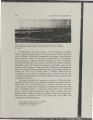
Copies of articles and book chapters about the Japanese-American evacuation of World War II and the Topaz and other internment camps; also a typescript school essay including photos |
| Collection Number and Name |
1002; Topaz Oral Histories |
| Table of Contents |
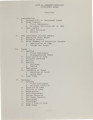
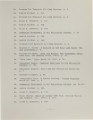
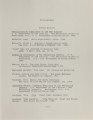
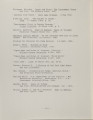
Educating the second generation Japanese, by Naoki Oka (typescript, 23 pages, English transcript of a Japanese article from The New World (Shin-Sekai), published in 17 installments from July 29, 1928 to August 14, 1928); My experience with the wartime relocation of Japanese, by Esther B. Rhoads, with a bibliographical essay by Howard H. Sugimoto (from East Across the Pacific: historical & sociological studies of Japanese immigration & assimilation, edited by Hilary Conroy and T. Scott Miyakawa, 1972, pages 127 - 150); Japanese Americans and Keetley Farms: Utah's relocation colony, by Sandra C. Taylor (from Utah Historical Quarterly, vol. 54, no. 4 (Fall 1986), pages 328 - 343 (last pages missing); Life in Japanese-American internment camps, by Delta Helmer (Typescript, 44 pages, a senior term paper for Mr. Cook, December 5, 1984) |
| Type |
Text |
| Genre |
oral histories (literary works) |
| Format |
application/pdf |
| Language |
eng |
| Rights |
 |
| Relation |
http://archiveswest.orbiscascade.org/ark:/80444/xv97265 |
| Scanning Technician |
Matt Wilkinson |
| Conversion Specifications |
Original scanned with Kirtas 2400 and saved as 400 ppi uncompressed TIFF. PDF generated by Adobe Acrobat Pro 9 for CONTENTdm display |
| ARK |
ark:/87278/s67s94tf |
| Topic |
Japanese Americans; Evacuation and relocation of Japanese Americans (United States : 1942-1945); Central Utah Relocation Center |
| Relation is Part of |
Mitsugi M. Kasai Memorial Japanese American Archive |
| Setname |
uum_toh |
| ID |
1043641 |
| Reference URL |
https://collections.lib.utah.edu/ark:/87278/s67s94tf |
| Title |
Page 36 |
| Format |
application/pdf |
| Setname |
uum_toh |
| ID |
1043568 |
| OCR Text |
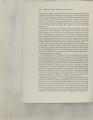
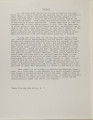
Show America without support. He sent his ~ war and since that became 1.an to take his family back to mother and family there. So, tyalty to Japan was not the the minds of such people but ·i boys came in asking to be serve in the U.S. army. Each seek legal advice concerning .·ould inherit from their pari in the United States and I y in the army. er capable Japanese were left otested the evacuation from ; were formed to press for a ;ervice of the 442d Infantry ·ly ·of Nisei, in the European e public opinion and finally )unced that as of January 2, 'e permitted to return to the mmittee negotiated with the 1942. During the next two :he building, which was left rs painted walls, restored the ure contributed by friends. the flow of returnees began d at one dollar a day for ten back their rented properties en days the price was raised us. Some of the Japanese we helped alien Buddhist · temples. By summer, the • remaining evacuees had no ·or them. The treatment of vho certified them for relief · not to ask for help except · 75 found work somewhere nfort to them to know they •ecame a hazard increasingly nzr Wartime Relocation of Japanese I 139 expensive to police. The last residents were brought back and established in trailer towns recently vacated by war workers. Government and private agencies helped determine the relocation of these final groups. The war against Japan ended on August 15, 1945 with persons of Japanese ancestry scattered all over the United States. Big cities, Chicago and New York, had the great st concentrations but almost every state had some. The record of the Japanese was impressive; everywhere those who started with humble jobs advanced rapidly. Many stayed where they relocated; others, especially those with property, returned to the West Coast. During the three years of expulsion from the West Coast the number of Nisei of voting age increased, as those just under 21 made up the largest number of any age group in 1941. The leaders of the Japanese American Citizens League were active; lawyers and civic leaders among them worked for restoration of rights and property. New opportunities for work in professional and business fields opened up. Little by little persons of Japanese ancestry won their rightful place, including the right of the first generation to become citizens. The evacuation camps left a black mark in the record of American justice, but their tragic effects were ameliorated by the character and determination of the Japanese themselves and the efforts of the Japanese American Citizens League. This organization worked effectively, without hate but with remarkable understanding of the war hysteria, to enrich the lives of Japanese Americans and reestablish their rightful place in American society. Americans have generally failed to maintain racial equality--our record is not good. Negroes were brought here as slaves; Indians were driven from their land; Orientals were encouraged to immigrate to provide cheap labor; and all these racial groups have been the target of prejudice and discrimination. Now that the American conscience has been aroused great strides have been made in erasing the dismal record of the past. Perhaps no group has done so much for itself and become so IDUfh a part of American life as have the Japanese. Despite their treatment which involved discrimination, financial loss, and evacuation, they proved most loyal. NOTES 1. Editors' note. In some communities the government formally designated b ees for storing personal goods which were returned undamaged to the evauees at the end of the war. However, the authorities in charge often made no pcciaJ effort to inform families of the storage arrangements and some were even |
| Reference URL |
https://collections.lib.utah.edu/ark:/87278/s67s94tf/1043568 |