| Title |
Topaz Oral History Project research files: Published articles (1920s-1980s) |
| Creator |
Oka, Naoki; Rhoads, Esther B.; Sugimoto, Howard H.; Taylor, Sandra C.; Helmer, Delta |
| Contributor |
Taylor, Sandra C. |
| Publisher |
Digitized by J. Willard Marriott Library, University of Utah |
| Date |
1928; 1972; 1984; 1986 |
| Date Digital |
2014-03-25 |
| Access Rights |
I acknowledge and agree that all information I obtain as a result of accessing any oral history provided by the University of Utah's Marriott Library shall be used only for historical or scholarly or academic research purposes, and not for commercial purposes. I understand that any other use of the materials is not authorized by the University of Utah and may exceed the scope of permission granted to the University of Utah by the interviewer or interviewee. I may request permission for other uses, in writing to Special Collections at the Marriott Library, which the University of Utah may choose grant, in its sole discretion. I agree to defend, indemnify and hold the University of Utah and its Marriott Library harmless for and against any actions or claims that relate to my improper use of materials provided by the University of Utah. |
| Spatial Coverage |
Topaz Camp, Millard County, Utah, United States, http://sws.geonames.org/5548582/ |
| Subject |
Japanese Americans--Forced removal and internment, 1942-1945; Central Utah Relocation Center |
| Description |
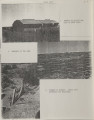
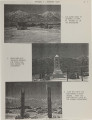
Copies of articles and book chapters about the Japanese-American evacuation of World War II and the Topaz and other internment camps; also a typescript school essay including photos |
| Collection Number and Name |
1002; Topaz Oral Histories |
| Table of Contents |
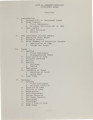
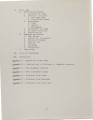
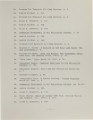
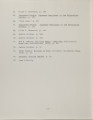
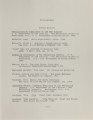
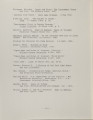
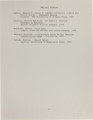
Educating the second generation Japanese, by Naoki Oka (typescript, 23 pages, English transcript of a Japanese article from The New World (Shin-Sekai), published in 17 installments from July 29, 1928 to August 14, 1928); My experience with the wartime relocation of Japanese, by Esther B. Rhoads, with a bibliographical essay by Howard H. Sugimoto (from East Across the Pacific: historical & sociological studies of Japanese immigration & assimilation, edited by Hilary Conroy and T. Scott Miyakawa, 1972, pages 127 - 150); Japanese Americans and Keetley Farms: Utah's relocation colony, by Sandra C. Taylor (from Utah Historical Quarterly, vol. 54, no. 4 (Fall 1986), pages 328 - 343 (last pages missing); Life in Japanese-American internment camps, by Delta Helmer (Typescript, 44 pages, a senior term paper for Mr. Cook, December 5, 1984) |
| Type |
Text |
| Genre |
oral histories (literary works) |
| Format |
application/pdf |
| Language |
eng |
| Rights |
 |
| Relation |
http://archiveswest.orbiscascade.org/ark:/80444/xv97265 |
| Scanning Technician |
Matt Wilkinson |
| Conversion Specifications |
Original scanned with Kirtas 2400 and saved as 400 ppi uncompressed TIFF. PDF generated by Adobe Acrobat Pro 9 for CONTENTdm display |
| ARK |
ark:/87278/s67s94tf |
| Topic |
Japanese Americans; Evacuation and relocation of Japanese Americans (United States : 1942-1945); Central Utah Relocation Center |
| Relation is Part of |
Mitsugi M. Kasai Memorial Japanese American Archive |
| Setname |
uum_toh |
| ID |
1043641 |
| Reference URL |
https://collections.lib.utah.edu/ark:/87278/s67s94tf |
| Title |
Page 21 |
| Format |
application/pdf |
| Setname |
uum_toh |
| ID |
1043553 |
| OCR Text |
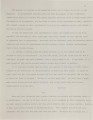
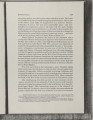
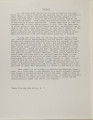
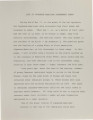
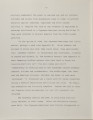
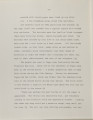
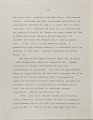
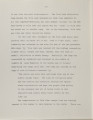
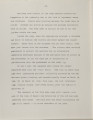
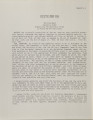
Show 21 vacuum in leadership can be filled by Nisei college graduates. I would like to see all Nisei graduate from college so that they can become leaders in our society, thereby enabling the Japanese to further their goal of expanding their race outside the borders of Japan. There is a feeling among the Japanese--on the West Coast especially--that jobs for the college graduattsare not available. However, I have been told that jobs are plentiful on the East Coast for the talented and capable. Most Japanese there appear to be doing well, not confined to the Japanese community, but in the society of other Americans. They are engaged in their own business or are employed in the fields of medicine, dentistry and the like. Since Nisei are United States citizens and are conversant in the English language, they should, by all means, explore new paths hithereto not explored by Japanese in America. This applies not only to careers, but to such matters as marriage as well. I believe that mixed marriages should be allowed since they would pose one solution to the problem of discrimination. With mixed-marriages, discrimination should gradually disappear. But referring back to education, I think it is quite sensible for those who are unable to get a college education--for whatever reason-- to turn their efforts to vocational education. Since "accomplishments are lifelong benefit to the possessor," this will surely bring forth happiness. On the other hand, we should aspire toward the highest possible education. Even those who think they cannot afford a higher education, should try to work their way througl As they say, "Strike while the iron is hot." If one neglects to get an education while young, he or she will quite likely find it a thing to be regretted. It seems obvious that with a higher education, one has a better chance of attaining greater achievements in the future. |
| Reference URL |
https://collections.lib.utah.edu/ark:/87278/s67s94tf/1043553 |