| Title |
Topaz Oral History Project research files: Published articles (1920s-1980s) |
| Creator |
Oka, Naoki; Rhoads, Esther B.; Sugimoto, Howard H.; Taylor, Sandra C.; Helmer, Delta |
| Contributor |
Taylor, Sandra C. |
| Publisher |
Digitized by J. Willard Marriott Library, University of Utah |
| Date |
1928; 1972; 1984; 1986 |
| Date Digital |
2014-03-25 |
| Access Rights |
I acknowledge and agree that all information I obtain as a result of accessing any oral history provided by the University of Utah's Marriott Library shall be used only for historical or scholarly or academic research purposes, and not for commercial purposes. I understand that any other use of the materials is not authorized by the University of Utah and may exceed the scope of permission granted to the University of Utah by the interviewer or interviewee. I may request permission for other uses, in writing to Special Collections at the Marriott Library, which the University of Utah may choose grant, in its sole discretion. I agree to defend, indemnify and hold the University of Utah and its Marriott Library harmless for and against any actions or claims that relate to my improper use of materials provided by the University of Utah. |
| Spatial Coverage |
Topaz Camp, Millard County, Utah, United States, http://sws.geonames.org/5548582/ |
| Subject |
Japanese Americans--Forced removal and internment, 1942-1945; Central Utah Relocation Center |
| Description |
Copies of articles and book chapters about the Japanese-American evacuation of World War II and the Topaz and other internment camps; also a typescript school essay including photos |
| Collection Number and Name |
1002; Topaz Oral Histories |
| Table of Contents |
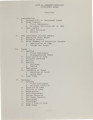
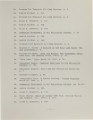
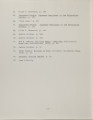
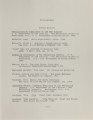
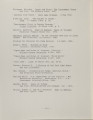
Educating the second generation Japanese, by Naoki Oka (typescript, 23 pages, English transcript of a Japanese article from The New World (Shin-Sekai), published in 17 installments from July 29, 1928 to August 14, 1928); My experience with the wartime relocation of Japanese, by Esther B. Rhoads, with a bibliographical essay by Howard H. Sugimoto (from East Across the Pacific: historical & sociological studies of Japanese immigration & assimilation, edited by Hilary Conroy and T. Scott Miyakawa, 1972, pages 127 - 150); Japanese Americans and Keetley Farms: Utah's relocation colony, by Sandra C. Taylor (from Utah Historical Quarterly, vol. 54, no. 4 (Fall 1986), pages 328 - 343 (last pages missing); Life in Japanese-American internment camps, by Delta Helmer (Typescript, 44 pages, a senior term paper for Mr. Cook, December 5, 1984) |
| Type |
Text |
| Genre |
oral histories (literary works) |
| Format |
application/pdf |
| Language |
eng |
| Rights |
 |
| Relation |
http://archiveswest.orbiscascade.org/ark:/80444/xv97265 |
| Scanning Technician |
Matt Wilkinson |
| Conversion Specifications |
Original scanned with Kirtas 2400 and saved as 400 ppi uncompressed TIFF. PDF generated by Adobe Acrobat Pro 9 for CONTENTdm display |
| ARK |
ark:/87278/s67s94tf |
| Topic |
Japanese Americans; Evacuation and relocation of Japanese Americans (United States : 1942-1945); Central Utah Relocation Center |
| Relation is Part of |
Mitsugi M. Kasai Memorial Japanese American Archive |
| Setname |
uum_toh |
| ID |
1043641 |
| Reference URL |
https://collections.lib.utah.edu/ark:/87278/s67s94tf |
| Title |
Page 40 |
| Format |
application/pdf |
| Setname |
uum_toh |
| ID |
1043572 |
| OCR Text |
Show -rica and eventual re-integragly analyzes his subjects compounds of a number al business as an Episco-of her early years, gives y in pre-war Seattle. Her ip to Japan are probably rd Japan and its culture. ns (New York: William ve story of the Japanese r, a well-known journal: uated and relocated. His :en for the lay reader, is :ount of the plight of the · periods during the war ed The Spoilage and co" ld -Los Angeles: Univer ·oblems of those groups pan. (It should be noted lRA, such as Professor . thor's description of the ttion process serves as a 1 in the official governme, The Salvage: Japanese with the assistance of td Los Angeles: Univer. of representative case ·of their lives following ief surveys of the ecoJapanese identifies the .nd Japanese Americans "le evacuation and relo-t mericans: Symbol of Ra. pany, 1944) while the ic. It indicts American h.e official government ns' account relates the the triumph of antied in the expulsion of !Se ancestry from their The Wartime Relocation of Japanese I 143 homes. The work al so assesses the effect of that biased treatment of the Japanese on the peoples of post-war Asia. Removal and Return: The Socio-Economic £/feels of the War on Japanese Americans by Leonard Broom (also Bloom) and Ruth Riemer (Berkeley and Los Angeles: University of California Press, 1949. University of California Publications in Culture and Society, IV, 1949) is a sociological study of the evacuees and the impact of the evacuation on their economic and occupational status. Case histories provide ·ample evidence that U.S. government agencies failed to protect Japanese American property and interests. The authors comment on how certain government agencies minimize that failure in their official records. Case history studies on Japanese families are found in Volume VI of the University of California Publications in Culture and Society, The M anaged Casualty: The Japanese-American Family in World War II by Leonard Broom and John I. Kitsuse (Berkeley and Los Angeles: University of California Press, 1956). This work includes a brief general survey of the evacuation and relocation. Case histories cite the solidarity of Japanese families prior to the evacuation, family disintegration in relocation, and post-war settlement and reintegration. The study shows clearly that the evacuation undermined the authority of heads of households with a consequent breakdown in family solidarity which resulted in more individualism and independence for the younger members. Alexander H. Leighton in the Governing of Men: General Principles and Recommendations Based on Experience at a Japanese Relocation Camp (Princeton: Princeton University Press, 1945) studies the Poston Relocation Center in depth. The study is based on an investigation of the social and anthropological aspects of camp life. A team of experts analyzed social problems in the camp, such as those which resulted in a strike against the administration. The analysis was the basis of recommendations made to the governmental authorities concerning those features of community management judged to be useful in the administration of "occupied areas" in the Pacific. Probably the best study on the cultural and artistic activities in the relocation communities is the short work by Allen H. Eaton, Beauty Behind Barbed Wire: The Arts of !he Japanese in Our Relocation Camps (New York: Harper, 1952). Despite the vicissitudes of camp life, many evacuees brought beauty to their otherwise bleak surroundings, creating works of art by judiciously blending their natural and human resources. The author describes the hobbies and group activities which helped to keep the Japanese constructively occupied. A selection of photographs portrays the range of talent present among the evacuees. The work |
| Reference URL |
https://collections.lib.utah.edu/ark:/87278/s67s94tf/1043572 |