| Title |
Topaz Oral History Project research files: Published articles (1920s-1980s) |
| Creator |
Oka, Naoki; Rhoads, Esther B.; Sugimoto, Howard H.; Taylor, Sandra C.; Helmer, Delta |
| Contributor |
Taylor, Sandra C. |
| Publisher |
Digitized by J. Willard Marriott Library, University of Utah |
| Date |
1928; 1972; 1984; 1986 |
| Date Digital |
2014-03-25 |
| Access Rights |
I acknowledge and agree that all information I obtain as a result of accessing any oral history provided by the University of Utah's Marriott Library shall be used only for historical or scholarly or academic research purposes, and not for commercial purposes. I understand that any other use of the materials is not authorized by the University of Utah and may exceed the scope of permission granted to the University of Utah by the interviewer or interviewee. I may request permission for other uses, in writing to Special Collections at the Marriott Library, which the University of Utah may choose grant, in its sole discretion. I agree to defend, indemnify and hold the University of Utah and its Marriott Library harmless for and against any actions or claims that relate to my improper use of materials provided by the University of Utah. |
| Spatial Coverage |
Topaz Camp, Millard County, Utah, United States, http://sws.geonames.org/5548582/ |
| Subject |
Japanese Americans--Forced removal and internment, 1942-1945; Central Utah Relocation Center |
| Description |
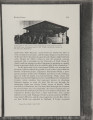
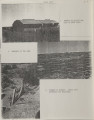
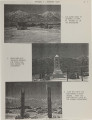
Copies of articles and book chapters about the Japanese-American evacuation of World War II and the Topaz and other internment camps; also a typescript school essay including photos |
| Collection Number and Name |
1002; Topaz Oral Histories |
| Table of Contents |
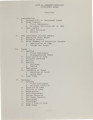
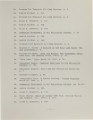
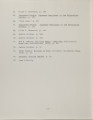
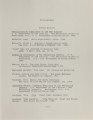
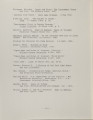
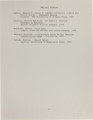
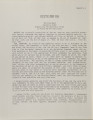
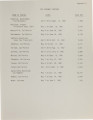
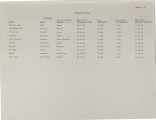
Educating the second generation Japanese, by Naoki Oka (typescript, 23 pages, English transcript of a Japanese article from The New World (Shin-Sekai), published in 17 installments from July 29, 1928 to August 14, 1928); My experience with the wartime relocation of Japanese, by Esther B. Rhoads, with a bibliographical essay by Howard H. Sugimoto (from East Across the Pacific: historical & sociological studies of Japanese immigration & assimilation, edited by Hilary Conroy and T. Scott Miyakawa, 1972, pages 127 - 150); Japanese Americans and Keetley Farms: Utah's relocation colony, by Sandra C. Taylor (from Utah Historical Quarterly, vol. 54, no. 4 (Fall 1986), pages 328 - 343 (last pages missing); Life in Japanese-American internment camps, by Delta Helmer (Typescript, 44 pages, a senior term paper for Mr. Cook, December 5, 1984) |
| Type |
Text |
| Genre |
oral histories (literary works) |
| Format |
application/pdf |
| Language |
eng |
| Rights |
 |
| Relation |
http://archiveswest.orbiscascade.org/ark:/80444/xv97265 |
| Scanning Technician |
Matt Wilkinson |
| Conversion Specifications |
Original scanned with Kirtas 2400 and saved as 400 ppi uncompressed TIFF. PDF generated by Adobe Acrobat Pro 9 for CONTENTdm display |
| ARK |
ark:/87278/s67s94tf |
| Topic |
Japanese Americans; Evacuation and relocation of Japanese Americans (United States : 1942-1945); Central Utah Relocation Center |
| Relation is Part of |
Mitsugi M. Kasai Memorial Japanese American Archive |
| Setname |
uum_toh |
| ID |
1043641 |
| Reference URL |
https://collections.lib.utah.edu/ark:/87278/s67s94tf |
| Title |
Page 8 |
| Format |
application/pdf |
| Setname |
uum_toh |
| ID |
1043540 |
| OCR Text |
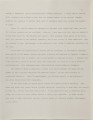
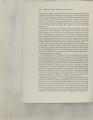
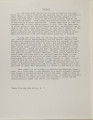
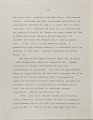
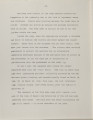
Show 8 Th r i!:i n n o b no in spi of th f ct th t one might be living h rt! rm n n 1 ', i - s }Ui ·s 'ble h t hi' is don mor 0 less unwillingly nd th t, t cor , th same erson h rbors desire to return to Jap n. And playing both en s g in!::)t the mi dle, this person might look to the public school for the American educ tion of his offspring while, at the same time, send the child to the Japanese 1 nguage school f r th study of the Japanese language and tradition. If such a "double game" is played, it might well result in personality developments in the chil ren which are fraught with fault and inconsistencies. This may also result in their being discriminated against in the United States and, at the same time, being considered undesirable in Japan because of their American education. In bushido, a samurai with divided loyalties is considered an outcast from the samurai rank. As the saying goes, "He who runs after two hares will catch neither." Among Lessing's parables, there is one about a goose that thought that in its previous life it was a crane. So it behaved in a lordly manner, not associating with birds of its own kind. One day the goose chanced to notice that its neck was short and ugly and tried with all its might to stretch it out. But instead of becoming like a crane with a long neck, it became a crippled goose. Similarly, unless we Japanese in America are careful now, we might produce crippled Nisei like the goose in the story. We must not direct them into becoming persons of divided loyalties, acceptable neither in America nor in Japan. There is nothing wrong with a person, born and living in the United States, mastering Japanese as a foreign language. However, we must ask the question of whether it would be acceptable to Americans in general to have a Japanese person claim " I am an American" and, at the same time, be inculcated with Japanese principles of morality. (8/2/28) |
| Reference URL |
https://collections.lib.utah.edu/ark:/87278/s67s94tf/1043540 |