| Title |
Topaz Oral History Project research files: Published articles (1920s-1980s) |
| Creator |
Oka, Naoki; Rhoads, Esther B.; Sugimoto, Howard H.; Taylor, Sandra C.; Helmer, Delta |
| Contributor |
Taylor, Sandra C. |
| Publisher |
Digitized by J. Willard Marriott Library, University of Utah |
| Date |
1928; 1972; 1984; 1986 |
| Date Digital |
2014-03-25 |
| Access Rights |
I acknowledge and agree that all information I obtain as a result of accessing any oral history provided by the University of Utah's Marriott Library shall be used only for historical or scholarly or academic research purposes, and not for commercial purposes. I understand that any other use of the materials is not authorized by the University of Utah and may exceed the scope of permission granted to the University of Utah by the interviewer or interviewee. I may request permission for other uses, in writing to Special Collections at the Marriott Library, which the University of Utah may choose grant, in its sole discretion. I agree to defend, indemnify and hold the University of Utah and its Marriott Library harmless for and against any actions or claims that relate to my improper use of materials provided by the University of Utah. |
| Spatial Coverage |
Topaz Camp, Millard County, Utah, United States, http://sws.geonames.org/5548582/ |
| Subject |
Japanese Americans--Forced removal and internment, 1942-1945; Central Utah Relocation Center |
| Description |
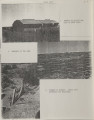
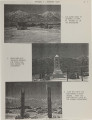
Copies of articles and book chapters about the Japanese-American evacuation of World War II and the Topaz and other internment camps; also a typescript school essay including photos |
| Collection Number and Name |
1002; Topaz Oral Histories |
| Table of Contents |
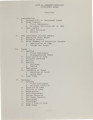
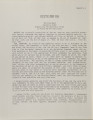
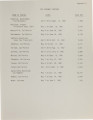
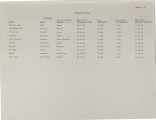
Educating the second generation Japanese, by Naoki Oka (typescript, 23 pages, English transcript of a Japanese article from The New World (Shin-Sekai), published in 17 installments from July 29, 1928 to August 14, 1928); My experience with the wartime relocation of Japanese, by Esther B. Rhoads, with a bibliographical essay by Howard H. Sugimoto (from East Across the Pacific: historical & sociological studies of Japanese immigration & assimilation, edited by Hilary Conroy and T. Scott Miyakawa, 1972, pages 127 - 150); Japanese Americans and Keetley Farms: Utah's relocation colony, by Sandra C. Taylor (from Utah Historical Quarterly, vol. 54, no. 4 (Fall 1986), pages 328 - 343 (last pages missing); Life in Japanese-American internment camps, by Delta Helmer (Typescript, 44 pages, a senior term paper for Mr. Cook, December 5, 1984) |
| Type |
Text |
| Genre |
oral histories (literary works) |
| Format |
application/pdf |
| Language |
eng |
| Rights |
 |
| Relation |
http://archiveswest.orbiscascade.org/ark:/80444/xv97265 |
| Scanning Technician |
Matt Wilkinson |
| Conversion Specifications |
Original scanned with Kirtas 2400 and saved as 400 ppi uncompressed TIFF. PDF generated by Adobe Acrobat Pro 9 for CONTENTdm display |
| ARK |
ark:/87278/s67s94tf |
| Topic |
Japanese Americans; Evacuation and relocation of Japanese Americans (United States : 1942-1945); Central Utah Relocation Center |
| Relation is Part of |
Mitsugi M. Kasai Memorial Japanese American Archive |
| Setname |
uum_toh |
| ID |
1043641 |
| Reference URL |
https://collections.lib.utah.edu/ark:/87278/s67s94tf |
| Title |
Page 18 |
| Format |
application/pdf |
| Setname |
uum_toh |
| ID |
1043550 |
| OCR Text |
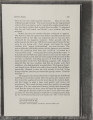
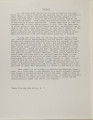
Show In th m 'III reli i I, wh'l Nis r , 1 n in h ways o h American L l U n i mu 1 n • u · 1 y , til 11 t i .l t i d n i :l , 1 , , • j c m , > f u :,; o 1 · 1 un rst n 1n h t d to ~ucl W sterr id s . I t:1i v h l r li1i n t ch s evil. Il i ·fin ·a par•nts lo speak to their hil ren bout their own religious beliefs, but it is absurd for parents who 18 h no f ith th m~ lves t try to force a cert in religion on their children solely because th t religion happens to be that of their ancestors. children from families of the Buddhist faith need to be cautioned against s. aking ill of rublic school teachers who talk about Christianity. The same holds tr e of Christian families too. This type of friction is ugly, all the more so for being concerned with a lofty matter like religion. It goes without saying that all things being equal between the ideals of Japan and America, it would be advantageous for us to adopt the customs and traditions of the place in which we reside. Being a country where various races exist, the United States is especially sensitive to the problem of Americanization. Recently, we have seen vocational education encouraged among the Nisei. I for one, am delighted. However, I think it would be quite a loss, a waste of talent, for a child who has the intellectual capability of getting a college education to be limited to vocational training. This would be a loss not only to the individual but to society as a whole. Needless to say, it is advisable to give vocational education to children whose parents cannot afford to send them to college. It is, however, quite ill-advised for parents to abandon a college education for their children simply because they have observed the unemployment problem of college graduates. Having been deeply concerned about the subject of education for a long while, I cannot in good conscience encourage the easier way out. (8/10/28) |
| Reference URL |
https://collections.lib.utah.edu/ark:/87278/s67s94tf/1043550 |