| OCR Text |
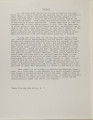
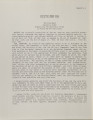
Show This special article appeared in Japanese in The New World (Shin-Sekai) , a San Francisco daily newspaper in 17 installments from July 29 , 1928 to August 14, 1928. The author lived in Isleton, California at the time of the writing. EDUCATING THE SECOND GENERATION JAPANESE Naoki Oka I The issue of educating our Dai-Nisei (second generation) children has been discussed on numerous occasions, and it would seem that there is nothing more to be said on the subject. Much to the contrarv, however, it is quite clear that the debate on the subject to date has amounted to nothing more than a mere prelude . The time has come to engage in a more serious discussion, one based on scrupulous study and due deliberation, particularly now that the Dai-Nisei are coming of age. In reviewing past discussions on this matter, I feel that they are quite off the mark overall. For one thing, the discussions have been entirely too concerned with the issue of employment of the teachers in the Japanese language schools. And for another, self-centered zealots, parents and self-style intellectuals, purists of the Japanese tradition, has been advancing the notion of an all-out nationalistic education, Japan-style. As an example, I might cite that when Consul Ohashi, a man of foresight, one who is not given to curry favor with the public, expressed the view that the Nisei* should become Americanized for the good of their future in this country, the public opposed his proposal as if in one voice. I have since come to favor Ohashi's view, although I myself am a Japanese language teacher. I feel that the Americanization of the Nisei is vital to their interests and have been advocating this thought whenever and wherever the subject of education is discussed. *Translator's note: The author and his contemporaries from Japan referred to their offspring born in the United States as Dai-Nisei or as Nisei, the abbreviated term, meaning '' second generation." Beginning at around 1930, Nisei became the common term used in both English and Japanese to designate this group. The latter term is used hereinafter in this translation. |