| OCR Text |
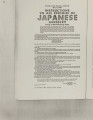
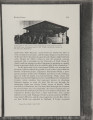
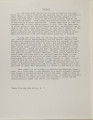
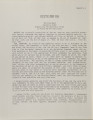
Show Keetley Farms 329 our group and we traveled in two sedans and three trucks. The latter were loaded with our personal belongings and furnitures. I drove one of the sedans. That night we stopped over at a motel in Truckee, California. It was a very nice and comfortable place, (and incidentally very expensive), and we all slept well. We spent Sunday night at a motor court in Winnemucca, Nevada. I still remember that we had dinner at a Chop Suey place in that town and they charged us fifteen cents for a small dish (not bowl, mind you) of rice ... and each of us ate two to three (and even four) dishes of them too."1 Masao Edward Tsuj imoto, the author of this statement, was a young man when he and a group of Japanese Americans set out from the Bay Area to farm a valley in the high Wasatch Mountains east of Salt Lake City in early March 1942. They were part of a migration of nearly five thousand people who, prompted by the army's "encouragement" of Japanese resettlement in areas east of the Pacific Coast, sought new homes. Voluntary resettlement was a fleeting attempt at solving the apparent problem posed by the presence of some 110,000 Japanese, citizens and aliens, on the West Coast. From many sectors came demands that Japanese Americans be removed from the coast because of their suspect loyalties and undoubtedly visible ethnicityan inescapable reminder of the countenances of the enemy that had struck without warning and destroyed the heart of America's Pacific fleet at Pearl Harbor. . Few were successful in their attempts to move. Hostility along their travel routes forced many to sleep in their cars and made them desperate for gasoline. Others succeeded in leaving California and crossing Nevada but were unsuccessful in finding new residences and livelihoods in the states of the Intermountain West. Most eventually returned to the West Coast to await relocation to internment camps. One small group that did succeed, in most unusual circumstances, was a little colony at Keetley, Utah. Its story is to be found in references in local newspapers and in the oral history of its founder, Fred Isamu Wada.2 Most interesting, however, is the chronicle of Masao Edward Tsujimoto, who wrote a lengthy document about the group's experiences the first year at Keetley as a letter to a fictitious 1 Masao Edward Tsujimoto, "A Letter to Ophelia about Keetley Farms," manuscript dated 1943 in tht' Japanese American Evacuation and Resettlement Study, Bancroft Library, University of California, Berkeley (hereafter cited as Tsujimoto, "Letter to Ophelia"). 2 Los Angeles County Public Library/ Claremont Graduate School joint Oral History.Program, Fred lsamu Wada: Businessman, Community Leader, and Philanthropist (Oral History Program, Claremont Graduate School, Claremont, California, 1984). |