| Title |
Topaz Oral History Project research files: Published articles (1920s-1980s) |
| Creator |
Oka, Naoki; Rhoads, Esther B.; Sugimoto, Howard H.; Taylor, Sandra C.; Helmer, Delta |
| Contributor |
Taylor, Sandra C. |
| Publisher |
Digitized by J. Willard Marriott Library, University of Utah |
| Date |
1928; 1972; 1984; 1986 |
| Date Digital |
2014-03-25 |
| Access Rights |
I acknowledge and agree that all information I obtain as a result of accessing any oral history provided by the University of Utah's Marriott Library shall be used only for historical or scholarly or academic research purposes, and not for commercial purposes. I understand that any other use of the materials is not authorized by the University of Utah and may exceed the scope of permission granted to the University of Utah by the interviewer or interviewee. I may request permission for other uses, in writing to Special Collections at the Marriott Library, which the University of Utah may choose grant, in its sole discretion. I agree to defend, indemnify and hold the University of Utah and its Marriott Library harmless for and against any actions or claims that relate to my improper use of materials provided by the University of Utah. |
| Spatial Coverage |
Topaz Camp, Millard County, Utah, United States, http://sws.geonames.org/5548582/ |
| Subject |
Japanese Americans--Forced removal and internment, 1942-1945; Central Utah Relocation Center |
| Description |
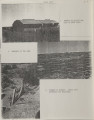
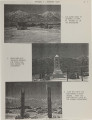
Copies of articles and book chapters about the Japanese-American evacuation of World War II and the Topaz and other internment camps; also a typescript school essay including photos |
| Collection Number and Name |
1002; Topaz Oral Histories |
| Table of Contents |
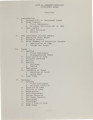
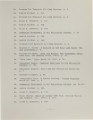
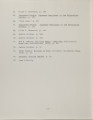
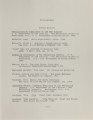
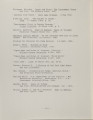
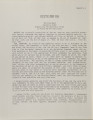
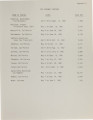
Educating the second generation Japanese, by Naoki Oka (typescript, 23 pages, English transcript of a Japanese article from The New World (Shin-Sekai), published in 17 installments from July 29, 1928 to August 14, 1928); My experience with the wartime relocation of Japanese, by Esther B. Rhoads, with a bibliographical essay by Howard H. Sugimoto (from East Across the Pacific: historical & sociological studies of Japanese immigration & assimilation, edited by Hilary Conroy and T. Scott Miyakawa, 1972, pages 127 - 150); Japanese Americans and Keetley Farms: Utah's relocation colony, by Sandra C. Taylor (from Utah Historical Quarterly, vol. 54, no. 4 (Fall 1986), pages 328 - 343 (last pages missing); Life in Japanese-American internment camps, by Delta Helmer (Typescript, 44 pages, a senior term paper for Mr. Cook, December 5, 1984) |
| Type |
Text |
| Genre |
oral histories (literary works) |
| Format |
application/pdf |
| Language |
eng |
| Rights |
 |
| Relation |
http://archiveswest.orbiscascade.org/ark:/80444/xv97265 |
| Scanning Technician |
Matt Wilkinson |
| Conversion Specifications |
Original scanned with Kirtas 2400 and saved as 400 ppi uncompressed TIFF. PDF generated by Adobe Acrobat Pro 9 for CONTENTdm display |
| ARK |
ark:/87278/s67s94tf |
| Topic |
Japanese Americans; Evacuation and relocation of Japanese Americans (United States : 1942-1945); Central Utah Relocation Center |
| Relation is Part of |
Mitsugi M. Kasai Memorial Japanese American Archive |
| Setname |
uum_toh |
| ID |
1043641 |
| Reference URL |
https://collections.lib.utah.edu/ark:/87278/s67s94tf |
| Title |
Page 22 |
| Format |
application/pdf |
| Setname |
uum_toh |
| ID |
1043554 |
| OCR Text |
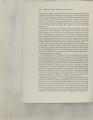
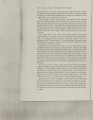
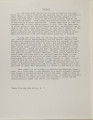
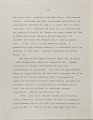
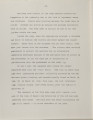
Show rrh lU 1. t h r t r. It i p n i!:> no g u s n i 1 h 22 y st tus nor by honor, bu· by his or her on t k h m sur of one's individual p biliti s nd tr · t hi v th h' hes lO!:iS.ble uc tion based on those capabilities. The ben fits of n due tion, not th 1 ast of which is th improvement of one's character, ill enable p Lson o m k contributions to his or her immediate society, and indeed to th entir s i t - t-1 rg . In sum, we should take into consideration, first, the capabilities of our Nisei chil ren, and according to their individual capacities, attempt to give them the level of education that is appropriate. Those who lack the necessary funds for education should cultivate the spirit of independence and self-respect in their children and encourage them to work through college. If, however, a person likes the family business, it is only proper that he be allowed to carry on the business. If, for some reason, the time is not ripe for him to take over, he might even work elsewhere, also a proper thing to do. In any event, it is most essential that person proceed toward a higher goal as much as possible. It is generally thought that the Nisei are superior to the Issei in every respect because of the differences in the environments in which they were raised. In spite of that, Issei are apt to be quick to point out only the faults of the Nisei, and too easy to criticize them as "no good." We must be careful about this. The Nisei have a great many strong points which we should recognize, and we must guide them with as much understanding as we are able. (8/13/28) XVII When our Nisei offspring have leaders--teachers and parents with mistaken ideas--it is unfortunate. One has to be very careful not to be misguided by those newspapers which are bent solely on making profits and thus print material only to please parents. Needles~ to say, such a policy serves to mislead the Nisei. Their leaders should be not only indignant, but also ones who keep pace with the times. The World War in Europe was an |
| Reference URL |
https://collections.lib.utah.edu/ark:/87278/s67s94tf/1043554 |