| OCR Text |
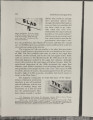
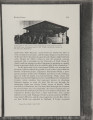
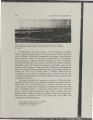
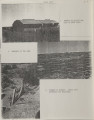
Show b 'e nd below: Two zn a series of Burma have szgns of the 1940s with the message" lap the ]ap with crap zron." Courtesy of the Utah Hi torical Quarterly ibility; they could not arrange th ir per onal affair fast nough, they Ia ked the fund to move on their own, and they did not know where to go, e peciall y when they were overwhelmed by the rumors of local hostility or even mob violence.8 Amid growing uncertainty and fear, most elected to wait for the atzonal Archzves. government's next steps: a curfe , the prohibition after March 29 of travel, and then the "round up" of 110,000 people into assembly centers and from there to the ten concentration camps in the interior. The situation in Utah was similar to the other Intermountain states. A small Japanese population in the state dated from the census of 1890. The first residents had come to work in the sugar beet industry, on the railroad, and in the coal and copper mines. Some came as converts to the Mormon faith. By 1910 most of the two thousand Japanese worked in the sugar beet industry, although many still worked in the coal mines of Carbon County. After the agricultural depression of the 1920s devastated the sugar beet industry, most Nikkei switched to truck farming and fruit raising, and gradually some people moved to the cities. The census of 1940 revealed a decline of nearly a thousand Japanese from the previous decade's high of 3,269; economic instability had forced many to return to the West Coast.9 The Japanese community in Utah had many of the characteristics of minority settlements elsewhere: it was self-contained and self-sufficient, with its own places of worship, shops, a_nd restaurants. If it did not melt into the predominantly Mormon culture around it, neither 8 U.S., Department of the Interior, War Relocation Authority, WRA: A Story of Human Conservation (Washington, D.C.: Government Printing 0£fice, 1946), p. 26. 'Mamoru Iga, ''Acculturation of Japanese Population in Davis County, Utah" (Ph.D. dissertation, University of Utah, 1955); Leonard J. Arrington, "Utah's Ambiguous Reception: The Relocated Japanese Americans.'' in Roger Daniels, Sandra C. Taylor, and Harry H. L. Kitano, japanese Amencans: From Relocation to Redress Salt Lake City: Universtiy of Utah Press, 1986). |