| Title |
Topaz Oral History Project research files: Published articles (1920s-1980s) |
| Creator |
Oka, Naoki; Rhoads, Esther B.; Sugimoto, Howard H.; Taylor, Sandra C.; Helmer, Delta |
| Contributor |
Taylor, Sandra C. |
| Publisher |
Digitized by J. Willard Marriott Library, University of Utah |
| Date |
1928; 1972; 1984; 1986 |
| Date Digital |
2014-03-25 |
| Access Rights |
I acknowledge and agree that all information I obtain as a result of accessing any oral history provided by the University of Utah's Marriott Library shall be used only for historical or scholarly or academic research purposes, and not for commercial purposes. I understand that any other use of the materials is not authorized by the University of Utah and may exceed the scope of permission granted to the University of Utah by the interviewer or interviewee. I may request permission for other uses, in writing to Special Collections at the Marriott Library, which the University of Utah may choose grant, in its sole discretion. I agree to defend, indemnify and hold the University of Utah and its Marriott Library harmless for and against any actions or claims that relate to my improper use of materials provided by the University of Utah. |
| Spatial Coverage |
Topaz Camp, Millard County, Utah, United States, http://sws.geonames.org/5548582/ |
| Subject |
Japanese Americans--Forced removal and internment, 1942-1945; Central Utah Relocation Center |
| Description |
Copies of articles and book chapters about the Japanese-American evacuation of World War II and the Topaz and other internment camps; also a typescript school essay including photos |
| Collection Number and Name |
1002; Topaz Oral Histories |
| Table of Contents |
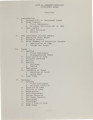
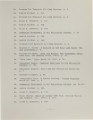
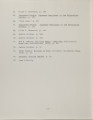
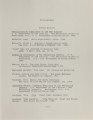
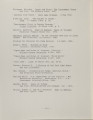
Educating the second generation Japanese, by Naoki Oka (typescript, 23 pages, English transcript of a Japanese article from The New World (Shin-Sekai), published in 17 installments from July 29, 1928 to August 14, 1928); My experience with the wartime relocation of Japanese, by Esther B. Rhoads, with a bibliographical essay by Howard H. Sugimoto (from East Across the Pacific: historical & sociological studies of Japanese immigration & assimilation, edited by Hilary Conroy and T. Scott Miyakawa, 1972, pages 127 - 150); Japanese Americans and Keetley Farms: Utah's relocation colony, by Sandra C. Taylor (from Utah Historical Quarterly, vol. 54, no. 4 (Fall 1986), pages 328 - 343 (last pages missing); Life in Japanese-American internment camps, by Delta Helmer (Typescript, 44 pages, a senior term paper for Mr. Cook, December 5, 1984) |
| Type |
Text |
| Genre |
oral histories (literary works) |
| Format |
application/pdf |
| Language |
eng |
| Rights |
 |
| Relation |
http://archiveswest.orbiscascade.org/ark:/80444/xv97265 |
| Scanning Technician |
Matt Wilkinson |
| Conversion Specifications |
Original scanned with Kirtas 2400 and saved as 400 ppi uncompressed TIFF. PDF generated by Adobe Acrobat Pro 9 for CONTENTdm display |
| ARK |
ark:/87278/s67s94tf |
| Topic |
Japanese Americans; Evacuation and relocation of Japanese Americans (United States : 1942-1945); Central Utah Relocation Center |
| Relation is Part of |
Mitsugi M. Kasai Memorial Japanese American Archive |
| Setname |
uum_toh |
| ID |
1043641 |
| Reference URL |
https://collections.lib.utah.edu/ark:/87278/s67s94tf |
| Title |
Page 34 |
| Format |
application/pdf |
| Setname |
uum_toh |
| ID |
1043566 |
| OCR Text |
Show merua ~ d and shipped to the camps cember I went to Poston to mraged pastor who felt that ere was considerable rivalry >ably between the different distributed by the Christian o attract children to their e would be enough for all. )Ution handled by commu) ads of gifts arrived and to ·ts than children. Each child ensive gift which carried a u ge sorted the gifts wisely. e libraries, and towels and l had no children in their ; ifts was distributed in the vith the donors helped with :changed letters, and some• n was lessened. ld not be enough gifts so I ::>p" -pieces big enough to .:1thusiastic letters of appre- Esther." I wrote back that •erform errands for them. I to celebrate my mother's ight be guessed. Thereafter oads" with apologies and nail items. I found that my ·Is whose parents were not o college. gan opening offices in such :ourage employers to make ,s as well as to provide a camps. Before the Author ·rican Friends Service staff in that city. The American the placement of special practice only in California. for a capable optometrist, able to her would be as a els where evacuees could The Wartime Relocation of Japanese I 13 7 come for a few days and get jobs as a result of personal interviews. The hostels satisfied the requirement that the evacuees had to have jobs before they could be relocated. Many Nisei found far better jobs as a result of the hostels because they were challenged to make good. Some parents were afraid to let their children go. Two sisters came to me and asked that I permit the younger girl to go with her sister to one of our hostels. Their parents would not give permission. I talked with the younger girl about her relationship with her parents and suggested that a break with them would be tragic. I advised her to wait until she had her parents' permission. The girls insisted that their parents were stubborn and would not understand. Still I refused and urged them to be frank with their parents. In two days the parents consented, apparently feeling they could trust the girl to an organization which stressed the value of good relations with parents. Later the emphasis changed from relocating individuals, mostly Nisei, to that of arranging for families to leave the camps. The staff found work for many able Issei in nurseries, truck farms, and maintenance jobs at colleges where Japanese students had already proven their worth. By autumn of 1943 induction of the Nisei into the U.S. Army became a great issue. Some of them wanted to volunteer to prove their loyalty as Americans. Others felt it was unfair of the government to call men from "internment" into service. As a result families were divided, and some boys volunteered and left without telling their parents. Two other events complicated the situation. An exchange ship, I recall, was scheduled to transport expatriates to Japan and the United States Government eventually decided to segregate those to be embarked at the TuleLake Center. 3 I served on the welfare staff at Poston during this confusion. Japanese nationals who applied for expatriation were considered disloyal and transferred to TuleLake. A very few subsequently embarked on the repatriation ship and most of them had relatives in Japan who requested their expatriation and helped pay their passage. We had to interpret regulations to the few who left since they were not allowed to take printed matter with them. That regulation was especially tragic ... for one Boy Scout who was not permitted to take the record of his honors with him-like many others he did not want to leave. 4 The evacuees' applications for repatriation seldom were related to national loyalties. One man, too old to start over, had all his savings in a Japanese bank, and requested return to Japan to maintain his financial security. Another did not want his daughters to relocate in the Midwest -he elected to take his family to TuleLake so the daughters would not be allowed to relocate. Still another was a second son whose older |
| Reference URL |
https://collections.lib.utah.edu/ark:/87278/s67s94tf/1043566 |