| Title |
Topaz Oral History Project research files: Published articles (1920s-1980s) |
| Creator |
Oka, Naoki; Rhoads, Esther B.; Sugimoto, Howard H.; Taylor, Sandra C.; Helmer, Delta |
| Contributor |
Taylor, Sandra C. |
| Publisher |
Digitized by J. Willard Marriott Library, University of Utah |
| Date |
1928; 1972; 1984; 1986 |
| Date Digital |
2014-03-25 |
| Access Rights |
I acknowledge and agree that all information I obtain as a result of accessing any oral history provided by the University of Utah's Marriott Library shall be used only for historical or scholarly or academic research purposes, and not for commercial purposes. I understand that any other use of the materials is not authorized by the University of Utah and may exceed the scope of permission granted to the University of Utah by the interviewer or interviewee. I may request permission for other uses, in writing to Special Collections at the Marriott Library, which the University of Utah may choose grant, in its sole discretion. I agree to defend, indemnify and hold the University of Utah and its Marriott Library harmless for and against any actions or claims that relate to my improper use of materials provided by the University of Utah. |
| Spatial Coverage |
Topaz Camp, Millard County, Utah, United States, http://sws.geonames.org/5548582/ |
| Subject |
Japanese Americans--Forced removal and internment, 1942-1945; Central Utah Relocation Center |
| Description |
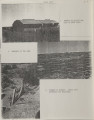
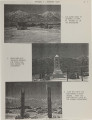
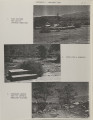
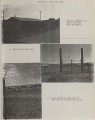
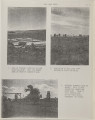
Copies of articles and book chapters about the Japanese-American evacuation of World War II and the Topaz and other internment camps; also a typescript school essay including photos |
| Collection Number and Name |
1002; Topaz Oral Histories |
| Table of Contents |
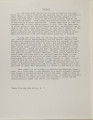
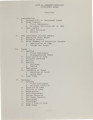
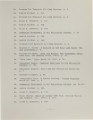
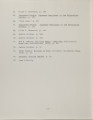
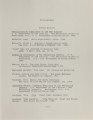
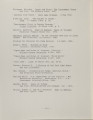
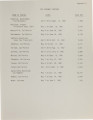
Educating the second generation Japanese, by Naoki Oka (typescript, 23 pages, English transcript of a Japanese article from The New World (Shin-Sekai), published in 17 installments from July 29, 1928 to August 14, 1928); My experience with the wartime relocation of Japanese, by Esther B. Rhoads, with a bibliographical essay by Howard H. Sugimoto (from East Across the Pacific: historical & sociological studies of Japanese immigration & assimilation, edited by Hilary Conroy and T. Scott Miyakawa, 1972, pages 127 - 150); Japanese Americans and Keetley Farms: Utah's relocation colony, by Sandra C. Taylor (from Utah Historical Quarterly, vol. 54, no. 4 (Fall 1986), pages 328 - 343 (last pages missing); Life in Japanese-American internment camps, by Delta Helmer (Typescript, 44 pages, a senior term paper for Mr. Cook, December 5, 1984) |
| Type |
Text |
| Genre |
oral histories (literary works) |
| Format |
application/pdf |
| Language |
eng |
| Rights |
 |
| Relation |
http://archiveswest.orbiscascade.org/ark:/80444/xv97265 |
| Scanning Technician |
Matt Wilkinson |
| Conversion Specifications |
Original scanned with Kirtas 2400 and saved as 400 ppi uncompressed TIFF. PDF generated by Adobe Acrobat Pro 9 for CONTENTdm display |
| ARK |
ark:/87278/s67s94tf |
| Topic |
Japanese Americans; Evacuation and relocation of Japanese Americans (United States : 1942-1945); Central Utah Relocation Center |
| Relation is Part of |
Mitsugi M. Kasai Memorial Japanese American Archive |
| Setname |
uum_toh |
| ID |
1043641 |
| Reference URL |
https://collections.lib.utah.edu/ark:/87278/s67s94tf |
| Title |
Page 24 |
| Format |
application/pdf |
| Setname |
uum_toh |
| ID |
1043556 |
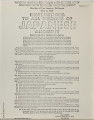
| OCR Text |
Show d. rt. k t- 'e .o d s 0 1 e 1 My Experience with the Wartime Relocation of Japanese ESTHER B. RHOADS* wilh a bibliographical e.ssay by HOWARD H. SUGIMOTO On December 7, 1941 the Japanese in America were as shocked as everyone else in the United States when they learned of the attack on Pearl Harbor. The truck farmers were at work in the fields, the nursery men and the store owners were at their usual jobs or relaxing at home, and children were helping their parents, studying or returning from Sunday school when they heard the news. In addition to the thousands of Japanese in Hawaii, there were more than 127,000 persons of Japanese ancestry in the continental United States. About 63 percent of these were born in this country, but because of their youth only about 15 percent were of voting age. The immigrants came from a great variety of backgrounds and from many parts of Japan, but the great majority were from western Japan, second or third sons of farmers or fishermen from crowded areas where the inheritance was too small to be divided. They had come seeking a better life for themselves and their children. In the still rather feudal system of Japan, the one chance of improving one's social status was through education. America offered unlimited educational and economic opportunities if one worked hard. Despite discrimination and the inability of the first-generation parents to become citizens, many Japanese settled on the West Coast. Some were businessmen, priests, and teachers influential i~ their •Esther B. Rhoads lived in Japan for 20 years before 1941. A teacher at the Friends (Quaker) School in Tokyo, she was one of few Americans who could speak Japanese. Home on furlough at the beginning of the Pacific war, she began work in February 1942 with the Quaker-sponsored American Friends Service Committee program to help persons of Japanese ancestry and continued in this until June 1946. Then she returned to Occupied Japan to work with the AFSC relief program and teach at the Friends School until1960. In this essay the term "Japanese" is sometimes used in the old-fashioned way of ethnic identification. It should be remembered that even during the Pacific war period more than half the ''Japanese" in North America were actually Japanese Americans or Japanese Can adians. 127 JUL C: 198 THIS MATERIAL MAY BE PROTfCJED BY COPYRIGHT 1J (Title 17 U.S. Code} |
| Reference URL |
https://collections.lib.utah.edu/ark:/87278/s67s94tf/1043556 |