| OCR Text |
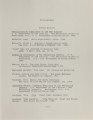
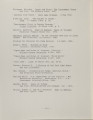
Show crica hare in natural resources, l as on our government's American fighting forces ~ exploits of the Japanese -ador in Arms (Honolulu: s D. Murphy which is a n try Battalion, composed · general work is Orville -:om bat Team (MTOUSA, onal information on that hove, such as Bosworth's perb section on the Japa- ' awa's book summarizes acific war which hitherto count of an individual's , and London: Harper & of. Ben Kuroki, who won as well as delightfully ent and military service sei Veterans' Reunion {Los interesting and hitherto ny Japanese Americans ge number served in the military intelligence (as n war). It also notes that he USS Maine when it eals that a Japanese was tdred years ago. concerning the Japanese are plentiful. For exam{ States," in Far Eastern count of the immediate ~se in the United States. evoted entirely to Japan culture and life and the articles in that issue is isei, Kibei" gives a clear problems related to the of Japanese Origins," in The Wartime Relocation of japanese I 149 the Annals of American Academy of Political and Social Science CCXXIII (September 1942), pp. 107-113, is a short commentary on the socioeconomic conditions of the pre-war Japanese American· population, the rise of antagonism toward them, and the eventual clamor for evacuation. The resettlement of the Japanese in their original communities is treated by William L. Worden in "The Hate that Failed," in Saturday Evening Post CCIX (May 4, 1946 ), a story of the propaganda against the Japanese and the counter-offensive carried on by the War Relocation Authority and the various citizens' committees which made frequent reference to the Nisei military record. Carey McWilliams' "Moving the West Coast Japanese," in Harper's Magazine CLXXXV, 1108 (September 1942), pp. 359-369, praises the conduct of the detainees as well as the dispatch with which the U.S. Army prepared the locations and cleared the West Coast Military Areas of Japanese Americans by moving them to temporary "reception centers" during the inital stages of evacuation. The author, however, makes an erroneous assumption that "Canada, for example, merely evacuated all male Japanese between the ages of 18 and 45, but this policy again resulted in separating families." The initial order; based on sex and age categories, was soon superseded by a general order calling for the immediate evacuation of all Japanese Canadians from the "protected areas" of Canada. (For a special study of the evacuation in Canada, see La Violette's The Canadian japanese and World War IL cited above.) Commander Kenneth D. Ringle in "Japanese in America: The Problem and the Solution," in Harper's Magazine CLXXXV, 1109, (October 1942), pp. 489-497, is a sophisticated account with a keen appreciation of the actual situation and developments during the period under discussion. Charles Iglehart's "Citizens Behind Barbed Wire," in The Nation (June 6, 1942) and Forrest La Violette's" American-born Japanese and the World Crisis," in Canadian journal of Economic and Political Science VII (November 1941), pp. 517-527, also merit attention. We gratefully acknowledge the assistance of Senator Daniel K. Inouye in making available a most useful reference, entitled japaneseAmerican Relocation During World War 11· A Selecfed Bibliography, prepared by Maryann Conway of the Library of Congress. Besides a number of the titles referred to here, Conway's bibliography lists other materials, including: Henry Fukuhara's Pori/olio of 50 Scenes of Relocation Centers (New York: Plantin Press, 1944); the Japanese American Citizens League's The Case for !he Nisei: Brief of !he japanese-American Citizens League (Salt Lake City, 1945)i R. E. Cushman's "West Coast Curfew Applied to Japanese American Citizens: U.S. Supreme Court Decision," in American Political Science Review XXXVIII (April 1944), pp. 266-268i |