| Title |
Topaz Oral History Project research files: Published articles (1920s-1980s) |
| Creator |
Oka, Naoki; Rhoads, Esther B.; Sugimoto, Howard H.; Taylor, Sandra C.; Helmer, Delta |
| Contributor |
Taylor, Sandra C. |
| Publisher |
Digitized by J. Willard Marriott Library, University of Utah |
| Date |
1928; 1972; 1984; 1986 |
| Date Digital |
2014-03-25 |
| Access Rights |
I acknowledge and agree that all information I obtain as a result of accessing any oral history provided by the University of Utah's Marriott Library shall be used only for historical or scholarly or academic research purposes, and not for commercial purposes. I understand that any other use of the materials is not authorized by the University of Utah and may exceed the scope of permission granted to the University of Utah by the interviewer or interviewee. I may request permission for other uses, in writing to Special Collections at the Marriott Library, which the University of Utah may choose grant, in its sole discretion. I agree to defend, indemnify and hold the University of Utah and its Marriott Library harmless for and against any actions or claims that relate to my improper use of materials provided by the University of Utah. |
| Spatial Coverage |
Topaz Camp, Millard County, Utah, United States, http://sws.geonames.org/5548582/ |
| Subject |
Japanese Americans--Forced removal and internment, 1942-1945; Central Utah Relocation Center |
| Description |
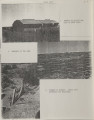
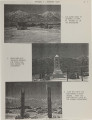
Copies of articles and book chapters about the Japanese-American evacuation of World War II and the Topaz and other internment camps; also a typescript school essay including photos |
| Collection Number and Name |
1002; Topaz Oral Histories |
| Table of Contents |
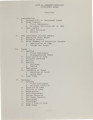
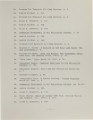
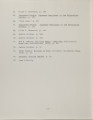
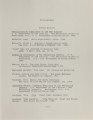
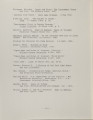
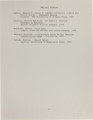
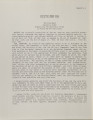
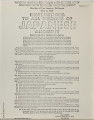
Educating the second generation Japanese, by Naoki Oka (typescript, 23 pages, English transcript of a Japanese article from The New World (Shin-Sekai), published in 17 installments from July 29, 1928 to August 14, 1928); My experience with the wartime relocation of Japanese, by Esther B. Rhoads, with a bibliographical essay by Howard H. Sugimoto (from East Across the Pacific: historical & sociological studies of Japanese immigration & assimilation, edited by Hilary Conroy and T. Scott Miyakawa, 1972, pages 127 - 150); Japanese Americans and Keetley Farms: Utah's relocation colony, by Sandra C. Taylor (from Utah Historical Quarterly, vol. 54, no. 4 (Fall 1986), pages 328 - 343 (last pages missing); Life in Japanese-American internment camps, by Delta Helmer (Typescript, 44 pages, a senior term paper for Mr. Cook, December 5, 1984) |
| Type |
Text |
| Genre |
oral histories (literary works) |
| Format |
application/pdf |
| Language |
eng |
| Rights |
 |
| Relation |
http://archiveswest.orbiscascade.org/ark:/80444/xv97265 |
| Scanning Technician |
Matt Wilkinson |
| Conversion Specifications |
Original scanned with Kirtas 2400 and saved as 400 ppi uncompressed TIFF. PDF generated by Adobe Acrobat Pro 9 for CONTENTdm display |
| ARK |
ark:/87278/s67s94tf |
| Topic |
Japanese Americans; Evacuation and relocation of Japanese Americans (United States : 1942-1945); Central Utah Relocation Center |
| Relation is Part of |
Mitsugi M. Kasai Memorial Japanese American Archive |
| Setname |
uum_toh |
| ID |
1043641 |
| Reference URL |
https://collections.lib.utah.edu/ark:/87278/s67s94tf |
| Title |
Page 2 |
| Format |
application/pdf |
| Setname |
uum_toh |
| ID |
1043534 |
| OCR Text |
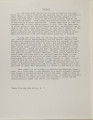
Show 2 lth ugh it my seem too large a leap forward right now to accept Ohashi's vie , I belie e th t popul r opinion will come to favor it in time, just as water ·11 gra u lly arrive at its proper level. I believe that current practices of Jap nese 1 ngu ge due tion reflect wh t pleases the Issei* parents rather than h t might be of greater benefit to their Nisei children in the long run. These practices will eventually shackle the Nisei, restricting them to the role of social outcasts in this country. Of course, for those who want to go to Japan eventually or for Nisei who will be oing business in Japan, learning the Japanese language may be essential. Ho ever, in order for the Japanese citizens of the United States to make real contributions to the growth and development of their people here, knowing the Japanese language is not indispensable, living as they are among Americans of other races. Mr. Taketomi, a former consul general in San Francisco, who had a long-standing interest in this matter, suggested that it would be well for Japanese language study to be undertaken as the need or desire for it as expressed by Nisei themselves. I hasten to add, however, that Mr. Taketomi did not exactly say this straight out, but as befits a diplomat, only offered it as suggestion, to which I wholeheartedly concurred. (7/29/28) II Although the conclusion to the speech rendered by Vice-Consul Shibata at the Northern California Japanese Language Schools Association in San Jose last year seemed anticlimatic,the portion which dealt with education of the Nisei was quite *Translator's note: The author refers to the first generation Japanese living in the U.S. (Japan born) as Dai-Issei. After about 1920, however, Issei became the more commonly used term to denote this group of immigrants. The latter term is used hereinafter in this translation. |
| Reference URL |
https://collections.lib.utah.edu/ark:/87278/s67s94tf/1043534 |