| Title |
Topaz Oral History Project research files: Published articles (1920s-1980s) |
| Creator |
Oka, Naoki; Rhoads, Esther B.; Sugimoto, Howard H.; Taylor, Sandra C.; Helmer, Delta |
| Contributor |
Taylor, Sandra C. |
| Publisher |
Digitized by J. Willard Marriott Library, University of Utah |
| Date |
1928; 1972; 1984; 1986 |
| Date Digital |
2014-03-25 |
| Access Rights |
I acknowledge and agree that all information I obtain as a result of accessing any oral history provided by the University of Utah's Marriott Library shall be used only for historical or scholarly or academic research purposes, and not for commercial purposes. I understand that any other use of the materials is not authorized by the University of Utah and may exceed the scope of permission granted to the University of Utah by the interviewer or interviewee. I may request permission for other uses, in writing to Special Collections at the Marriott Library, which the University of Utah may choose grant, in its sole discretion. I agree to defend, indemnify and hold the University of Utah and its Marriott Library harmless for and against any actions or claims that relate to my improper use of materials provided by the University of Utah. |
| Spatial Coverage |
Topaz Camp, Millard County, Utah, United States, http://sws.geonames.org/5548582/ |
| Subject |
Japanese Americans--Forced removal and internment, 1942-1945; Central Utah Relocation Center |
| Description |
Copies of articles and book chapters about the Japanese-American evacuation of World War II and the Topaz and other internment camps; also a typescript school essay including photos |
| Collection Number and Name |
1002; Topaz Oral Histories |
| Table of Contents |
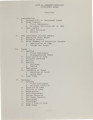
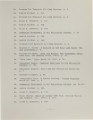
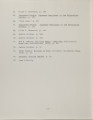
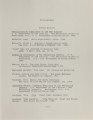
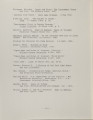
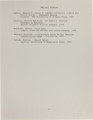
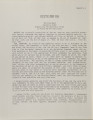
Educating the second generation Japanese, by Naoki Oka (typescript, 23 pages, English transcript of a Japanese article from The New World (Shin-Sekai), published in 17 installments from July 29, 1928 to August 14, 1928); My experience with the wartime relocation of Japanese, by Esther B. Rhoads, with a bibliographical essay by Howard H. Sugimoto (from East Across the Pacific: historical & sociological studies of Japanese immigration & assimilation, edited by Hilary Conroy and T. Scott Miyakawa, 1972, pages 127 - 150); Japanese Americans and Keetley Farms: Utah's relocation colony, by Sandra C. Taylor (from Utah Historical Quarterly, vol. 54, no. 4 (Fall 1986), pages 328 - 343 (last pages missing); Life in Japanese-American internment camps, by Delta Helmer (Typescript, 44 pages, a senior term paper for Mr. Cook, December 5, 1984) |
| Type |
Text |
| Genre |
oral histories (literary works) |
| Format |
application/pdf |
| Language |
eng |
| Rights |
 |
| Relation |
http://archiveswest.orbiscascade.org/ark:/80444/xv97265 |
| Scanning Technician |
Matt Wilkinson |
| Conversion Specifications |
Original scanned with Kirtas 2400 and saved as 400 ppi uncompressed TIFF. PDF generated by Adobe Acrobat Pro 9 for CONTENTdm display |
| ARK |
ark:/87278/s67s94tf |
| Topic |
Japanese Americans; Evacuation and relocation of Japanese Americans (United States : 1942-1945); Central Utah Relocation Center |
| Relation is Part of |
Mitsugi M. Kasai Memorial Japanese American Archive |
| Setname |
uum_toh |
| ID |
1043641 |
| Reference URL |
https://collections.lib.utah.edu/ark:/87278/s67s94tf |
| Title |
Page 35 |
| Format |
application/pdf |
| Setname |
uum_toh |
| ID |
1043567 |
| OCR Text |
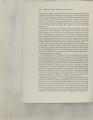
Show 138 I Hislorical Essays: Mainland North America brother died, 1 aving a mother in Japan without support. He sent his mother money until the outbreak of the war and since that became impossible he could see no other course than to take his family back to Japan, try to find work, and support his mother and family there. So, although the list of expatriates grew, loyalty to Japan was not the primary reason for expatriation. Social workers should not try to change the minds of such people but they can emphasize problems. Two Kibei boys came in asking to be repatriated because they did not want to serve in the U.S. army. Each owned property so they were advised to seek legal advice concerning the disposition of the farms which they would inherit from their parents. Both of those young men remained in the United States and I believe both served loyally and effectively in the army. As the family relocation increased, fewer capable Japanese were left in the centers. Many American people protested the evacuation from the beginning and "Fair Play" committees were formed to press for a change of policy. Also, the outstanding service of the 442d Infantry Regiment Combat Team, composed entirely of Nisei, in the European Theater of Operations helped to influence public opinion and finally just before Christmas in 1944 it was announced that as of January 2, 1945 persons of Japanese ancestry would be permitted to return to the West Coast. Again the American Friends Service Committee negotiated with the owners of the school used as a hostel in 1942. During the next two months one hundred volunteers repaired the building, which was left in a sorry state by the U.S. Army. Volunteers painted walls, restored the plumbing and fixtures and placed furniture contributed by friends. When the facility was sufficiently restored the flow of returnees began to increase. They were given board and bed at one dollar a day for ten days while they made arrangements to get back their rented properties and searched for jobs and housing. After ten days the price was raised to discourage returnees lingering with us. Some of the Japanese churches maintained smaller hostels and we helped alien Buddhist priests to obtain permits for use of their temples. By summer, the relocation centers were closed. Many of the remaining evacuees had no plans and public assistance was needed for them. The treatment of applicants by doctors and social workers who certified them for relief was impressive. They trusted the Japanese not to ask for help except when it was needed. Several men well over 75 found work somewhere and never drew on relief funds; it was a comfort to them to know they were eligible if need arose. As the centers emptied, vacant barracks became a hazard increasingly |
| Reference URL |
https://collections.lib.utah.edu/ark:/87278/s67s94tf/1043567 |