| OCR Text |
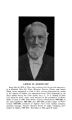
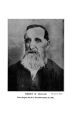
Show 124 THE UTAH STATE HISTORICAL QUARTERLY DANIEL H. WELLS' NARRATIVE* I finally left there (Nauvoo, Illinois) in the Spring of 1848 and arrived in Salt Lake City Sept. 20, 1848. The people (of Salt Lake City) were then living in the Fort. They had gone through the "Cricket War" and had got a little crop. The ground which had been cultivated around here that year in wheat had been eaten two or three times by the crickets, but finally some of it got to be about six inches high. I bought corn for $1.50 a bushel, and scarce at that. In the Fall of 1849 we had a Harvest Feast in S. L. City as crops were abundant that year. I was appointed Superintendent of Public Works in the Fall of 1848. The first house that was built was a little adobe place that was used for the Church office. Robert Campbell engraved the stamp for the coin that was made here. President Young conceived the idea of coining the gold as currency was very scarce then. Gold dust from California was about the first currency we had. The gold was coined up into 2y2> 5, 10, and 20 dollar pieces. The dies and everything connected with the coining were made here. The coin was made of pure gold without alloy, which made it deficient in weight, therefore it was discounted and sold as bullion. We laid out the Temple and the Council House sites, and commenced to build the latter right away. The little office that was the first place built was one storey, about 18 x 12 feet, slanting roof which was covered with boards and dirt. This remained the Church office for about two years and a great amount of business was done in it. In the Spring of 1849 we went out on the lots and commenced building. The foundation of the Council House was laid in the Spring of 1849, and then the first storey was put up. A great many temporary buildings went up in 1849. The first Indian trouble was a little scrimmage between some sheepherders and some Indians in the county adjoining here, but •This is an unchanged portion of a statement made in 1884 for the use of historians working- on Bancroft's History of Utah, published in 1889. This statement was not published, but was used as a basis for many disconnected statements appearing in that history. Of the statement, Bancroft says (p. 331): "The Narrative of General Daniel H. Wells, Ms., gives an account of the disturbances in Hancock County, the troubles at Nauvoo before the exodus, the journey to Winter Quarters, the organization of the Nauvoo Legion, and of the State of Deseret; but perhaps the most valuable portion is a condensed narrative of all the Indian outbreaks between 1849 and 1864, a task for_ whic*. General Wells, who during this period had charge of the Nauvoo Legion and aided in suppressing some of the disturbances, is specially qualified." The manuscript is in the Bancroft Library, Berkeley, California, whose Librarian has kindly permitted its reproduction here. DANIEL H. WELLS' NARRATIVE 125 was not a regular hostile movement. The place where it occurred was Battle Creek, now called Pleasant Grove. People then began to settle in Provo building right on the south side of the river. Our people fraternized with the Indians a good deal and got quite familiar with them; but they commenced their depredations, killing cattle, &c. They would also go to the houses and demand food and the women got frightened. They were permitted in the Fort just the same as anybody else, and they got quite saucy and unbearable to the people who could no longer stand it. During the winter of 1849 and 50 the Provisional State government of Deseret was organized and President Young elected Governor. We had a legislature, and I was elected General of the militia of the state, or the Nauvoo Legion, as it was called. We also had a company of what was called Life Guards. Military districts were organized, one in each county. At first in most of the districts there was only sufficient for a company or battalion with a captain at their head. When a district had enough we would form a brigade and elect a Brigadier General, and when sufficiently increased in numbers a division was formed with a Major General at the head. Each district made returns direct to the Adjutant General's Office. During that season this Indian trouble grew into hostilities and the people called on us for help, and Governor Young directed that I should send out assistance. I sent George D. Grant with about 50 men as quick as we could raise them, and John Scott staid to raise other 50, but when the time came he declined to go. The Indians were camped on Provo Bottoms which was then covered with timber and brush, forming quite a hiding place for them; and they would shoot from under their cover. One man was killed and four or five others wounded. The people did not seem to be successful against the Indians, and they requested me to go down, which I did and took charge of the expedition. Colonel Stansbury was here at the time. Lieutenant Hawland of the U. S. Army went out, but he got disgusted and came back about the time I went out. The Indians had guns as well as bows and arrows. Before I went down they had improvised a battery and put in on truck wheels which could be shoved along before them to protect them from the Indians' fire, because the Indians would pick them off from under their cover. This battery did good service and had a good effect in frightening the Indians. The night that I got to Provo there was a great snowstorm. I had never been in Utah Valley be; fore, and we got there about three o'clock in the morning. After 126 THE UTAH STATE HISTORICAL QUARTERLY having a little rest I organized the troops and declared martial law. Took all the men and brought them into service. As I was ordered not to leave the valley until every Indian was out, I seized everything there in the shape of provisions &c to keep the men on. We went out to search for these Indians and found that a portion of them had left this cover and gone into what is called Rock Canyon, and the others had gone south. Snow, was then about two feet deep which made it very difficult to travel. With the majority of the troops I went out to Spanish Fork on the Indian trail and left a guard at the mouth of Rock Canyon to keep those Indians there, but some of them made their escape over the mountains. We encountered the Indians near the north end, on the west side of the mountain, east of the south end of Utah Lake, and completely defeated them. During the whole expedition 27 warriors were killed. Their squaws, with their papooses and children, as is usual with them, threw themselves upon the victorious party for protection and support; we brought them to the ctiy, fed and took care of them until spring when they ran back to their Indian camps. Many of them died, not being able to stand our way of living. We cleaned all hostile Indians out of Utah Valley, but some escaped. There were settlements being formed in Sanpete, and I sent a detachment to notify the people in Manti that the Indians were ho.-,tile, and for them to be on their guard. We had peace for some time after that. Our policy was to conciliate the Indians all the time.-No trouble between 1850 and 52. In 1852 there was trouble in Tooele where settlements had been formed, between the settlers and the Indians, and a company went out there; but I think the Indians got the best of it, and got away with the stock. We always consider it cheaper to feed and clothe the Indians than to fight them, and so long as we can get access to them to feed them &c. we have no trouble with them; but when they get out of the settlements into the mountains there is danger of depredations &c. by them. In 1848 some Indians came in here with two Indian children offering them for sale. It appears that the tribes of Goshup and Wanship were at variance resulting in a fight between them in which Wanship was killed, and among other prisoners these two children were taken; and as they kill their prisoners unless they can sell them, these children were offered for sale. Charles Decker bought one of the prisoners which was a girl and President Young afterwards brought her up. She afterwards married an Indian chief named Kanosh. DANIEL H. WELLS' NARRATIVE 127 Walker was the chief of the Ute Indians. They were committing depredations in Sanpete County, and other places, and Walker professed to know nothing about it. Walker, as I understand 4t, did not inherit the Chiefship; he became chief through his success in making raids on California herds. When an Indian possesses horses and cattle enough to mount and feed others, he is at once recognized as a big man among them. That's the way I think Walker got his prestige. Uinta was the great chief of this nation, and Ora, now dead, was the head chief of the Ute nation. Walker got his name,I think, from a mountainier of Southern California by that name. I cannot tell whether they made any demonstrations in Sanpete before or after they shot the guard in 1853. Capt. Gunnison was topographical engineer for the government. He and his party came in by way of the Spanish Fork trail; they landed (stopped) in Gunnison (sic) where they obtained an interpreter. They were warned about the hostile state of the Indians. Capt. Gunnison knew we were friendly with the Indians, and he himself knew how to get along with them, and he thought he could get along without any difficulty. He went from there to Fillmore where he got supplies. Before they got to Fillmore they divided; he took, I think, 8 soldiers from Beckwith, and Beckwithcamped on the Creek near Fillmore with the remainder of the men, while he detoured Sevier Lake in Millard County. It was perhaps 40 miles west of the settlement from where Beckwith remained. Anson Call, now of Bountiful, Davis Co., had charge of Fillmore. Previous to Gunnison's going there some emigrants passed through, they went by the southern route thinking to escape hostile Indians. These Indians were exercised, but they had not committed much depredations up to that time. They had, however, shot two or three men and driven off some stock in Sanpete. Pavantee, the chief, acknowledged Kanosh as their chief. They were decidedly friendly, and they used their influence with Walker and others to quit their depredations. The Indians declared they would shoot the first Indian that came to their camp. It was customary with the Indians to come to our camps while crossing the plains. We often hired them to herd our stock and to make them feel friendly. We have found, if you trust an Indian when he comes to your camp, he will riot betray the trust; but if you act as if you were afraid to trust him and don't do so, he is very likely to steal, that is, if he can. In trusting Indians and treating them as human beings, we have never known them to fail to bring up our stock. If they see stock about not herded they feel as though they had a right to take it,, as they would take any wild game. I don't think 128 THE UTAH STATE HISTORICAL QUARTERLY Indians should be killed for stealing stock; they don't consider stealing a crime as we do. These emigrants declared at Fillmore to our people that they would shoot Indians at sight, if they came around their camp. Mr. Call told them these Indians were friendly, and they would be sure to come to their camp as was their custom hoping to get something to eat or some little present. Bro. Call warned them against shooting the Indians, telling them if they did so the Indians would surely seek revenge. This warning, however, was not heeded; they felt quite prepared to defend themselves, and didn't care. When Indians are hostile they will withdraw to the hills; they won't come around your camp. But these Pahvant Indians came around the emigrants' camp as was their custom around ours. The result was, they killed one Indian and wounded one or two others. The Indians retaliated, shooting one of their number, I think his name was Hart. They returned to Fillmore. Bro. Call told them they had done wrong. They wanted Call to furnish them an escort. He told them he could not spare any men as they themselves were not strong enough. They started on again. Call told them the Indians would follow them in all probability; and sure enough they did. Call said he heard from them; they went as far as Cedar Valley followed by the Indians; somewhere in this region they gave up the chase, and started to return. They reached Sevier Lake at the time that Gunnison and party were there. The Gunnison party consisted of himself, two engineers named Creutzfeldt and Kern, 8 soldiers, a cook, and Potter, who was the guide and interpreter. They camped within a hundred yards of the brush. In order to be safe they, should have kept farther out. I don't know whether they had finished making their observations, but they calculated to move that day-the day they were killed. The Indians fired on the party out from the brush, while the party were at breakfast, sitting at table, killing Gunnison, Creutzfeldt and Kern, also the cook. Potter and the soldiers were after the horses. Potter and four soldiers were killed, and four soldiers escaped. We were accused of killing the Gunnison party, as we were accused of the Mountain Meadow Massacre. We regarded Capt. Gunnison as one of our best friends. He had been here with Capt. Stansbury and party, and was well liked. Before Gunnison fell, he raised up his hands to the Indians, thinking he could get them to stop shooting. They were too mad, though, and Gunnison's was the first party of white men they met after the affair, and they avenged themselves, as is their wont to do. Gunnison had been warned about it, and our own people felt unsafe, at Fillmore, because of the hostile feeling of the Indians. Walker at the time was away; he and DANIEL H. WELLS' NARRATIVE 129 others had made a raid and left. The emigrant company was said to be from Missouri; that is all we knew about them.' They passed through Salt Lake, but there was no particular attention paid to them, as they were merely an ordinary train. This was in September, 1853, I think. An accusation was gotten up against the "Mormons" for the killing of Capt. Gunnison and party. His brother, among others, believed the report. He appeared, at first, scared. He went to see Call at Bountiful, and declined Call's hospitality to stay over night, and Call thought, from his manner, that he was afraid. They made an appointment to meet in this City (Salt Lake) and did meet. Call produced his diary from which he read particulars of the affair, as recorded by him at the time. After a full and free investigation he expressed himself fully satisfied that the Mormons had nothing whatever to do in the matter. This, of course, was a long time after the occurrence, and I naturally suppose that he had been laboring all that time under the impression that his brother met his death through "Mormon treachery." Of one thing I am sure, no one regretted the affair more than we did. We considered his death a great loss as he was one of our best non-Mormon friends. Beckwith and party remained here two winters, I think. In 1854 these hostilities continued. We sent out troops more to help to defend the people and guard their stock, than to fight. That year Governor Young was travelling through our southern settlements, and we met Walker and his Indians at Chicken Creek. Made a truce of peace with him, and gave them presents. When we approached them Walker was in his "Wickeup"; he had fastened it down to within about 4 feet of the ground and had to crawl to get in and out. I remember our having a good laugh at him because of this. He sat in this "arrangement" like a prince and never rose at all. He remarked, through our interpreter, that Brigham was a big Chief, and Walker was a big Chief, suiting the action to the word he put up his two thumbs to indicate that he was as big a chief as Brigham, and Brigham as big as he. In the treaty the Indians agreed to give up the stolen horses-at least all they had of them then in their possession. Walker wouldn't talk, he had a child sick. If his child died, some one else, he thought might die, and it was a long time before we got him to talk. He asked us to administer to the child (through prayer and laying on of hands) which we did. Prest. Young asked him what he wanted in the way of presents. He said, "I don't know-you talk." I think he was afraid he would say something less than Prest. Young would give him. After this treaty Walker became very friendly. He travelled with us that day (on the way) to Cedar City and 130 THE UTAH STATE HISTORICAL QUARTERLY camped with u> that night. He did this for our protection, fearing that some of his Indians, who did not know of the treaty, might make a raid on us. We enjoyed good peace after that for several vears. Don't remember any Indian outbreak until 1864. Walker's headquarters was the Sevier, generally. He used to pay a visit to Sanpete once a year. His brothers were Arapeen, Sanpitch and Tabby. Tabby is now the acknowledged chief of the Uintah Indians. Arapeen, I think, succeeded Walker, and Sanpitch succeeded Arapeen. On visiting Sanpete they found the people were guarding their cattle expecting a raid. The Indians were in the habit of making requisitions on the people, and their demands were sometimes exceedingly large, so great indeed that the people were not able to meet them. If the people undertook to drive them off, they would perhaps shoot. At one town they were given food and appeared friendly. On their way out Arapeen shot a man while guarding stock. They stole some stock and killed one or two others. This was the commencement of hostilities of 1853, as near as my memory now serves me. From that time on, the people would defend themselves. 150 men went from Provo under Col. Conover. The people were counselled to send their loose stock to other settlements and to build forts. They have never attacked a town or settlement, but would make raids on poorer people. Arapeen was more of a public speaker than Walker, and afterwards proved himself the orator of the tribe. He would get mad if the people would not listen to him. He once undertook to dig open an Indian's ears because he refused to hear him. They were in the habit of stealing children from the Piutes and selling them to Mexicans from New Mexico, who came up to trade. You could scarcely tell the difference between them and the Indians, excepting the Mexicans wore hats. Slavery existed in Mexico at that time. Arapeen once had a stolen child that was sick; he could not sell it which made him cross and savage, and he took it by the heels, swung it around and dashed its brains out. Nothing but a fear of the consequences of an Indian war prevented our people from shooting him on the spot. It is customary among Indians when one tribe defeats another, for the women to throw themselves upon the victorious party to be cared for. This custom existed when we came here. The women of the Indians we killed (Timpminagoos[?]) threw themselves on our hands. We gave them out to families. Our people were all willing to take them and civilize them. Our fobd didn't agree with them as well as their own, and a good many died. When spring came and the Indians came around DANIEL H. WELLS' NARRATIVE 131 they left us with the Indians. The women did not manifest any sorrow that we could perceive. I suppose they took it as the chance of war. Indians have dared our people in some places to fight. In this, however, we have paid no attention to them. We have found it necessary at times to chastise them, to let them know who was the stronger party, and that they could not impose on you with impunity. We did this in 1850 and '53. The immediate action on the part of the Indians, that brought us out in 1853 was their insults upon the people when making requisitions for food and other things; also the shooting of the guard by Arapeen, and depredations that they continued to make from time to time. Gov. Young then issued orders on Provo and 150 men under Col. Conover went to assist the Sanpete people. About this time a company started west to fight Indians for stealing horses. Bills of expense amounted to $70,000. They were cut down to $40,000 and paid. This was for services rendered only (didn't include losses) about ten years afterwards, after sending out special agents to investigate. It was the only thing paid to the Territory by the Government, for suppressing Indian hostilities. In that campaign no regular battles were fought. You can scarcely ever get a regular battle with the Indians; they way-lay people, make raids; here today and somewhere else tomorrow. In order to get them in force you must attack their village or camp where their women are, as Custer did. After Gen. Connor came here the Indians were hostile up north; their camp was near Franklin. Connor fought and quelled them; they were better afterwards. I cannot bring to mind any hostilities until 1864, when they made an attack on Thistle Creek. In 1862 the Indians about the South Pass, along the mail routes, disturbed the carrying of the mails, and Prest. Lincoln sent a requisition on Gov. Young to furnish 100 men to protect the mails on the Eastern line. The men were raised in three days for 90 days. Our Lot Smith was captain of the company. They followed the Indians along the upper branches of Snake River, but never saw an Indian. They got the start of our men, and they were driving stolen horses which gave them the advantage of being able to change saddle horses, while our boys could not. It was a common thing for our boys to reach their camp at night and find their fires burning. The wall around Salt Lake was built in 1853. It was usual for our people to protect themselves by building what we called a fort--a place the people could get into in the event of a raid. Our wall was a kind of concrete. In Mount Pleasant their walls 132 THE UTAH STATE HISTORICAL QUARTERLY were built of cobble rock, parts of which are now standing. At that place they put a grist mill inside, so the Indians couldn't cut them off. At Nephi the Indians did cut them off from their grist mill. I don't remember the immediate cause that led to the attack on Thistle Creek in '64. Generally, however, we have found the cause of hostilities have arisen from some imprudent or unwise act on the part of white men. It sometimes, however, would require the patience of Job to keep clear of trouble. About that time they stole some potatoes at Manti, and they whipped an Indian whom they caught. They came in considerable forces and demanded pay, and the man who "went for" the Indian had to give up his cow to satisfy them for it. Such things were very trying on our men's feelings, especially when it was about all they could do to live and support their own families. The cause of the Thistle Creek affair was this: The Indians attacked a family or two who were ranching-making butter, and killed some women and drove off stock, went to the mountains and would make raids. After that they killed some men on the road and took their cattle from their wagons. Our people were not strong enough to withstand them at Salina, and they (the Indians) knew it, and they would come out on the mound and dare the people to fight. Hostilities continued through 1865-6. The raid on Salina was made in 1866, and another was made on Scipio; at the latter place they got away with the cattle. Then I went out and was gone two months. They had killed a good many of our people. (For the Gravelford expedition, at this time, Gen. Wells referred to the report in the Adjutant General's Office. This report was ordered printed by the House of Rep., and referred to a committee on Militia.) |