| OCR Text |
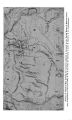
Show Utah Historical Quarterly State Capitol, Salt Lake City Volume 5 July, 1932 Number 3 EARLY PRINTING IN UTAH OUTSIDE OF SALT LAKE CITY By Douglas C. McMurtrie The activities of the printing press in the early days of Salt Lake City have received a certain amount of attention from general historians and from students of journalistic and typographic history. But our knowledge of pioneer printing in Utah communities outside of Salt Lake City is regrettably scant and unsatisfactory. The present resume of the record of the Utah country press in its beginnings is here set forth in the hope that its publication will elicit from authorities on local history some information that will add to the little we know about the pioneer printers. Except for the printing done at Fillmore when the official press of the Deseret News was driven to that point1 during the military disturbances of 1858, the first appearance outside of Salt Lake City of a regularly established Utah printing plant was in 1863. In that year, Joseph E. Johnson, a Mormon who had come to Utah from Nebraska in 1861, established a semi-monthly agricultural periodical called the Farmer's Oracle. The only issue of this paper which I have been able to find is in the Bancroft Library of the University of California. It is Volume 1, No. 9, and its date line reads "Spring Lake Villa, Utah County, Utah, Tuesday, September 22, 1863." Spring Lake Villa was a small settlement between Payson and Santaquin, some fifty or sixty miles south of Salt Lake City. Its few inhabitants abandoned the place later in the sixties because of trouble with the Indians. The date of the ninth issue of the Oracle indicates a beginning in July, or perhaps June, 1863. The copy before us contains an apology for "having missed the date of one number" because of the fact that "circumstances over which we had no control have denied us paper, and even the lean supply at present is of m- 'Aecordine to one authority, the Deseret Hews plant was divided between Fillmore and Paroj an, and the paper a p p ^ d now in one'place a„d now in the other (Charles W. Penrose. "The DeS«,e<News, the Pioneer Newspaper of the West," Utah Genealogical and Historical Magaz.ne. vol. 3. July, 1912, p. 1411. But the files <.f the AVu's for 1858 show no issues dated at Parowan. 84 T H E UTAH HISTORICAL QUARTERLY T H E r A R M E R S ' O R A C L E. Publuhed th* first and third Tuesday in each month, J. E. JOHNSON, EDITOR * PUBLISHER. W. D. JOHNSON, - - - pRoraiETo*. SUBSCRIPTION, r-er Ann. *2. ADVERTISEKENTS, 10 ai tltm. Afairdii n;n*Dii>l and vlenhnril, HBHU, Tain publiahod » • j . r line. < S a l u t a t o r y . W« ar« pleased once more to say to. eur friends, old and new, one and ail how d'ye do? Fate, or some well-mean ing power, places us again upon the tri pod,and so we submit, with this our best how and a grand flourish of our feather. As we hare eschewed politics, we come now to the aid of a science more pleasant, profitable and successful, and hope •ur change will not worse our readers, Our interests DOT- will bo to raise potatoes instead of armies-to count cabbage instead of votes-to s-.ick our "poll" for beans, instead of members of Congress- our "beets" will he of the scarlet sort- our "o'uVs" of the gourd species-our "•tump" meetings where our cabbage seed grows, and our "great gathering^'' in autumn-from the garden. Such ii life-all change- "i.U, CM! wbnt I. thcr* In Earth'i Tirlom rango, Which tine and absence 11117 »»t anrsly ch&ugf." It is our desire to bo useful (as well as ornamental), and HO if you like to try ua once more, come on, and wo will promise the best we have. Wo want to live with yoirhire, and earn our way among yon, and this last we are determined to do. So hero's our hand ! Our Paper.i-The Prospect. WE wiah to eay to our patrons that wc hare commenced the publication of the Oracle under circumstances rather discouraging to the dollar-and-cont interest of tho publisher; situated far away from markets where necessary "naterinl can only be obtained, and purchased at great expense, for cash only. Then wo are sadly annoyed for want of Sm ejtfwngft that **t ' o -v-ielly handled nnd transported at small expense; thcr again our little paper is an iunovatiou upon our customs and habits, consequently many will jirgue that, as they have got along first-rato without such an institution, they can profitably continuo with out, and will scarce discover their mistake until the progrcds of improvement has left them far behind. We earnestly believe that our vallicf Kid adjacent mountains contain the elements for our necessities, and material nough to make comfortable and ever enrich its inhabitants; yet it takes science, skill, industry, perseverance am. pplication to bring out the hiddc:* ivealth, and develop the many comforts few countries ever offered a wider field for the industrious, the energetic or scientific in the various details of home industry. The farmer, through hia own • 111J the experience of others, finds room for great improvement in the quantity i f liis crops with less than former labor [lis stock may be improved and increase" when an interchange of experience i.- adopted. The pomoIogiBt may learn where is to be obtained the best stock of fruits, and teach and learn the bcBt modes of cultivation, propagation, &o. Th" mechanic falls into the advancing column,and produces,withless hrboraud expense, tho aecssaries of life, and soon, by division of labor and union of mean: ind strength, our artizans may stay importations by supplying all our mo-important wants. With a limited research, discoveries have already beci made of fine beds of stone coal, gypsum (plaster of Paris), salt, brimstone, salc-iMtus, copperas, alum, nitre, borax, iron, lead, and some otaer valuable metals, at well as springs of coal oil, mineral or chalyleate maters of rare medicinal virtues; limestone, chalk and colored earths may also be enumerated. Now with tho farmer and stock-grower, producing a surplus of coreals, vegetable!!, fruits, wool and cotton, and the industry of the mechanic showing itself in' rearing of better and more extended machinery; our chymist dissolving, purifying, melting and bringing to perfection our mincriis, wo only need the aid of science and the blessinirs of Heaven to lead us on with gigantic strides to an elevated and envious position among the sisterhood of States. Wo feel a Bort of inspiration to attempt assistance in this great cause that underlies our prosperity, nnd is the foundation of all social enjoyment; wealth nnd power. Those who feci the importance of tbii abject should enlighten his neighbor, od awaken a thirst for intelligunce and knowledge in every branch of domestic economy nnd industry, and whilst wo strive to assist you, let us not faint for want of sustenance. Should Jife and health be spared, we expect that the Oracle will be. published one year, whether well or-poorly sustained. TFiiat F r u i t s s h a l l w c g r o w 7 The above subject gives a broad field for comment, and in the present number can only make a contracted prelude to a subject of such importance, but in future issues we purpose making this a promt' neat feature in the Oracle. Fruit, in proper or extended variety, may constitute much of the material cf human existence, and taking all the range of climate in our Territory, we niny produce all of the most important varieties cultivated on this continent. Among the most staple of these are the early berries, such as strawbcriies, currants, gooseberries, raspberries nnd mulberries; the cherry, apricot, peach, plum, grape, apttlc, and pear. Of these and many other varieties, experience lia.« proven to be not only quite hardy, but from the abundance of fruit and rich flavor, we Erd the soil and atmosphere congenial to their growth. Then we may nuswer the question Above in rather a broad sense, and reply, grow every variety of fruit whose tree or Blirub may be protected from the frosts of winter. This question settled, our next in order is the easiest, best and cheapest manner of producing the stocks, starting from the oed, and covering the whole interim of their growth. First the nursery, then the suil most proper, time and modo ol removing to, and care of, the orchard. Wc hope our prominent fruit-growers will communicate the result t>f their experience in every Vranch of this subject, for wc shall be glad to present the snma to our readers. We shall, from time to time, detail our limited obecrvatiocs and experiments. We have introduced into this Territory quite a number of new varieties, and our experience in growing nnd propagating may be advantageous. Wc would say to nurserymen that now is the time to order seeds of every sort of fruit, evergreens and ornamental trees and shrubbery. Setting aside the comfort and convenience of having an abundance of fruit in variety, there is now no crop grown that jiaya a% well RB fruit; and in a country Editorial page, first number surface 8 ^ by l]1/^ inches. of Utah's second oldest newspaper, consisting of 8 pages, type EARLY PRINTING IN UTAH 85 different quality." The quality of the paper was indeed "indifferent," and the printing on it muddy and inferior. The Oracle consisted of eight small pages to an issue, three columns to the page. J. E. Johnson was the editor, and W. D. Johnson was named as proprietor. In Nebraska, Editor Johnson had been concerned with several publishing enterprises.2 In Utah he did not confine himself to his paper as a means of livelihood. Advertisements in the pages of the Oracle disclose the fact that he had for sale "A few choice pot-plants, including Verbenas, Geraniums, Ice-plants, Pansies, Antirrhinum, etc., also choice Carnations, Hadwigii, China grass and other Pink roots in autumn," as well as "Fruit and other Utah novelties," among them "Deseret current, Gilia longaflora (Scarlet), scarlet pens-tamon, Thousand-flowered Cone Cactus, a beautiful white variegated lily, and a few other desirable and beautiful sorts." The subscription price of the Oracle was two dollars a year and its advertising space sold for ten cents a line, but "Hymenial and Obituary Notices, and Reports of Agricultural, Manufacturing and Literary Societies, and Fairs" were published without charge. The Oracle lasted about two years; probably it ended with the abandonment of the settlement at Spring Lake Villa. Later, Johnson had moved to Saint George, in the extreme southwestern corner of Utah. On January 22, 1868, he there began the publication of a weekly which he called at first Our Dixie Times.3 The following May, the name was changed to Rio Virgen Times. This paper is said to have continued for about one year. After the Farmer's Oracle at Spring Lake Villa, the next undertaking of the press in Utah outside of Salt Lake City was the Union Vedette, published at Camp Douglas, a military post immediately adjacent to Salt Lake City, "by officers and enlisted men, for the California & Nevada Territorial Volunteers." This began on November 20, 1863, as a four-page four-column weekly. On "January 5, 1864, the publishers, who remained anonymous, added the Daily Vedette, the first daily in Utah. The intention at first was to continue both the daily and the weekly editions, but as the subscribers showed a decided preference for the daily, with its telegraphic news, the weekly was discontinued with the issue of January 14, 1864. Beginning January 27th, the daily was enlarged to the size of the former weekly and took the name Daily Union Vedette. 2In 1852, he had bought the Bugle, at Xanesville (now Council Bluffs), Iowa, and from that office issued the Omaha Arrow, printed in Iowa, but intended for circulation in the Nebraska settlement. In I860 he was publishing the Huntsman's Echo at Wood River Center, Nebraska. 'The Latter-Day Saints Library at Salt Lake City has vol. 1, no. 6, February 26, 1868. 86 THE UTAH HISTORICAL QUARTERLY In July, 1865, Great Salt Lake City was substituted for Camp Douglas in the date line of the Vedette, and the page was again enlarged, to 14 by 20y inches, six columns. After it had become a Salt Lake City paper, the Vedette passed into civilian ownership with the issue of October 22, 1866, when P. L. Shoaff & Co. appeared as publishers. The recorded file ends in November, 1867.4 The establishment of a press at Saint George by Joseph E. Johnson in January, 1868, has already been mentioned. There is a record of a second paper started in that remote locality in the same year. It was the Cactus, published by Sangiovanni & Co. The only extant copy of this paper that I know of is Vol. 1, No. 2, September 19, 1868, in the library of the Masonic Grand Lodge at Salt Lake City. It is a little four-page affair, measuring barely 6 by 8 inches, and crudely printed. The next Utah point, other than the capital, to have a press was probably Ogden, to which place the Daily Telegraph was removed from Salt Lake City in May, 1869. But the paper could not survive the change and was taken back to the capital the following August. Ogden was not long, however, without a paper of its own. On January 1, 1870, Franklin D. Richards started there the Ogden Junction, a semi-weekly. Richards withdrew from the enterprise soon after its inception and was succeeded by Charles W. Penrose. The paper was later renamed the Ogden Herald.5 The present-day Standard-Examiner at Ogden traces its descent from the Junction of 1870. Provo seems to have received its first press with the establishment of the Provo Daily Times on August 1, 1873. This paper had many changes of name, appearing successively as the Provo Tri-Weekly Times, the Utah County Times, the Utah County Advertiser, and the Territorial Enquirer. Among its early editors were R. T. McEwen, R. G. Sleater, S. T. McEwen, and John C. Graham.6 Early in 1874, the Beaver Enterprise, established by Joseph Field, brought the press to Beaver City for the first time.7 This location thus became the fifth Utah printing point, outside of Salt Lake City, of which record has been found. Next was Silver Reef, a now extinct mining camp ten or fifteen miles northward from Saint George, where the Silver Reef Echo was established on February 24, 1877, by Joseph E. Johnson of whom we last had record at Saint George. This paper was probably purchased 'Information concerning the Vedette is derived from the file in the Salt Lake City Public Library. "From a manuscript account of Mormon journalism by Franklin D. Richards, in the Bancroft Library. It contain, a record of Mormon publications down to July, 1884. "Information from the Richards manuscript. 'Or. cit. JOURNAL EXTRACTS OP HENRY W. BIGLER 87 by Crouch and Louder and renamed the Miner, which was successively edited by James N. Louder, Scipio A. Kenner, and Edward and John Pike.8 With these few notes, the available record of the Utah country press in the early days may be said to end. The record as it stands is admittedly faulty, and corrections and additions are much to be desired. Particularly desired is information about the old-time printers and editors. Also welcome would be notes of copies of old Utah country newspapers of the seventies and earlier. It is suggested that these notes should contain not only the dates of the papers, but also their volume and serial numbers and mention of the names of the publishers. EXTRACTS FROM THE JOURNAL OF HENRY W. BIGLER* Wed. 11th. We traveled about 28 miles, across a dry plain, suffering much with heat and thirst, to a river. I thought I would die for want of water before we reached the river. Many did give out by the way and were only refreshed by sending them full canteens of water. Thurs. 12th. Camp laid by while Captain Everett and a few pioneers went up the river to examine the route and to look for Walker's Pass, leading over the mountains. Fri. 13th. To-day we moved camp up the river ten miles, where we met Captain Everett and men who reported that they found nothing like a pass and that we could not cross the mountains with our pack animals. A meeting was immediately called at which it was decided that we take Fremont's route and go by way of Sutter's Fort, for we had no good map for the one we had brought from Los Angeles did not have the rivers marked in it, nor the names of streams, and to tell the truth we do not know where we are, only that we are somewhere in the mountains. Sat. 14th. The next morning we retraced our steps a few miles and crossed the river about 75 yards wide and made an early camp. Here we were visited by Indians. We told them we were their friends and did not wish to hurt them. They told us we could lie down in peace and sleep. They sang and danced in their way, which to us was quite amusing. 'Mark A. Pendleton, "Memories of Silver Reef," Utah Historical Quarterly, vol. 3, no. 4, October, 1930, pp. 99-118, at p. 108. •Continued from the Quarterly for April, 1932. |