| OCR Text |
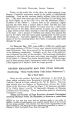
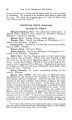
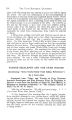
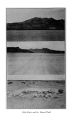
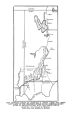
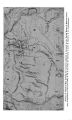
Show AMERICAN POSTS 27 Taking into consideration the nature of the country, the information in Smith's letter, and the story of the Indians, I believe it can be stated with a reasonable degree of accuracy, that Jedediah S. Smith crossed the Great Salt Desert over approximately the route of the present Goodyear or Sieberling Cutoff of the original Lincoln Highway, (now abandoned), running between Orr's Ranch in Skull Valley and Gold Hill, western Utah. The feat of crossing this great unknown country between the Sierras and the Salt Lake, with only two companions, has never been fully appreciated by historians, partly because Smith himself makes such brief mention of it, but principally because of the historians' lack of knowledge concerning that section of the west. Few persons today-few even in Utah-have ever seen the Great Salt Desert or the country which lies to the west of it. The desert between the Sierras and the Sink of the Humboldt is desolate enough, dangerous enough, even for the hardiest explorer. But the Great Salt Desert, stretching for 75 miles without water and without any vegetation whatever, reflecting froim its salt-encruste.d surface all the heat of the summer sun, confusing the traveler with its beautiful mirages and choking him with its salt-laden winds; enmeshing his feet in its bottomless mire and sapping his energy with its shifting sand dunes, presents the most desolate and dangerous stretch of desert in America, with the exception of Death Valley itself. Jedediah S. Smith, crossing this desert for the first time, with no knowledge of what lay before him, achieved one of the greatest single exploits in the whole history of western exploration. The next article of this series will deal with the Bartleson- Bidwell party of 1841, the first to cross the Salt Desert with wagons. AMERICAN POSTS (Continued) By Edgar M. Ledyard Hindrnan, Fort. ("Arkansas Post"). Left bank of the Arkansas River; fifty jmiles above the mouth, in the southern part of Arkansas County. Built by the Confederates. Arkansas. Holabird Quartermaster Intermediate Depot. Five and one-half miles .southeast of Baltimore, Maryland. Maryland. Holmes, Fort. On Mackinac Island, north of Fort Mackinac. Michigan. Holt, Fort. Temporary work at the mouth of the Ohio, opposite Cario, Illinois. Kentucky. 28 THE UTAH HISTORICAL QUARTERLY Hook, Fort. Temporary fort in Florida War, eleven miles south of Fort Wheelock on Orange Lake, and 17 miles west of Fort King. Florida. Hoover, Fort. In Rockingham County, at Harrisonburg. Virginia. Hope, Fort. Canada. Hoskins, Fort. (Military). On left.bank of the south fork of Yamhill River, present town of Hoskins, Benton County. Oregon. Hot Springs Army and Navy Hospital, Hot Springs, Arkansas. Houston, Fort Sam. Fort Sam Houston was founded in 1865; it is the headquarters of the Eighth Corps Area. Ordinarily about 12,000 troops are barracked at Sani Houston and every branch of the service is represented-infantry, cavalry, artillery, tank and transport. The original size of the post was about one fourth of the present area of 1,000 acres. In addition, the Government has the use of 20,000 acres nearby for field maneuvers. Fort Sam Houston is one of the most desirable stations, among the various posts, in the United States. The Alamo, located in the business center of San Antonio, is of great interest to Americans. The Alamo was built about 1718. On March 6, 1836, while garrisoned by Texans, it was attacked by General Santa Ana of the Mexican Army. All but a few of the garrison were killed; among them were Travis, Crocket and Bowie, of frontier fame. Those who surrendered were immediately put to death by General Santa Ana. Albert Sidney Johnson, Robert E. Lee, George H. Thomas, W. H. Carter, Henry T. Allen and many other noted soldiers have been on duty at Fort Sam Houston. The Fort and military reservation are located near the City of San Antonio, Texas. Howard, Fort. Seventeen miles southeast of Baltimore; established in 1900. The reservation covers 149 acres and the post is situated at North Point on Patapsco River. In 1914 four companies of Coast Artillery were stationed there. Maryland. Howard, Fort. One of the defenses before Petersburg. Virginia. Howard, Fort, on left bank of Fox River, 14 miles from its mouth at Green Bay, Brown County. Wisconsin. Howell, Fort, in the vicinity of Hilton Head, due east from Fort Wells. South Carolina. Howes' House (1810-11), Hudson's Bay Company Post. Montana. Hoyle, Fort, at Edgewood. Maryland. AMERICAN POSTS 29 Huachuca, Fort. Located in Cochise County, Arizona, 22 miles from Tombstone, Arizona, near the southern border. Arizona. Hudson Battery. On Staten Island; right bank of Narrows, entrance to New York Harbor. New York. Hudson, Camp. At second crossing of the San Pedro, 34 miles from its mouth on the Rio Grande. Texas. Huger, Fort, at the junction of the Blakely and Apalache Rivers, northwest of Spanish Fort. Built by the Confederates to command Blakely River and nearby points. Alabama. Hugh, Camp, Bibb County. Alabama. Hughes, Camp, Manitoba. Canada. Hughes, Fort, on the island of Pulo Caballo, Manila Bay. Philippine Islands. Hulbert, Fort. Temporary fort established during Florida War, about 13 miles from coast, and midway between Forts Andrews and Frank Brooke. Florida. Hull, Fort. In central part of Macon County, five miles due south from Tuskegee, near the Caleebee Creek, tributary of the Tallapoosa River. Alabama. Humboldt, Fort. The site of this old post is at Bucksport, about three miles south of Eureka, in Humboldt County. The site of the post is well defined and well-known to residents in the vicinity. Some of the old buildings were standing in 1924. In August, 1853, U. S. Grant was promoted to the grade of full captain in the Fourth United States Infantry, at Fort Vancouver, Washington Territory; in October of the same year, Captain Grant was ordered to Fort Humboldt and took command of Company "F." While a captain at Fort Humboldt, Grant and three other officers Teased the Union Hotel on Kearny Street, San Francisco, at $500.00 per month, with the idea of subletting it. This enterprise was a financial failure. When Grant was at Fort Humboldt, the nearest town was Eureka, three miles north. The principal citizen of Eureka at that time was James F. Ryan who surveyed the town, operated a sawmill and afterwards became a brigadier general of the militia and a member of the California Senate. Grant and Ryan were great friends, according to Albert D. Richardson, one of Grant's biographers. Richardson states that Ryan kept a barrel of whiskey on tap and that his table was loaded with local game and bread made from Genesee, New York flour. Visitors to Old Fort Humboldt are still shown a well-worn path, said to have been established by Grant while making pedestrian trips from the fort to a nearby saloon. Grant called the Humboldt Bay clams "a first-rate substitute for gutta percha oysters." California. Humphreys, Camp, (Engineers), Accotink. Virginia. 30 THE UTAH HISTORICAL QUARTERLY Humphreys, Fort. Fifteen miles southwest of Washington, D. C, in Fairfax County, on the Potomac River, at Accotink. Virginia. Hunt, Fort. In the District of Washington; lV/2 miles south of Washington, D. C. Virginia. Hunter, Fort. Temporary fort in Florida War, right bank of St. John's River, about 1/4 miles south of Pilatka. Florida. Hunter, Fort, Montgomery County. New York. Hunter, Fort, Daughin County. Pennsylvania. Huntington Smith, Fort. One of the Civil War defenses of Knoxville, east of the city and north of the Holston River. Tennessee. Hyndshaw, Fort. On January 12, 1756, Benjamin Franklin issued instructions from Bethlehem, Pennsylvania, addressed to Captain Vanetta of Upper Smithfield Township. Captain Vanetta was directed to raise a company of soldiers of not less than 30 able men to be engaged for a period of one month. The Province had no money to furnish arms or blankets and each man who enlisted was directed to bring his own equipment, for the use of which he would be allowed $1.00, for the entire period of enlistment. Captain Vanetta was directed to keep a journal in which all the activities of the men, including desertions or deaths were to be reported. The men were advised that if attacked by the Indians, they were to kill and scalp them; also that they would be paid $40.00 for each scalp brought in. Drunkenness and immorality were forbidden. Some fifty soldiers signed the following obligation: "Jany. 12th, 1756. "We, the Subscribers, do hereby engage ourselves to Serve as Soldiers in his Majesty's Service, under the command of Captain John Vanetta, for the space of one Month, and whoever of us shall get drunk, desert, or prove cowardly in Time of Action, or disobedient to our Officers, shall forfeit his Pay. This Agreement we make in Consideration of being allow'd at the rate of Six Dollars per Month, Wages, one Dollar for the Use of a Gun and Blanket, to each Man who shall furnish himself with them, and the Provisions and Rum mentioned in a Paper hereunto annex'd." (Penn. Arch., ii, p. 547.) This was one of the shortest enlistments in the history of. this country. Henshaw was one of the Lieutenants and from the inclusion of his name in the records, the name, Henshaw, q. v., may have become confused with Hyndshaw. When the fort was completed it was about 70 feet "each way" and very "slightly Staccaded." The bastians were later rebuilt and all trees and other obstacles cleared for a distance of 300 yards around the post. Pennsylvania. AMERICAN POSTS 31 Independence, Fort, in Owens River Valley. California. Independence, Fort, (Castle William). On Castle Island. Built on former site of Castle William at the inner entrance to Boston Harbor. Massachusetts. Independence, Fort. On south bank and at mouth of East Creek, Orwell County. Vermont. Indianapolis Arsenal, Indianapolis, Marion County. Indiana. Indianhead Naval Station, Maryland. Washington, D. C. Inge, Fort. Left bank of Big Leona River, about 5 miles below its source at Leona Spring, in Uvalde County. Texas. Iona Island Naval Magazine, Iona Island. New York. Jackson Barracks, on left bank of the Mississippi, three miles below New Orleans. Louisiana. Jackson, Camp. Six miles east of Columbia. South Carolina. Jackson, Fort. Temporary work, left bank of the Coosa, two miles northeast from the junction of Alabama and Tallapoosa River. Formerly Fort Thoulouse." Alabama. Jackson, Fort. Temporary fort, established during Florida War, 13 miles.southwest from Columbus, on the road to Tallahassee. Florida. Jackson, Fort, on right bank of Savannah River, three miles below Savannah. Georgia. Jackson, Fort. On right bank of the Mississippi at Plaquemines Bend, nearly opposite Fort St. Phillip, and 70 miles below New Orleans, at Triumph, Plaquemines County. Some writers give the distance below New Orleans as 78 miles. Fort Jackson was built during the years 1824 to 1832 and enlarged and repaired in 1841. The State authorities of Louisiana seized Fort Jackson and Fort St. Phillip in 1860 and fortified them strongly. These forts were captured on April 28, 1862, by Commodore Porter of the Federal Navy. Louisiana. Jackson, Fort, (1833). North bank of Milk River. Montana. Jackson, Fort, St. Lawrence County. New York. Jackson, Fort. On James Island. The first independence -flag displayed in South Carolina'was at the taking of Fort Jackson, September 13, 1775. It was blue with a white crescent in one corner. This was the flag rescued by Sergeant Jasper in the attack on Fort Moultrie on June 28, 1776. South Carolina. Jackson, Fort. One of the Civil War defenses of Washington, D. C.; south side of the Potomac, at Long Bridge. Virginia. Jackson, Fort. At Mineral Point. Built during the Black Hawk War. Wisconsin. Jacqua, Camp. In northwestern California on Fort Humboldt and Fort Gaston Road. California. James, Fort, on right bank of Alatamaha River, two miles above the mouth of Beard's Creek. Also called Old Fort. Georgia. 32 THE UTAH HISTORICAL QUARTERLY James, Fort. On right bank of Ogeechee River. Built by the Confederates. Georgia. James, Fort. About the year 1664 the Dutch Settlement at Fort New Amsterdam was captured by the English and the name of the Fort was changed to James (See Fort William Henrik). New York. ^ James, Fort. At junction of Firesteel Creek with the James River, Alexandria, Hanson County. South Dakota. Jameson Battery. One of the defenses of Washington on right bank of Eastern Branch. District of Columbia. Jasper House. This post was situated at the outlet of Lake Jasper, an expansion of Athabasca River. It was an important trade outpost of the Hudson's Bay Company on the east side of the Rocky Mountains between the eastern ends of the Athabasca and the Yellow Head passes. It was named in honor of Jasper Haws, a clerk in the Northwest Company. This post was built about 1800. The name "Jasper House" is preserved in the name of a station on the Canadian National Railroad in this vicinity. Canada. Jay, Fort, now called Fort Columbus. On Governors Island, New York Harbor. (See Governors Island). A United States military post, established in 1806. The area of Governors Island, on which this fort stands has been increased by refilling the shallow waters near its shores. The island is so named because it was a perquisite of the royal governors, from which it derived its name. Governors Island has been used as a quarantine station and garrisoned by American and British troops at various times. The Island was deeded to the United States in 1800 and a per: manent fortification was built upon the site of the original Fort Jay which was an early earthwork. In 1812, the "South Battery" was added. Extensive improvements were begun in 1901. These included docks, warehouses, barracks and officers' quarters. New York. Jefferson Barracks, on right bank of the Mississippi, below St. Louis. This post was established by Order No. 66 on October 23, 1826. It is located near the city of St. Louis and one of our most important army posts. Jefferson Davis, Lee, Johnson and many noted officers have been stationed here. Blackhawk was confined here. Washington Irving visited Blackhawk here and Catlin painted Indian pictures at this post. In South St. Louis; ten miles south of St. Louis. Missouri. Jefferson, Fort. On Tortugas Island. Garden Key, Dry Tortugas, in the Gulf of Mexico. Florida. Jefferson, Fort. On the Mississippi River; longitude 89.54 west, latitude 36.36 north. Kentucky. (Continued) Utah State Historical Society BOARD OF CONTROL (Terms Expiring April 1, 1933) J. CECIL ALTER, Salt Lake City JOEL E. RICKS, Logan WM. R. PALMER, Cedar City PARLEY L. WILLIAMS, Salt Lake City ALBERT F. PHILIPS, Salt Lake City (Terms Expiring April 1, 1931) GEORGE E. FELLOWS, Salt Lake City WILLIAM J. SNOW, Provo HUGH RYAN, Salt Lake City LEVI E. YOUNG, Salt Lake City FRANK K. SEEGMILLER, Salt Lake City EXECUTIVE OFFICERS 1929-1930 ALBERT F. PHILIPS, President J. CECIL ALTER, Secretary-Treasurer Librarian and Curator Editor in Chief WILLIAM J. SNOW, Vice President All Members, Board of Control, Associate Editors MEMBERSHIP Paid memberships at the required fee of $2 a year, will include current subscriptions to the Utah Historical Quarterly. Non-members and institutions may receive the Quarterly at $1 a year or 35 cents per copy; but it is preferred that residents of the State become active members, and thus participate in the deliberations and achievements of the Society. Checks should be made" payable to the Utah State Historical Society and mailed to the Secretary-Treasurer, 131 State Capitol, Salt Lake City, Utah. CONTRIBUTIONS The Society was organized essentially to collect, disseminate and preserve important material pertaining to the history of the State. To effect this end, contributions of writings are solicited, such as old diaries, journals, letters and other writings of the pioneers; also original manuscripts by present day writers on any phase of early Utah history. Treasured papers or manuscripts may be printed in faithful detail in the Quarterly, without harm to them, and without permanently removing them from their possessors. Contributions and correspondence should be addressed to the Editor, Utah Historical Quarterly, 131 State Capitol, Salt Lake City, Utah. |