| OCR Text |
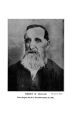
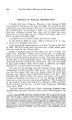
Show FORT DUCHESNE'S BEGINNINGS 31 FORT DUCHESNE'S BEGINNINGS By Henry Fiack I shall try and give the story of Fort Duchesne as near as I can remember. We were stationed, (I. K. F. and C. Companies, 21st U. S. Infantry) at Fort Fred Steele, Wyoming, at a point where the U. P. Railroad crosses the North Platte River. The latter part of July, or early in August, 1887, at 9 o'clock p. m., our senior captain in command, Captain Duncan, received orders from the War Department to abandon Fort Steele and proceed by special train and in all haste to Fort Bridger, Wyoming, and there await the arrival of Brigadier General Crook, and receive further orders from him, as to our destination. At 11 o'clock p. m. that same night we were on board of a special train under heavy marching order, and started for Carter station, Wyoming, and from there marched eleven miles to Fort Bridger, Wyoming. General Crook arrived in due time at Fort Bridger, handed our commander, Captain Duncan, a package of sealed orders, directed us to follow the road by way of Fort Thornberg and old Ashley, until we arrived on the banks of the Uintah River, there open our sealed orders and await his coming, which we did. From Ashley to the Uintah River you had your choice of two roads, one was by way of Deep Creek and the other the regular traveled road, but much longer than the Deep Creek road. So our commander, always looking for short cuts, decided to take the Deep Creek road. Just before breaking camp that morning, which came nearly being another "Custer Affair," one, "Captain Billy," Indian Police, arrived on a foaming steed and warned us not to go near the Deep Creek road, because about 300 Ute braves were ambushed along some of the deep cuts along that road, bent on another massacre like the ones just previous to our coming, at Fort Thornberg and Fort Meeker, on the lower Ouray in Colorado. We took the regular traveled road, marched about thirty miles without water or anything to eat, arrived on the banks of the Uintah river about 4 o'clock p. m., and so did General Crook in an Army Ambulance, and confronted about 700 Indians, Ute and Ouray in full war dress and paint, and hostile, as hostile can be. Our first act was to throw out a picket line and the remainder of our tiny command started to dig in, or in other words, to dig trenches, a task we accomplished in a surprisingly short time. We stayed in the trenches for three weeks, short on ammunition and provisions, put on a bold front, displayed our triangle shaped bayonets to the best advantage, and succeeded in 32 THE UTAH HISTORICAL QUARTERLY bluffing the Indians, until the welcome approach of re-enforcements in the shape of two companies of colored cavalry (B. and C, 9th U. S. Cavalry, Fort Washakie, Wyoming, under command of Lieutenant Colonel Benteen) with plenty of ammunition, supplies, and best of all, two light field revolving cannons. Oh what a joy in the camp that night! The big Indian out there was one "Colerow," the biggest thief on earth, especially when it came to stealing tobacco, a very serious offense among soldiers, especially when they are 125 miles from any line of communication or base of supplies. Our first wagon train load of supplies came by way of Fort Bridger, in charge of a man by name John B. Millburn, civilian. Shortly after that we sent another wagon train for more supplies, to Fort Bridger under military escort, of which I had charge. We arrived at Fort Bridger all okey, and got back to Fort Duchesne unmolested by anyone, except a few coyotes keeping us from well deserved slumber at night. After that we turned our attention to making our tents warm and comfortable for the winter, in which we succeeded very nicely, while another detachment was busy building a telegraph line to Price, and also making the road to Price passable for teams to haul supplies from Price to Fort Duchesne. Shortly after the boys had finished the telegraph line, a bunch of young Ute braves promptly cut it down and made fire-wood out of the poles, with the net result that cavalry herded them to the fort, where they were confined to the guardhouse for a time, on a very wholesome diet of bread and water. The coming spring we built a canal, diverting water from the Uintah river, and planting a large garden, large lawn, numerous shade trees, all of which are at the old Fort yet, besides building quarters for officers, enlisted men and animals. The Government spent a great deal of money to keep Fort Duchesne up for a number of years, and for no other purpose than to bring both the Ute and Ouray Indians under submission, after the Fort Thornburg and Fort Meeker massacre, and they succeeded in doing it without very much trouble and no bloodshed whatever. The Government paid fabulous prices for hay, grain, wood and hauling of supplies from Price and Bridger to Fort Duchesne, but the project or program was mapped out, and had to be carried out, no matter the cost. The commanders at Fort Duchesne in my days were, Captain Duncan, 21st Infantry; Colonel Benteen, Colonel Hatch, and Lieutenant Colonel James. F. Randlett, all of the 9th U. S. Cavalry. The four companies of the 21st Infantry were relieved early in 1889, by four companies of the 16th Infantry, and were sent to Fort Sidney, Nebraska, where I was discharged. Utah State Historical Society BOARD OF CONTROL (Terms Expiring April 1, 1933) J. CECIL ALTER, Salt Lake City TOlEL E. RICKS, Logan WM. R. PALMER, Cedar City PARLEY L. WILLIAMS, Salt Lake City ALBERT F. PHILIPS, Salt Lake City (Terms Expiring April 1, 1931) GEORGE E. FELLOWS, Salt Lake City WILLIAM J. SNOW, Provo HUGH RYAN, Salt Lake City LEVI E. YOUNG, Salt Lake City FRANK K. SEEGMILLER, Salt Lake City EXECUTIVE OFFICERS T928-1928 ALBERT F. PHILIPS, President J. CECIL ALTER, Secretary-Treasurer Librarian and Curator Editor in Chief WILLIAM J. SNOW, Vice President All Members, Board of Control, Associate Editors MEMBERSHIP Paid memberships at the required fee of $2 a year, will include current subscriptions to the Utah Historical Quarterly. Non-members and institutions may receive the Quarterly at $1 a year or 35 cents per copy; but it is preferred that residents of the State become active members, and thus participate in the deliberations and achievements of the Society. Checks should be made payable to the Utah State Historical Society and mailed to the Secretary-Treasurer, 131 State Capitol, Salt Lake City, Utah. CONTRIBUTIONS The Society was organized essentially to collect, disseminate and preserve important material pertaining to the history of the State. To effect this end, contributions of writings are solicited, such as old diaries, journals, letters and other writings of the pioneers; also original manuscripts by present day writers on any phase of early Utah history. Treasured papers or manuscripts may be printed in faithful detail in the Quarterly, without harm to them, and without permanently removing them from their possessors. Contributions and correspondence should be addressed to the Editor, Utah Historical Quarterly, 131 State Capitol, Salt Lake City, Utah. |