| OCR Text |
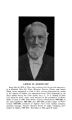
Show 154 THE UTAH HISTORICAL QUARTERLY Nevada and would meet us somewhere in the mountains Thurs 20th last night just before being down and before the guard was posted something or other gave our horses & cattle a dreadful affright supposed to be either Grizelys or indians the thundering of the runing stock fairly shook the ground"and was like an earth quake Lieut. Thompson ordered to "limber up a Cannon and let her speak once", The guard was soon put out but nothing more occured all was quiet til morning when we found more than one third of the stock missing we lay here all day sent men in all directions hunting up lost stock in the afternoon we enclosed the grave with granite rocks to prevent wild beasts from tareing them out and to stand as a monument to all who may chance to pass that 'way We judged they were killed the second night out which would make it the 27th of June. We cut the following inscription on a Balsome fir' that stood near the grave. "To the memory of Daniel Browett and Ezrah H. Allen, Henderson Cox who was supposed to have been murdered and buried by indians on the night of the 27th of June, A. D. 1848 We called this place tragedy spring Friday 21st. haveing found all our stock except 1 or 2 mules we hooked on and moved a bout 4 miles and campt on what we called Rock Creek and built a Correl by falling timber & piling brush - the mountains well over laid with-large masses of Rocks, in the little vallies plenty of leeks young grass and clover with here & there a large bank of snow. Sat. 22nd. Camp laid by while myself and 15 others worked a road to the top of the mountain some 6 miles from the top we saw several small lakes some of which I was told abounded with trout I past over snow more than 2 feet deep and saw banks ten and perhaps 50 ft. deep, this day I gathered flowers with one hand and snow with the other There were plenty of Chickings in the timber resembling the prairie chickings at evening we returned to camp tired and hungry although we carried lunch with us. Sunday 23d In camp all day. Mo. 24th. Moved bout 6 mi, and campt just over the Sumit. 2 wagons broke down and 2 upset two indians came in to stay all night Tues. 25th Laid by while some went to reparing wagons others watching Stock while others again worked a road down the mountain some 2 miles Wed. 26th Moved to the foot of the mountain and campt near a lake, this we call lake valley - as usual we broke down again an axil tree snapt in to this afternoon we sent out ten men to explore and hunt a pass across the mountain Thurs 27th made some Road, 20 indians came into camp all armed with Bows & arrows but laid them by while in camp, late in the afternoon our ten men returned but made no new discovery. Fr. 28th, Moved 3 m. and made an early JOURNAL EXTRACTS OF HENRY W. BIGLER 165 encampment at the head of the American fork near or at the Summit of the great Sierra Nevada Here we soon built a Correl sufficiently large to hold all our Stock Several indians was seen some peaking out from behind & over rocks, 2 however came jn Camp.- Some of our party caught a young fawn they marked the youngster and let him go This afternoon we worked and made a road across the mountain Sat. 29th moved across about one mile & half and campt at the head of what we calld hope valley (as we began to have hope) in crossing over we broke one wagon. Sunday 30th Worked & made a road for about 2 miles and moved camp about 8 and encamped on what we calld pass Creek at the head of a Kanyon. Here we expect to lay by for several days in order to work a road through the Cannon about 4 miles and very bad Mo. 31st. a general turn out to work on the road makeing fordeing places to cross the Creek Considerable diging to do and roaling rocks out of the way. Tues. Aug. 1st. Clear & frosty this morning 15 turned out and worked on the road, some went afishing and caught a lot of trout. Here grows the first wild flax I ever seen some of it is in blow and some in the bowl Wed. 2nd Working as yesterday in the Cannon except myself who went afishing Caught" 12 nice trout. Thurs 3d Road workeing in the afternoon fell a little rain & Snow We were overtaken to day by 13 of our boys with pack animals they had left the mines 5 days ago. We finished our Road. Fr. 4th Moved through the Kanyon all safe 4 indians came into Camp. Sat. 5th of Aug. at about 7 oclock we was on the march good road made about 12 miles and campt on Carson River though at that time we had no name for it only the one we gave it that was "Pilot River" One of our men killed a fine Antelope Several of the natives visited our camp the mountains seems to be all on fire and the valley full of smoke Sun. 6th Continued down Carson River past a hot spring campt in the bend of the River here Mr. Pratt killed a Rattlesnake which gave the name rattlesnake camp - at night we could see as it were a hundred fires in the Cal. mountains made no doubt by indians some think it is a signel to other indians of distress others say it is for peace and others say it is for war Mr Weaver one of Col. Cooks guides said a smoke raised on the mountains was a signal for peace and a token for help and a smoke raised in a valley was a sign for war I Remember when the Col. wanted to raise an Indian near the Copper mines in Sonora he ordered , a-smoke to be raised on the top of a mountain close by and he got him Mo. 7th. This morning 4 horses and 1 ox were missing supposed to been stolen by indians made about 15 m. and campt on the River Road rather bad indians were seen following us all 156 THE UTAH HISTORICAL QUARTERLY day Tues. 8th Still continued our course down the river makeing about 15 m. Wed 9th after makeing about 15 m. we campt again on the River in a short bend this we called ox bow encampment Thurs. 10th At 2 this morning the camp was aroused by the guard saying the horses were crossing the River leaveing the Correl which we had made by forming our Wagons across the narrow neck or bend of the river, on examineing there was no horses missing but when daylight come we found that 2 horses and a mule was gone there seemed to be no doubts but indians had got them some way in spite of the guard notwithstanding our guard affirmed that they was and had been faithful while on duty and when we come to look after the cattle we found a Cow and calf was missing ten men was sent out after the animals when they overtook some indians and recovered one horse and mule One of the men Mr. Dimond was shot in the breast by an arrow from an indian but did not prove fatal. After breakfast the calf belongin to the lost cow came up with an arrow sticking into its guts and some of the camp had to knock it in the head. Friday 11th. Traveld 12 m. and campt. A little dog belonging to one of the company came up being shot with an arrow it had remained behind in the morning eating on the remains of the calf Sat. 12th Left Carson River traveled rather a N. W. course 25 miles when we struck the old trucky road on the east side of the Truckey River Here our packers left us and went ahead Sunday 13th Laid by Mo. 14th after travling about 8 miles over a sandy road we then had smooth road and encampted at the boiling springs makeing about 25 m. Here we made our tea and Coffee without fire to heat the water. A little dog walked up so near to one of theese springs as to loose his balance and fell in and was instantly scalled to death and boilt to peaces Here was no water for our stock Tues. 15th At 11 last night we rolled out for water the moon shone bright and a good road and at 6 this morning we arived at the sink of the Humbolt and campt the water here was not very good Cattle did not like it towards evening 18 emigrant wagons rolled in and campt by us they had met our packers about 40 miles ahead of us and had traveled about 100 miles without water theese emigrants had come by way of fort hall there was one family in the croud that had wintered at the Salt Lake and had moved in march to fort hall by the name of Hazen Kimball he said he did not like the Salt lake country and had left but the people there had been sowing wheat all last fall and winter and had put in 8 thousand acres of grain - at this camp we lost a Cow she mired and in strugles broke a blood vessel Wed. 16th made 20 miles, road good at this camp that waiter is a little better and runs a little the stock JOURNAL EXTRACTS OF HENRY W. BIGLER 157 looks bad not haveing much grass and water sence leaveing trucky. To day we met 25 wagons, emegrants for Cal. Thurs. 17th We were followed all day by indians - at night had plenty of good runing water, late in the evening when we drove up our stock we found that one of the horses was shot with a poison arrow, three indians had just come into camp with their bows and arrows we shewed the wounded horse to them and took their bows from them and gave them to understand that they could not leave camp, they set up a dreadful tuss one of them shed a- heavy shower of tears indeed I began to pity him they paw-waud" over the animal when the one in tears put his mouth over the wound and sucked out all the poison and the wound healed up and the next morning we gave them their bows & arrows and let them go. Fri. 18th. Some of the cattle began to get lame and we had to throw them and take the gravil from their feet Sat. 19th This morning we had to leave a cow she had become so tender footed that she could not travel, as we were makeing camp a lot of indians men wimen and children as soon as they saw us roll in sight took to their heels for life and before we had been in camp 2 hours we see 2 of our horses walking around with arrows sticking in them - a long here there was no grass for the stock except a long on the river in the willows which offered the redskins- an excellent chance to skulk and shoot our animals when they went in among the willows to feed. Our boys rolled out some of them got sight of.an indian or two and fired at them but with what effect we never new perhaps might have scared them a little Sunday 20th Laid by Mo. 21st. made about 28 miles, to day 2 horses and a colt was shot with poison arrows the willows along the River in places affording so good a chance that our stock are shot in broad day light as we drive along the road and it appears to me that indians prefer horse beef to any other meat and it seems that it is their calculations that when a horse is shot with a poison arrow that the animal will become so sick that it will be left and of course willl fall into their hands Tues 22nd made an early encampment after makeing about ten miles. We had to leave one of our wounded horses. Wed. 23d. left another horse for beef made about 18 or 20 miles. Thurs 24th. made a short drive. Fr. 25th. This morning a horse was missing either estrayed off or stolen in the night by indians made about 8 m. and campted after we had struck camp 7 indians came in camp and appeared very friendy and promised they would not Shoot our horses Sat. 26th. We met ten wagons of emegrants. Sunday 27th. Laid by at 3 p. m. the camp came together at Addison Pratts tent and held prayer meeting, just as meeting was over Captain S. Hensly and Company of ten on 158 THE UTAH HISTORICAL QUARTERLY packs came up we were informed by Capt. H. that it was not more than 380 miles to Salt Lake by takeing a certain route that he had found and had just come he gave us a way bill saying the route was a good one and easy to be found saveing at least 8 or ten days travel as it was our intention to go by way of fort hall. Mr. Hensly had got defeated in attempting to take Haistings Cutoff and had turned back by so doing discovered this new route and found it to be much nearer than Has-ting's and on the 30th we met Captain Childs and Company of 48 wagons, emegrants he gave us a way bill (sic) purporting to give a still nearer route than that of Hensly's. We bought of Capt. Child's Co. some Baken and Buffalo meat. Friday Sept. 1st. made 16 m. when in the after noon it became cold and the wind blew briskly from. the N. W. about sundown it rained. Sat. 2. Rained & snowed and became very disagreeable made a few m. and campt. Sund. 3d. Cleared up in the night & this morning it was very cold, the tops of the mountains were capted with the late snow while here in the valley is a heavy frost and everything froze hard and as our camp ground was not very good we concluded to roll out until we found a more suitable place and lay over a day and we went a bout 20 m. before we found it here several of the natives came in camp to trade drest buckskin for knives, Clothing, some of them had rifles and wanted to trade for powder Mo. 4th. Lay'd by and killed a beef while some went a fishing and caught a fine lot of what some of the boys called Sammon trout. Tues. 5th. Cool & frosty a bout 8 we rolled out went a bout 2 miles and found that 1 horse and a mule was missing, it was then concluded to camp here and hunt up the animals and at the same time send 4 pioneers a head and find where we were to leave the road and take Capt. Childs's Cutoff and meet us the day after to morrow - In the evening the boys that went to hunt for the horse & mule returned with them the mule however was shot through the thigh by indians.- Lieut. Thompson lost a horse by eating or drinking something that gave him the scours. Wed. 6th. made a bout 20 m. when we found a note left by our 4 men to camp here - To day several Sage hens was killed. Tuesday Sept. 7th, After makeing a bout ten miles we met our 4 pioneers at the head of the Flumbolt here we campt and had a report from them which was that according to Mr. Childs's map or way bill this must be the place to turn off but they had been ten miles or more had found no trace where Capt. Childs had been neither had they found water and 2 of them got sick and of course they turned back to meet the camp that evening the camp came to gether to talk the thing over and consider whether it was best to Continue this new route or go Henslys it was JOURNAL EXTRACTS OF HENRY W. BIGLER 159 decided not to give up Childe's rout but on the morrow send out 5 men with plenty water to explore and make a thorough hunt for Capt. Child's trail while our was to follow after until they gained the summit at the head of, the humbolt some 5 or 6 miles where there was several springs and there a wait until they heard from the 5 men or for a smoke that would be raised as a signal for the Camp to Come a head, next morning early they set out accompanied by one hunter and the camp hooked on and rolled after them to the top of the mountain to await developments and at sundown 4 of the men returned they had found nothing at 11 in the night the other pioneer & hunter got in they had been farther south but found no trail where wagons had been or anything else in the shape of white men neither had they found water if they had our camp would of stuck on that Cutoff at all hazards a meeting was called immediately to get the mind of the camp whether to continue on this Cutoff or go the fort hall road until we come to Henslys route and take that? it was soon voted to try the latter if we could find it which from the chart could easily be done the next morning we rolled back to our camp ground we had left the morning previous and camp and here within a few rods where the humbolt river comes out of the ground we caught lots of trout the surrounding country'looks beautiful with low mountains all a round with plenty of grass. Sat. 10th, made a bout 24 m. and campt in hot Spring valley, 6 miles back the runing water was hot - a few indians came in to trade. 11th, made 15 m. Sept. 12th. Past over some rough road made 16 m. and campt on Goose Creek Sept. 13th, Traded down Goose Creek 15 m. & campt. here I caught a fine mess of trout. Sept. 14th. While at breakfast this morning an indian came in with a mule to swap for a horse, no doubt but the mule was a stolen one from some emegrant. Mr. Brown gave the indian a trade made 12 m. & campt in the mountain At dusk our pilots that had went a head in the morning returned and reported they had found Capt. Henslys Cutoff a bout 8 m. head. Sept. 15th. Set off this morning in good spirits everyone seemed to feel fine and after makeing a bout 8 m. we came into a chain of low mountains and near by on our left was 2 towering rocks near each other which Mr. A. Pratt named the Twin Sisters", since known by travlers as the City of Rocks", as there are several masses piled up all around in the same neighborhood here we left the fort hall road on our left takeing a course directly east through sage brush and over rocks and holders and campted on Cashier Creek makeing to day about 13 miles. Sat. 16th. Continued down this stream ten miles and Campt. We were met by 11 indians of the Snake nation on horse back. Sept. 160 THE UTAH HISTORICAL QUARTERLY 17th. Last night one of the guard lost a silver case from off a valuable Silver watch belonging to Mr. E. Green, how that Was done the guard could not tell and remains to this day a mystery! At this camp we left the Cashier it turning and runing north while our course was east over and through sage brush for ten or 12 m. and campt on the side of a mountain where there was plenty of Cedar timber. Mon. Sept. 18th. This morning we could see as we supposed Salt Lake off to the South east of our camp some 20 or 30 miles - To day we made some 20 miles east and campt on Deep Creek. Here a lot of the natives came in on horse back to trade and will camp with us. Tues. 19th. made a bout 18 or 20 m. Wed. 20th. Lost a Cow last night what became of her we could not tell - made a bout 12 m. and campt by a spring of brackish water and poor feed Thurs 21st. Rained in the night made to day a bout 18 m. and campt on the "Melad" here the boys Ketchd fish all most as fast as they threw their hooks in We are now in Sight of Beare River and the whole camp is all life talking and Singing and to morrow night the camp has the promise of a new Song to be composed for the occasion by Mr. Daniel Denit Fr. Sept. 22 This morning in crossing the Melad we broke down a wagon the crossing was very bad the stream was narrow and not very deep but the bottom very soft and mudy in comeing out on the opposite side passing on for 6 or 7 miles we came to Bear River the fording of which was good in consequence of breaking down we made but a short drive and campt on the east side of bear river - just as we went into Camp a shower of rain was upon us but it soon held up when almost every man brought in an armful of wood to have' one common fire around which we were to have some singing, after Supper and prayrs the Camp just enjoyed themselves Singing Songs, telling yarns", Cracking jokes on each other &c &c. Sat. 23d. made only a few miles owing to many of our Calves being so tender footed. (Concluded) AMERICAN POSTS 161 AMERICAN POSTS (Continued) By EDGAR M. LEDYARD, President UTAH HISTORICAL LANDMARKS ASSOCIATION (Organized August 23,1929) Utah Historical Landmarks Association Museum 518 CHAMBER OF COMMERCE BUILDINC, SALT LAKE CITY Pitt, Fort. French work at Pittsburg. Fort Pitt was built during the years 1759 to 1761. The blockhouse of Fort Pitt which remains at the present time was built in 1764. A number of important historical events center around Fort Pitt. In 1753 the French started to build a series of forts to enforce their boundaries. In 1754 Fort Duschene was completed and during the same year Washington attacked de Jumonville at Great Meadows. In 1755 Braddock suffered defeat near Fort Pitt. In 1758 Fort Bedford and Fort Ligonier were built and Fort Duschene destroyed. The next year the work on Fort Pitt was begun by General John Stanwix. In 1763, during the conspiracy of Pontiac, Fort Pitt was besieged by Indians. In 1772 it was abandoned by the British and in 1774 occupied by the Virginia Militia under Dr. James Connelly who changed the name to Fort Dunmore. In 1791 Major Isaac Craig reported Fort Pitt to be in a ruinous condition and built Fort Lafayette. Fort Pitt was visited by George Washington in 1753, 1758 and 1770. The redoubt which remains was built by Colonel Henry Bouquet in 1764. The blockhouse and grounds are now owned by the Daughters of the American Revolution. Pennsylvania. Pitt's Fort. At Cumberland Gap. Tennessee. Pittston, Fort. At Pittston. Pennsylvania. Plain, Fort. Montgomery County. On Mohawk River near mouth of Oquago Creek. Now town of that name on the New- York Central Railroad. New York. Plank, Fort. On Mohawk River, about ten miles northwest of Fort Plain. New York. Plaquemine, Fort. Left bank of the Mississippi, west side of mouth of Bayou Mardi Gras, later Fort St. Philip. Louisiana. Platte, Fort. "At junction of Laramie and Platte rivers." Quotation from card index of forts, Chicago Public Library. Wyoming. Platteville, Fort. Site of present town of same name, in Grant County. Wisconsin. 162 THE UTAH HISTORICAL QUARTERLY Plattsburg Barracks. An important reservation on west shore of Lake Champlain, at Plattsburg. Three forts formerly occupied this site, these being For,t Brown, Fort Scott and Fort Moreau. The "Old Post" was erected in 1839, according to tradition. The "New Post" dates from 1893. Th.e Barracks were located on the west shore of Lake Champlain, at the town of Plattsburg. The battle of Plattsburg was fought on this site in 1814. New York. Pleasant, Fort. Temporaty post on the right bank of the Econfinee, about twenty-two miles from its mouth; established in Florida War. Florida. Pleasant, Fort. On south branch of the Potomac. West Virginia. Plum River, Fort. Built during Black Hawk War. Illinois. Pocahontas, Fort. On James River at' Wilson's Landing. Virginia. Poinsett, Fort. Temporary post at Cape Sable; established in Florida War. Florida. Point, Fort. Left bank of the Golden Gate at the entrance to San Francisco harbor; now Fort Winfield Scott. California. Point, Fort. At Fitch's Point, near Norwalk. Connecticut. Point, Fort. At Castine. Maine. Point, Fort. At Annapolis. Maryland. Point, Fort. Present site of Fort Phoenix, Boston. Massachusetts. Point, Fort. Name later changed to Fort San Jacinto: Texas. Point Lobos, Fort. Later called Fort Miley. California. Pointe de Bois, Fort. Established in 1737. North Dakota. Polk, Fort. At Point Isabel, opposite Brazos Santiago. Texas. Ponca, Fort. Built in 1852-53. On right bank of the Missouri River near Fort Mitchell. South Dakota. Pond, Fort. In St. Charles County. Near Wentzville. Missouri. Pontchartrain, Fort. Detroit was known to the French as Fort Pontchartrain. Tablet in business district of Detroit marks site of this old post. Michigan. Pontoosack, Fort. On Housatonic River. Massachusetts. Pool's Fort. On Kings River, Fresno County. California. Poqplopens Kill, Fort. In the Highlands. New York. Popham, Fort. At the mouth of and on the west bank of the Kennebec River, in the town of Phippsburg, on Hunnewell's Point. Maine. Poplar, Old Fort. Site of Fort Aux Trembles (1781). Canada. Portage, Fort. In upper Canada pn the River Utawas, one hundred twenty miles west of Montreal. Canada. Portage, Fort. Right bank of Portage River, Wood County; eighteen miles southwest of Fort Meigs. Ohio. Porter, Fort. At Castine. Maine. AMERICAN POSTS 163 Porter, Fort. Established in 1867 on right bank of Niagara River at Black Rock; a defensive work at Black Rock was established on the same site in 1844. This post was located within the present city limits of Buffalo and has an uneventful history. The fort was named by General Marcy in honor of General Peter B. Porter. Fort Tompkins was located on the same site as that of "Buffalo Barracks." In 1914 a battalion of infantry was stationed at Fort Porter. New York. Porter, Camp. In Sanpete Valley. Utah. Potter's Fort. In Center County. Pennsylvania. Powell, Fort. Confederate work on Heron Island, west entrance to Mobile Bay, north of Fort Gaines. Fort Powell was one of the defenses of Mobile during the Civil War and commanded the principal pass to Mississippi Sound. It had one ten-inch and one eight-inch Columbiad and four rifled guns. The other defenses of Mobile were Forts Sames and Morgan. Alabama. Powell, Fort. Near Corinth. Mississippi. Powhatan, Fort (or Powhattan). Confederate work on right bank of James River, near Brandon, Prince George County. Virginia. Pownall, Fort. At Castine. Maine. Prairie du Chien, Fort. Established in 1710. An old French Fort located at junction of Mississippi and Wisconsin Rivers, later called Fort Crawford. Wisconsin. Preble, Fort. A United States military post established in 1809 at Spring Point, Cape Elizabeth. It occupied a reservation of twenty-four acres. Erected for defense of Portland Harbor and subpost of Fort Williams, two miles from Portland. The garrison in 1914 was a detachment of Coast Artillery. Maine. Prentiss, Fort. At Cairo. Illinois. Prescott, Fort. One of the Confederate defenses of Petersburg. Virginia. Presentation, Fort. At Ogdensburg. New York. "Presidio, California. Three miles west of San Francisco on the southern margin of the harbor, northwest suburbs of that city: The Officers' Club at this post was built by Spaniards in 1776. Garrisoned by the Mexicans from 1822 until 1846 when-the United States took forcible possession. After the discovery of gold this post became an important one. California. Presque Isle, Fort. Established in 1735. Near the present site of Erie, Pennsylvania, on the south shore of Lake Erie near Fort Le Boeuf. Pennsylvania. Preston, Fort. Temporary post in the Florida War, left bank of the Appalachicola River, thirteen miles south of Aspalago. Florida. 164 THE UTAH HISTORICAL QUARTERLY Price's Post. Established in 1875v Right bank of the Milk River. Montana. Pricket's Fort. On Monongahela River, twelve miles above Morgantown. West Virginia. Primeau's House, Fort. Left bank of Missouri River. South Dakota. Prince, Fort. Near King's Bridge at extreme northern limits of New York City. New York. Prince George, Fort. Established in 1760. Near west border of- South Carolina. On the upper waters of the Savanah River, near its source. South Carolina. Prince Maurice, Fort. On Hudson River. New York. Prince William, Fort. At Pemaquid. Maine. Prudhornme, Fort. 180 miles above the mouth of the Illinois River. Illinois. Prudhornme, Fort. Old French post in present Shelby County, in existence as late as 1682. Tennessee. Pueblo, Fort. This post was also called "The Pueblo." Most writers give the year 1842 as the one in which the post was founded, although other/ references indicate that it might have been built previous to that date. George Simpson and James P. Beckworth were associated with the post and were probably interested in its establishment. Under the leadership of William Crosby, forty Mormon emigrants, who were traveling with nineteen wagons, founded -a settlement about one-half mile from Fort Pueblo in 1846. At the time of their arrival on the seventh ,of August, the Mormons found a number of trappers living there at the fort with Indian and Mexican wives. The Mormons selected a site for their log cabins on the south side of the Arkansas, perhaps one-half mile below the post. This settlement was short-lived and was used by the Mormons only as a recruiting post. During the winter, several of the Mormon pioneers died. The site of the Mormon settlement has been entirely obliterated and the graves cannot be discerned at present. Colorado. Pulaski, Fort. Cockspur Island, at mouth of Savannah River. Erected for the defenses of the Savannah River. The confederates occupied this post at the beginning of the Civil War. It was captured by the Federals April 11, 1862. Georgia. Putnam, Fort. Near present site of Brooklyn, Long Island, different than fort of same name near West Point. New, York. Putnam, Fort. Right bank of the Hudson River, on heights near West Point. New York. Putnam, Fort. At Cummings Point, Charleston Harbor. South Carolina. AMERICAN POSTS 165 Putney, Fort. On the Connecticut River in Windham County. Vermont. Qu' Appelle, Fort. Built by Northwest Fur Company. Saskatchewan. Canada. Quarantine, Fort. On Cape Fear River, near Fort Fisher. North Carolina. Quebec, Fort. After Forts Niagara, Crown Point and Ticon-deroga were captured by the British in 1759, General James Wolfe planned to attack Quebec which was occupied by the French under the command of General Louis Joseph Montcalm. After skillful maneuvering Wolfe led his men up1, a narrow path to the Plains of Abraham where he was attacked by Montcalm on September 13, 1759. The British were successful and the city and post surrendered five days later. Wolfe and Montcalm were both fatally wounded. During the Revolutionary War, General Benedict Arnold made an attack on this fort. Montgomery, one of Arnold's officers, was killed. Arnold and his half-famished soldiers blockaded the city until the spring of 1776. Upon the approach of British re-inforcements, Arnold gave up the siege and left Canada in the hands of the English. Canada. Queen Anne's Fort. On Goat Island, subsite of Fort Walcott. Rhode Island. Quitman, Fort. Left bank of the Rio Grande, eighty miles below Franklin and seventy miles from El Paso. Texas. Racoon, Fort. Afterwards Fort Des Moines. Iowa. Radiminske or Radziminski, Camp. Left bank of Otter Creek, about four miles from its mouth. Otter Creek is in Tillman and Kiowa Counties, Oklahoma and flows into the North Fork of the Red River. When built the post was in Indian Territory. Oklahoma. ^ Rains, Camp. At Spotted Tail Agency? South Dakota. Rains, Fort, Colonel. At Cumberland Gap. Kentucky. Ralston, Fort. In Northampton County; also called Brown's Fort. Pennsylvania. Rampart, Camp. At Rampart City.. Alaska. Ramsay, Fort. One of the defenses of Washington, D. C, south of the Potomac. Virginia. Rancho de Jurupa Post. On Santa Anna River. California. Rancho del Chino Post. Thirty miles southeast from Los Angeles. California. Randall, Fort. In Gregory County. Right bank of the Missouri River about thirty-four miles above the mouth of the Niobrara River, on road out of Gross, Nebraska. South Dakota. Randall, Fort. In existence from 1857 to 1884. Established by General William S. Harney as a protection against the Sioux. Right bank of the Missouri River. Same site as old Fort Pierre 166 THE UTAH HISTORICAL QUARTERLY 1830-57, in Stanley County at the mouth of the Bad River. This post was near Fort Sully, Fort Tecumseh, Fort Teton and a number of other posts. The post was a considerable distance above noted Fort Randall of Gregory County, South Dakota. South Dakota. Randolph Camp. On Three-Mile Creek, near Fort Dalles. Oregon. Randolph, Fort. This post was named after Major General Wallace F. Randolph. One of the newer army posts, is located close to Cristobal and Colon on Margarita Island, five miles from Cristobal. Canal Zone. Randolph, Fort. Confederate work, left bank of the Missisr sippi, six miles below Fort Pillow. Tennessee. Randolph, Fort. Mouth of Great Kanawha River. West Virginia. Rankin, Camp. South Fork of the Platte, opposite the mouth of Lodge Pole Creek. At Julesburg; name later changed to Fort Sedgwick. Colorado. Rankin's Fort. Near Mobile River. Alabama. Ransom, Fort. According to Hebard and Brininstool, "The Bozeman Trail," "The fort which was to take the place of Fort Connor (which was to be dismantled and abandoned) was to be forty miles westward toward the Yellowstone, along the Bozeman Road, the new fort to be called Reno. North of this was to be Fort Ransom on the Big Horn River (subsequently changed to Fort C. F. Smith) and the third fort was to be at the junction of the Big Horn and Yellowstone Rivers." Heitman's "Historical Register" states that Fort C. F. Smith was "On Big Horn River, eight miles above the mouth of Rotten Grass Creek." Montana. Ransom, Fort. Left bank of the Sheyenne River, Ransom County, now town of that name. North Dakota. Raritan Arsenal. On Raritan River three and one-half miles northeast of New Brunswick. New Jersey. Rat River Post. Built-in 1789 by Northwest Fur Company. Canada. Rawlins, Camp. In Williamson's Valley. Twenty-seven miles northwest of Prescott. Arizona. Rawlins, Fort. At Vicksburg on Mississippi. Mississippi. Rawlins, Fort. Near Provo City. Utah. Raymond, Fort. The report of Lewis and Clark indicated an abundance of beaver on the upper Missouri. Manuel Lisa and George Druillard (half-breed companion of Colter) formed a partnership to gather furs on the upper Missouri and its branches. Lisa's party proceeded up the Yellowstone River and at the mouth of Big Horn started a trading post soon after their AMERICAN POSTS 167 arrival there November 21, 1807. Winter quarters and a trading post was built at once; the blockhouse was built the following year. This post was named in honor of Manuel's son, Raymond, but is generally referred to as Manuel's Fort. Fort Raymond was the site and center of many of Colter's adventures. Montana. Raystown, Fort. On Raystown Branch. Pennsylvania. Reading, Fort. The site of the old fort is about seven miles east of Redding in a direct line toward Mt. Lassen, on the Hawes Ranch. Major P. B. Reading established his residence on the Sacramento River and to protect settlers against the Indians it was necessary to establish Fort Reading. The most suitable location was elevated ground between Stillwater and Cow Creek, which was also on the old emigrant trail. Major Reading was a Virginian ; he lived at Eureka for a time and engaged in mining near the Trinity River before he came over Trinity Mountain into Sacramento Valley. He received a grant of about twenty-eight thousand acres from the Mexican Government. There are only a few remnants of the old foundations of the fort left. Major Reading's entrance into Sacramento Valley antedates American occupation; Reading was Fremont's pay-master. Fremont gathered together a number of Americans living in Sacramento Valley, these forming a part of his volunteers. California. Reading, Fort. On west bank of Delaware River. Pennsylvania. Recovery, Fort. On a branch of the Wabash, twenty-three miles north of Greenville. Indiana. Recovery, Fort. Northwest corner of Drake County near the western boundary of Ohio on the site of St. Clair's defeat. Mercer County. Ohio. Recovery, Fort. In existence from 1822 to 1823. Left bank of Missouri River. Same as Cedar Fort. South Dakota. Red, Fort. Near Old Spanish Fort. Alabama. Redan, Fort. Above Island number 10. Tennessee. Redstone, Old Fort. On the Ohio River at Brownsville, south of Pittsburgh. First occupied by Captain Trent of the Ohio Company who built it and occupied it in February, 1754. In 1759 Colonel James Burd erected a new post on the site of Redstone which was named in his honor. In January, 1778, Lieutenant Colonel George Rogers Clark recruited at this post in preparation for a secret expedition against the English in the Illinois country. Pennsylvania. Reed, Fort. Near Lake Monroe in Orange County; now town of that name. Florida. Reed, Fort. In Schoharie County. New York. Reid, Fort. At Lockhaven. Mr. William Reid stockaded his dwelling house in the spring of 1777. The Continental Army 168 THE UTAH HISTORICAL QUARTERLY drew largely on the young men in this section hence the necessity for protection against the Indians. Traces of the fort could be seen as late as 1820 after which public spirited citizens recorded the site. Pennslyvania. Reine, Fort de la. Built about 1734 by La Verendrye at the lower end of Manitoba Lake. This post was one of a series constructed in taking formal possession of western territory. Canada. Reiter, Fort. Near Helena. Arkansas. Reliance, Fort. On the Yukon River. Alaska. Reme Snyder's Blockhouse. Northeast of Little Falls. New York. Reno, Cajmp. In Tonto Valley. Arizona. Reno Cantonment. Name changed to Fort McKinney. Wyoming. Reno, Fort. Northeast of Tennallytown; first called Fort Pennsylvania. D. C. Reno, Fort. On Roanoke Island. North Carolina. Reno, Fort. A Quartermaster Intermediate Depot. On the north fork of the Canadian River, two miles from Darlington. Oklahoma. Reno, Fort. Near Portsmouth. Virginia. Reno, Fort Military. In existence from 1866 to 1867. Right bank of Powder River, one- hundred eighty miles northwest of Fort Laramie, Dakota. General Patrick E. Connor was in charge of the Powder River Indian Expedition in 1865. On August 14, the same year, he began the erection of buildings on the present site of Fort Reno; this post was called Fort Connor. On July 28, 1866, Colonel Henry B. Carington arrived at Fort Connor for the purpose of selecting a site for a permanent post. After some surveying, he decided that the best location for the new post was in the vicinity of Fort Connor and began the construction of the post named Fort Reno. Fort Reno was not attacked as often as some other of the Wyoming posts. Wyoming. Rensselaer, Fort. At Canajoharie, in Mohawk Valley. New York. Republic Fort. On south fork of the Shenandoah. Virginia. Resurrection, Fort. On southern coast. Alaska. Reverie, Fort. Subpost of Fort Andrews, at Nantasket Head in the town of Hull. Massachusetts. . Reviers, Fort. Between Alabama and Tombigbee Rivers. Alabama. Reynolds, Camp. On Angel Island; later called Fort McDowell. California. Reynolds, Camp. South bank of the Sun River, name changed to Fort Shaw. Montana. AMERICAN POSTS 169 Reynolds, Fort. On the Arkansas; two miles from Boones-ville. Colorado. Reynolds Fort. At Cross Creek village in Washington County. More properly called Reynolds' Blockhouse. This blockhouse was attacked by Indians in 1779; Mrs. Reynolds and a child were carried off and murdered/Pennsylvania. Reynolds, Fort. One of the defenses of Washington, D. C, south of Potomac; three miles northwest of Alexandria. Formerly Fort Blenker. Virginia. Rhode Island, Fort. Rhode Island. Rice; Fort. Military post built in 1864 in Morton County on right bank of the Missouri, ten miles above mouth of Cannon-ball River. North Dakota. Rice, Fort. Near Petersburg. Virginia. Rice's Fort. At Charleroi. Massachusetts. Rice's Fort. Located on Buffalo Creek about twelve miles above its junction with the Ohio River. Attacked by combined force of British rangers, renegade whites and Indians in 1782; the attacking force was repulsed. Pennsylvania. Richard's Fort. On the Monongahela. West Virginia. Richardson, Fort. Near Corinth. Mississippi. Richardson, Fort. On Lost Creek, near Jacksboro. Texas. Richardson, Fort. One of the defenses of Washington, D. C, south of the Potomac, about three miles from Washington, D. C. Virginia. Richmond, Fort. On west bank of the Kennebec, opposite Swan Island. Maine. Richmond, Fort. Oh east end of Staten Island, later called Fort Wadsworth. New- York. Richmond, Fort. On battle ground of Fair Oaks. Virginia. Ricketts, Fort. One of the defenses of Washington, east of Eastern Branch. District of Columbia. Riddle's Fort.. On Lost River. West Virginia. Ridgely, Fort. A military post built in 1853 on the left bank of the Minnesota or St. Peter's River at mouth of Rock River; at Fairfax in Nicollet County. Minnesota. Riffle, Fort. Located in Nicholson township, Fayette County. Built by Nicholas Riffle about 1779-80. Pennsylvania. Rigolets, Fort. Near Lake Pontchartrain; sometimes known as Fort Pike. Louisiana. Riley, Fort. East side of the mouth of Pawnee River on the Kansas River, one hundred twenty miles from Fort Leavenworth. Attention was attracted to this section of the country through Fremont's explorations in '43 and travel over the Santa Fe Trail from 1852 on. The post was begun in 1853 and named in honor of Major General Bennett C. Riley of Buffalo, New 170 THE UTAH HISTORICAL QUARTERLY York. The first year or two troops there were under the command of Colonel W. R. Montgomery; his order for occupancy was dated June 14, 1854. Custer, Sheridan, Forsythe and many other noted army men have been stationed there. It was established to protect caravans westward bound over the. Santa Fe Trail. Fort Riley Reservation comprises 19,447 acres along the Kansas River. This post was first known as Camp Centre, being near the geographical center of the United States. In 1914 the garrison consisted of a regiment of horse artillery and a regiment of cavalry. The Mounted Service School is also located there. During the World War Fort Riley and Camp Funston nearby were scenes of great activity. Kansas. Riley, Fort. Near Nashville. Tennessee. Riley, Fort. On Las Moras Creek; now Fort Clark. Texas. Ringgold, Fort. Located in Starr County, Texas, midway between Brownsville and Laredo. This section was settled in the early forties by H. Clay Davis. Captain J. H. Lamont camped on David Landing, the site, October 26, 1848. A lease for the property was made in 1853. The post was named in honor of Major David Ringgold, who was killed May 8, 1846. The present plan of the post was made in 1873. General Robert E. Lee and other noted officers have lived here. An impoftant Indian defense outpost in early days. At San Fordyce. Texas. Ripley, Fort. One of the defenses of Washington, D. C, north of Potomac and two miles above Chain Bridge. Later called Redoubt Cross. Maryland. Ripley, Fort. Military post built in 1851 on right bank of the Mississippi, nearly opposite the mouth of No Kay River; in Crow Wing County; formerly called Fort Gaines. Minnesota. Ripley, Fort. Confederate work in Charleston harbor, on the "Middle Ground." South Carolina. Ritnar, Fort. Lawrence County, now town of that name. Indiana. Roach, Fort. Southern border of Neosho County. Kansas. Roanoke Island, Forts on. There were fourteen posts on the island making it one of the most strongly fortified places in the world. The posts were as follows: Forts Barton, Blanchard, Burnside, Defiance, Ellis, Forrest, Foster, Huger, Lane, Monteil, Parke, Reno, Russell and Sullivan. North Carolina. Roberdeau, Fort. This post was located about seven miles west of Union Valley on the Pennsylvania Railroad in Sinking Valley. The post built in 1778 was unique in that it was erected to furnish protection for lead miners on account of which it is sometimes called the Lead Mine Fort. It was named in honor of a distinguished Pennsylvanian, General Daniel Roberdeau. Some lead was shipped from the mines nearby but the hostility AMERICAN POSTS 171 of the Indians, difficulties in mining and transporting material soon put an end to the operations. Pennsylvania. Robertson, Fort. Sadlersville. Tennessee. Robeson's Fort. One of the early posts in Dauphin County. The fort stood in Mountain Gap on Manada Creek. Built about 1756. Pennsylvania. Robidou (Robideau) Fort. This post is sometimes referred to and shown on the maps as Robidou's Fort Uintah. Fremont visited this post in 1844 and makes the following references to it: "Continuing our route across a broken country, of which the higher parts were rocky and timbered with cedar, and the lower parts were covered with good grass, we reached on the afternoon of the 3d, the Uintah fort, a trading post belonging to Mr. A. Roubideau, on the principal fork of the Uintah river. We found the stream nearly as rapid and difficult as the Lake fork, divided into several channels, which were too broad to be bridged. With the aid of guides from the fort, we succeeded, with very great difficulty, in fowling it; and encamped near the fort, which is situated a short distance above the junction of two branches which make the river. "By an immerson of the 1st satellite, (agreeing well with the result of the occultation observed at the Duchesne fork) the longitude of the post, is 109° 56' 42", the latitude 40° 27' 45". "It has a motley garrison of Canadian and Spanish engages and hunters, with the usual number of Indian women. We obtained a small supply of sugar and coffee, with some dried meat and a cow, which was a very acceptable change from the "pinoli" on which we had subsisted for some weeks past. I strengthened my party at this place by the addition of Auguste Archambeau, an excellent voyageur and hunter, belonging to the class of Carson and Godey. "On the morning of the 5th we left the fort and the Uintah river, and continued our road over a broken country, which afforded, however, a rich addition to our botanical collection; and, after a march of 25 miles, were again checked by another stream, called Ashley's fork, where we were detained until noon of the next day." According to a foot note appended to the above: "This fort was attacked and taken by a band of the Utah Indians since we passed it; and the men of the garrison killed, the women carried off. Mr. Roubideau, a trader of St. Louis, was absent, and so escaped the fate of the rest." The Robidou brothers were trappers and traders, enthused with the possibilities of the West. It was due to the inspiration of one of the brothers that a party was formed which was the first to cross Utah with wagons. When John Bidwell was teach- 172 THE UTAH HISTORICAL QUARTERLY ing school in Weston, Missouri, in 1839, one of the brothers interested him in the western regions through descriptions of their fertility and charms. An emigration society was formed and on May 9, 1841, the first emigrant train, whose destination was the Pacific Coast, left Sapling Grove, Missouri. John Bartleson was elected captain; DeSmet traveled with the party as far as Soda Springs. Bidwell's party turned to the south near Alexander, Idaho, and traversed northern Utah on their way to the Coast. Utah. Robinson, Fort. San Diego, San Diego County. California. Robinson, Fort. Quartermaster Intermediate Depot. On White River three miles from Crawford, at the Red Cloud Agency. Fort Robinson was established in 1874 and occupies a reservation of twenty square miles. The post has quarters for five hundred twenty men and cavalry stables for five hundred thirty horses. In 1914 it was garrisoned with two troops of cavalry. Nebraska. Robinson, Fort. The name of this post was variously spelled Robison, Robeson and as above. A blockhouse built in 1755 and in the first years following many settlers and travelers sought its protection. Several whites were killed near the fort, mostly pioneer farmers. Pennsylvania. Rock Fort. At Hackberry, Mohave County. Arizona. Rock Fort. Now Fort Hale. Connecticut. Rock Fort. In Lake County. Oregon. Rookfort, Fort. On Illinois River, in Lasalle County. Illinois. Rockport, Fort. A pioneer Mormon fort and village of same name on Beaver Creek, three miles above Wanship. This fort was built as a protection against Indians who were very hostile in this section in early days. Remnants of the pioneer fort may still be seen. There were some other fortified posts and forts in the same vicinity. Utah. Rodman, Fort. Four miles from New Bedford, at Clark's Point. Massachusetts. Rodman, Fort. Near Portsmouth. Virginia. Roller's Fort. In Sinking Valley, Blair County. Built about 1778 by Jacob Roller. Jacob Roller, Jr., was killed by Indians at this post; there were many other Indian outrages in the vicinity. Pennsylvania. Roney's Fort. In Finley Township, Washington County. A large strong blockhouse built by Hercules Roney about 1780. The entire Mcintosh family, with the exception of one daughter, eight in number, was killed near this post about 1789. Pennsylvania. Roots, Fort Logan H. Argenta. Arkansas. AMERICAN POSTS 173 Rosa, Fort. Heitman's "Historical Register" gives the location of this post as Latitude 20° 19' and Longitude 87° 14', which is probably an error as it would stand in the Gulf of Mexico. 30° 19' would place it in Santa Rosa County. Florida. Rosalie, Fort. A French fort on the Mississippi at Natchez. Mississippi. Rosecrans, Fort. West side of entrance to San Diego Harbor, six miles from San Diego. California. Rosecrans, Fort. At Murfreesboro; built during the Civil War. Tennessee. Rosedew, Fort. On Vernon River. Georgia. Ross, Fort. In 1809 the Russian Fur Company determined to carry their trading and trapping activities into what is now California. After some preliminary investigations around Bodega Bay and San Francisco Bay, Baranof received instructions from St. Petersburg to found a settlement at once on the California coast. In the spring of 1812 he dispatched an expedition consisting of 95 Russians and 80 Aleuts to a point about eighteen miles above Bodega Bay. The Russian force, which comprised some twenty-four mechanics, prepared timber for several months and, with the assistance of the Aleuts, erected a fortified village and fort; ten canon were mounted. On September 10, 1812, the post was formally occupied and dedicated and named Ross. The name Ross is said to have been derived from the root of the name Russia of great antiquity. The Russians exercised caution and did not invade the territory of Spanish trappers to the south. In the later '30's the Russians announced to the Mexican government their intentions of abandoning Fort Ross and Vallejo made them a proposition to buy it in 1841. In the meantime the Russian agent at the post entered into secret negotiations with John A. Sutter to purchase the property which were consummated on December 13 of the same year. Sutter acquired all the Russian property at Ross and Bodega with the exception of the land and agreed to pay for it in four yearly installments; $5,000 the first and second year and $10,000 the third and fourth. The first three payments were to be made in wheat and the fourth in money. Alvarado and Vallejo criticised Sutter in later years for allegedly acting dishonorably toward them. In addition to the historical interest associated with this post, an international controversy regarding the rights of Russians to occupy this territory centered around it for years. California. Ross, Fort. On Tennessee River. Tennessee. Rouge, Foft. Founded in 1738. Manitoba. Canada. Rouille, Fort. Old French fort on site of Toronto, Ontario. Canada. Roxbury, Fort. Near Boston. Massachusetts. 174 THE UTAH HISTORICAL QUARTERLY Royal, Fort. At Portland. See Fort Loyal. Maine. Royal, Fort. On Pamunkey River. Virginia. Royalhannon, Fort. See Loyal Hanna and Ligonier. Pennsylvania. Roy's House. Built by Northwest Fur Company. North Dakota. Ruby, Fort. This post was established as a protection against Indians on the western side of Ruby Valley, near the Overland Mail Station. Nevada. Ruckman, Fort. In Boston Harbor. Massachusetts. Ruddle's Fort. On Licking River. Kentucky. Ruger, Fort. Diamond Head, Oahu, six miles from Honolulu. Hawaii. Rugh's Fort. This post was built by Michael Rugh about 1782. It was a pioneer refuge for many years; torn down in 1842. The fort was in Hempfield Township, Westmoreland County. Pennsylvania. Run, Fort. Fuller, Jefferson County. Pennsylvania. Runyon, Fort. One of the defenses of Washington near south head of Long Bridge. Virginia. Rupert, Fort. In 1835 the officers of the Hudson's Bay Company learned of the existence of coal in considerable quantities on the north end of Vancouver Island at Beaver and McNeail Harbor, Queen Charlotte Sound. Peter Skene Ogden and James Douglas were instrumental in bringing this discovery into prominence. William McNeill, captain of the steamer "Beaver," was ordered to establish a post where coal had been found and in the summer of 1849 worked vigorously with his crew of whites, half-breeds and Kanakas in establishing a square stockade on which was placed four 9-pound guns. Quarters were also provided for officers and laborers. The post was named in honor of the first president of Hudson's Bay Company. Muir, a Scotchman,-sank a shaft to a depth of 120 feet in search of coal but found the seam too narrow and the coal too poor quality to make it a commercial success. In addition labor troubles arose and the mines were abandoned. Fort Rupert then continued as a trading post. This post had ceased to exist as a Hudson's Bay station in 1836 since it is not numbered among the thirteen listed when the Imperial Government repurchased the Hudson's Bay Company rights in the Island of Vancouver. Canada. Russell, Fort. Temporary post in Florida War; right bank of Orange Lake Creek, six miles west of Fort Brooke. Florida. Russell, Fort. A few miles northwest of present Edwards-ville. Illinois. Russell, Fort. At Loudon. Tennessee. AMERICAN POSTS 175 Russell, Fort D. A. This post was named in honor of Brigadier General David A. Russell. Temporary log huts were built in September, 1867; officers' quarters were established in 1868. This post has greatly assisted in the settlement of the West through the protection of railroad settlers. Two miles from Cheyenne; now called Fort Warren. Camp Carlin near the site of Fort D. A. Russell preceded the permanent post. Wyoming. Ryerson's Fort. A rallying point for settlers; built about 1790 at the junction of the north and south forks of the Dunkard Creek. Greene County. Pennsylvania. Sabine,, Fort. Temporary post, west side of Sabine Pass, three miles from the Gulf of Mexico and three miles below Sabine City. Louisiana. Sabine, Fort. In Sabine Pass, Jefferson County. Texas. Sacandaga Blockhouse. Schoharie County. New York. Sacket Harbor, Post at. Known as Madison Barracks. New York. Sackville, Fort. At Vincennes. Indiana. Saco Fort. On Saco River, near the falls. Maine. St. Andrew, Fort. On north end of Cumberland Island. Georgia. St. Anne Fort. On Lake Champlain. Also called Fort La Motte. New York. St. Anthony, Fort. Junction of St. Peter's River and the Mississippi; later called Fort Snelling. Minnesota. St. Antoine, Fort. Built in 1868. At mouth of Chippewa River. Wisconsin. St. Asaphs, Fort. Also called Logan's Fort. Built in 1755. Kentucky. St. Bernard, Fort. One of several forts at Pensacola. Florida. St. Carlos, Fort. One of several posts at Pensacola. Later called Fort Barrancas. Florida. St. Charles, Fort. New Orleans. Now obliterated. Louisiana. St. Charles, Fort. At Pemaquid. Maine. St. Charles, Fort. "Fort St. Charles was built by La Veren-drye in 1732 on the northernmost point of what is now Minnesota. It remained in existence till the eve of the conquest of New France, and it is probably the most widely known of the French forts in the Minnesota region. From it La Verendrye went out on some of his earlier explorations of the Northwest. As a result of investigations begun by the Jesuits of St. Boniface. Manitoba, in 1902, the ruins of the fort were discovered in 1908." Minnesota Historical Society, "Minnesota History," Vol. 11, No. 4. Minnesota. St. Charles, Fort. In Saint Louis. Missouri. 176 THE UTAH HISTORICAL QUARTERLY St. Clair, Fort. In the vicinity of Eaton, Preble County, on right bank of St. Clair River. Attacked by Indians, 1792. Ohio, St. Clair Morton, Fort. At Louisville. Kentucky. St. Croix Island, Fort. On Schoodic River. Maine. St. Diego, Fort. Built prior to 1740. About nine miles from St. Augustine. Florida. St. Ferdinand, Fort. At New Orleans. Louisiana. St. Fernando, Fort. Spanish fort, built 1783, at mouth of Wolf River near Memphis. Tennessee. St. Francis de Pupa Fort. On St, John's River. Florida. St. Francis, Fort. Erected in 1739 by Bienville at mouth of St. Francis River. Arkansas. St. Frederic, Fort. On Lake Champlain, near Crown Point. New York. St. George, Fort. On Amelia Island. Florida. St. George, Fort. At Phippsburg. Maine. St. George, Fort. At Thomaston. Maine. St. George, Fort. On- Long Island, at Smith's Point, near Mastic. New York. St. George Island, Fort. After the massacre of the Russians at Sitka by the Kolosh, Baranof received secret instructions from the Russian-American company to establish other forts and settlements with a view toward obtaining a boundary settlement from the English. In 1802 Fort St. George, St. Paul and St. Nicholas were built on Kenai Bay. These posts were armed with three-pounder pivot guns and additional measures were taken to protect the garrison against hostile natives. Alaska. St. Ignace, Fort. Ontario. Canada. St. Inigoes, Fort. Near St. Mary's. Maryland. St. James, Fort. Fort St. James was the headquarters for a number of Hudson's Bay Company trading posts in British Columbia. This post was built about 1839 and stood at the southeastern end of Stuart Lake. Chief Factor Ogden was in charge at one time and James Douglas, who afterwards became famous, was a Factor there as a young man. For many years supplies for Fort St. James were obtained from Fort Vancouver, these being conveyed by boats, horses and men. It was quite an undertaking to transport boat loads of supplies and drive bands of two or three hundred horses for hundreds of miles. Fort St. James was the center of what was known, at the time of Ogden, as New Caledonia. Canada. St. John, Fort. One and one-half miles from the mouth of Bayou St. John's at the south side of Lake Pontchartrain and six miles northwest from New Orleans. Louisiana. (To be Continued) Utah State Historical Society BOARD OF CONTROL (Terms Expiring April 1, 1933) J. CECIL ALTER, Salt Lake City JOEL E. RICKS, Logan WM. R. PALMER, Cedar City PARLEY L. WILLIAMS, Salt Lake City ALBERT F. PHILIPS, Salt Lake City (Terms Expiring April 1, 1935) GEORGE E. FELLOWS, Salt Lake City WILLIAM J. SNOW, Provo HUGH RYAN, Salt Lake City LEVI E. YOUNG, Salt Lake City FRANK K. SEEGMILLER, Salt Lake City EXECUTIVE OFFICERS 1931-1932 ALBERT F. PHILIPS, President Emeritus WILLIAM J. SNOW, President J. CECIL ALTER, Secretary-Treasurer-Librarian HUGH RYAN, Vice President Editor in Chief All Members. Board of Control, Associate Editors MEMBERSHIP Paid memberships at the required fee of $2 a year, will include current subscriptions to the Utah Historical Quarterly. Non-members and institutions may receive the Quarterly at $1 a. year or 35 cents per copy; but it is preferred that residents of the State become active members, and thus participate in the deliberations and achievements of the Society. Checks should be made payable to the Utah State Historical Society and mailed to the Secretary-Treasurer, 131 State Capitol, Salt Lake City, Utah. CONTRIBUTIONS The Society was organized essentially to collect, disseminate and preserve important material pertaining to the history of the State. To effect this end, contributions of writings are solicited, such as old diaries, journals, letters and other writings of the pioneers; also original manuscripts by present day writers on any phase of early Utah history. Treasured papers or manuscripts may be printed in faithful detail in the Quarterly, without harm to them, and without permanently removing them from their possessors. Contributions and correspondence should be addressed to the Editor, Utah Historical Quarterly, 131 State Capitol, Salt Lake City, Utah. |