| OCR Text |
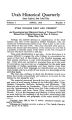
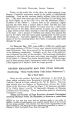
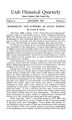
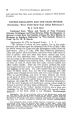
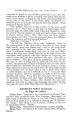
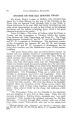
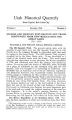
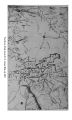
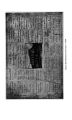
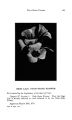
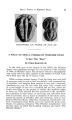
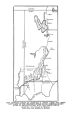
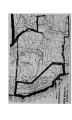
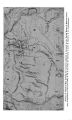
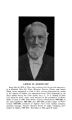
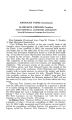
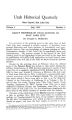
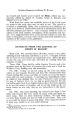
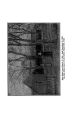
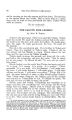
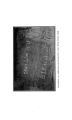
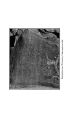
Show Idaho Utah MAP SHOWING ROUTE OF JEDEDIAH S. SMITH, FROM THE GREAT SALT LAKE TO THE COLORADO RIVER IN 1826. COMPARE ADAM'S RIVER OF GALLATIN'S MAP WITH THE VIRGIN ABOVE Dashed line, route proposed by Woodbury. Dotted line, route proposed by Merriam. Utah Historical Quarterly State Capitol, Salt Lake City Volume 4 April, 1931 Number 2 THE ROUTE OF JEDEDIAH S. SMITH IN 1826 FROM THE GREAT SALT LAKE TO THE COLORADO RIVER By A. M. Woodbury1, Park Naturalist, Zion National Park, Utah « The route of the intrepid explorer, Jedediah S. Smith from Salt Lake to the Colorado River in 1826 has been the subject of considerable controversy. The theory of his route last proposed by Dr. C. Hart Merriam2 (Calif. Hist. Quarterly, Vol. II, No. 3, Oct., 1923, p. 228) which takes him from the upper Sevier River westward over a range of mountains, across the Escalante Desert and down the Meadow Valley Wash to its junction with the Virgin River, leaves several open questions unanswered and projects several conditions which do not fit those stated by Smith. There is here proposed a modification of the older theory that his route lay along the Virgin River which appears to fulfill all of the conditions stated by Smith in his letter to General Clark. ^ h e writer, having been reared in the Dixie region along the Virgin River, having served for several years in the National Forest Service on the Dixie National Forest lying to the north of the Dixie country between it and the Escalante Desert, and having acted as Park Naturalist in Zion National Park for several seasons, has had unusual opportunity to study Smith's probable route through intimate personal knowledge of the entire region involved and by comparison of every alternative possibility. He first annuonced this theory in June, 1926, in his lectures in Zion National Park. 2F. S. Dellenbaugh, in a private letter of Jan. 22, 1930, states, "I find that Dr. C. Hart Merriam has arrived at the same conclusion I reached and has stated his views in the Quarterly of the California Historical Society Oct., 1923, Vol. II, No. 3, p. 228. * * * I had arrived at my deduction even 'before 1923, but I did not publish it. * * * Smith did not get any nearer to Zion Park than Cedar City if that near." 36 THE UTAH HISTORICAL QUARTERLY Among the older theories of Smith's route via the Virgin River, there is a diversity of opinion regarding his course in reaching that river. Farish, in his History of Arizona (p. 98) says of Smith, "Captain Jedediah S. Smith was the first white man to enter Arizona from the north. In August, 1826, he started from Salt Lake, passed south by Utah Lake, and keeping down the west side of the Wasatch and the High Plateaus, reached the Virgin River in Arizona, near the southwestern corner of Utah. This, he called in honor of the President of the United States, 'Adams River.' Following it southwest through the Pai Ute country, in twelve days he came to its junction with the Colorado." Others have suggested that he went up the Sevier nearly to Panguitch, then crossed the mountain range on the west and followed its base around through the region where Parowan and Cedar City are located, reaching the Virgin by way of Ash Creek. It is evidently upon the basis of correcting inconsistencies in this theory that Merriam has traced him on across the Escalante Desert to the Meadow Valley Wash. Still others take Smith up the Sevier to its head and down the Virgin from there without attempting to show anything more than his general route. Hanna, in Touring Topics (Sept:, 1926) gives a map showing his course up one river and down the other, which agrees with my theory except as to details. Anyone acquainted with the course of the Virgin Rivex would readily recognize the impossibility of following the river itself all the way and the necessity of detouring in sever'al places.* Smith and his partners, Jackson and Sublette, had been in the fur business in the mountainous regions of the north with headquarters on Bear Lake on the present line between Utah and Idaho, but they knew practically nothing of the region to the south and west. Looking for opportunity to extend their traffic, Smith set out with a party of 15 men for the purpose (to use Smith's words) "of exploring the country S. W. which was en- *[Mr. John C Neihardt, in The Splendid Wayfaring, which is the story of the exploits and adventures of Jedediah S. Smith and his comrades, publishes a map showing Smith's route up the Sevier to its headwaters and thence down the Rio Virgin along the stream course; but it is obvious the author was not familiar with the topography. "From, the headwaters of the Sevier," writes Neihardt, "the explorers crossed the divide southward and, near the end of September, reached the headwaters of the Rio Virgin, ("of a muddy cast and a little brackish"), which Smith called "Adams' River in compliment to our President." With mountains to their left and a sandy waste, broken by occasional rocky hills, on their right, they descended the Virgin through a country where even jackrabbits were scarce." That lost sentence, paraphrased from Smith, approximately describes Ithe topography in the vicinity of Toquerville, as if Smith had descended Ash Creek. I . C . A . ] , . THE ROUTE or JEDEDIAH S. SMITH 37 tirely unknown to me, and of which I could collect no satisfactory information from the Indians who inhabit this country on its N. E. borders." He states, "My general course on leaving the Salt Lake was South-W. & West-" evidently referring to his general direction of the trip and not to his immediate direction which was almost due south nor to the small sinuosities of the course. He goes on, "-passing the little Uta Lake, and ascending Ashleys River which" (he erroneously assumed) "empties into the little Uta Lake. * * * On Ashleys River, I found a Nation of Indians who called themselves Sampatch. They were friendly disposed toward us." Thus far everything appears to be definite. His Ashleys River is undoubtedly that portion of the Sevier River that runs northward and his Sa|mpatch Indians refer without question to those variously designated as San Pitch, San-peet, or Sanpete. He further states: "I passed oven a range of mountains running S. E. & N. W. and struck a river running S. W. which I called Adams' River in compliment to our president." Assuming that he meant what he said, "ascending Ashleys River," he would reach its head at the divide between the Sevier and the Virgin Rivers on the present road between Panguitch and Order-ville, and his route would approximately coincide with that of the present road between those two points. This is the crucial point in the entire controversy. This route would approximately fulfill the conditions stated by Smith. The mountains here at the divide, although not running exactly S. E. and N. W., approach it about as closely as any of the cardinal directions. Furthermore, he immediately reached a river whose general course is southwest. I can find no evidence to indicate that Smith had the Pacific Coast as a definite objective when he started. In all probability, that followed his arrival on a river that flowed away from the Great Basin. At any rate, Smith's excuse for entering California given to the Mexican Governor at San Diego, that he had penetrated the desert so far that it was necessary for him to push on to California to get supplies, seems to have been convincing not only to the Governor but also some of his compatriots, ship captains and others who signed the affidavit in his favor. I can find nothing to indicate that this explanation was developed merely for the purpose of extricating himself from a bad situation. (See Dale, p. 212.) Dr. Merriam's theory seems to imply a definite objective toward the Pacific Coast. Just why he should forsake the objec- 38 THE UTAH HISTORICAL QUARTERLY fives of the expedition (fur traffic possibilities) and leave the broad open valley of the upper Sevieri, with its natural route and its good trapping opportunities and take out to the west over a rough mountain range and a vast expanse of desert beyond as though he had a definite objective in view is not just clear.* Furthermore, this mountain range runs east of north and west of south which is decidedly contrary to Smith's description of S. E. & N. W. On such a route, it would take Smith approximately 5 days of travel before he could reach the Meadow Valley Wash which Dr. Merriam identifies as the Adams' River. Smith would hardly say "Passing down this river some distance * * * here (about 10 days march down it) the river turns to the Southeast" if he had spent half that time in crossing a desert to reach that river and the other half in following the river. The course of the Meadow Valley Wash in general is almost due south although the sinuosities vary from southwest to southeast. This direction, of course, does not fit that given by Smith for the Adams' River which he described as southwest. The Virgin, in fact, is the only river in the region that does fit that description. Smith's statement that "the water is of a muddy cast, and is a little brackish" is of but little significance as the statement might apply equally well to he waters of either stream. Even the character of the stream itself is against Merriam's theory. The stream of the Meadow Valley Wash is much smaller than the Virgin. During a part of its course, it is merely a dry wash wending its way through a barren desert. It is hardly likely that Smith would have dignified it by the term river. A large part of the Merriam argument is based upon Smith's statement that the river (about 10 days' march down it) turns to the southeast. He identifies the southeast portion with the Muddy River, but Smith makes it clear that the portion below the junction of the Muddy and Virgin is the part to which he referred as running southeast. Evidently he was mistaken for this part of the river actually runs almost due south. He says, "I followed Adams' River 2 days further, to where it empties, into the Seeds Keeden, a southeast course," Seeds Keeden evidently referring to the Colorado River. This is corroborated by Gallatin's map to which Smith seems to have contributed. He shows the Adams' River in the approximate position of the Virgin and that part of the river from the bend to the Colorado as *The old Spanish Trail, possibly then in use, turned west at this point emerging at the present town of Paragonah-J. C. A. THE ROUTE OF JEDEDIAH S. SMITH 39 actually bending to the southeast. This is further corroborated by Smith's statement that the salt cave which he visited was on the southwest side of the river (which he errouneously assumed to run southeast). ^v-^SS *» >ji.. ""'•'•••{ r- y^., \- /, • i / ; < • » • < • / • / •* # -'.\ -jL^ty I:'il r* v,ti/ ruin.fi. I K i " Oilit PART OF ALBERT GALLATIN'S MAP OF 1836, SHOWING JEDEDIAH S. SMITH'S ROUTES OF 1826 AND 1827, AND ESPECIALLY ADAM'S RIVER, NAMED BY SMITH, AND NOW KNOWN AS THE VIRGIN The Virgin River as thus outlined is somewhat longer than the Meadow Valley Wash and would as thus delimited take just about 10 days for Smith to march down it to the bend. It also fulfills another condition given by Smith. He states that "the country is mountainous to the East-towards the West, there are Sandy Plains, and detached Rockey Hills." Leaving the headwaters and coming down the Virgin River west away from the mountains there are many sandy plains and detached rocky hills which fit the conditions equally as well as the Meadow Valley Wash. Smith states, "Passing down the river some distance, I fell in with a Nation of Indians, who call themselves Pa Ulches. 40 THE UTAH HISTORICAL QUARTERLY These Indians, as well as those last mentioned, wear rabbit skin robes-who raise some little Corn and Pumpkins." It is entirely possible that these Indians may have been located on the Meadow Valley Wash and the Muddy River as Merriam attempts to show. In view of the evidence for such location, let me point out that it would be entirely feasible for Smith to fall in with them in the lower end of the Muddy Valley, even'if he had come down the Virgin. It is entirely possible, however, as well as probable, that he may have referred to Indians in the Dixie country farther up stream. The wording of his statement indicates that Smith probably encountered them before reaching the bend of the river. Fifty years prior to this time Escalante found what he termed the Parussis Indians in the vicinity of Toquerville and La Ver-kin raising corn and calabashes (Bolton, Escalante in Dixie and the Arizona Strip, New Mex. Hist. Rev., Vol III, No. 1, Jan., 1928, p. 52, 53). Certain other auxiliary evidences should perhaps be mentioned, not because they are of themselves of primary importance, but because they tend to corroborate the Virgin River theory and help to eliminate contradictory items. Smith states, "the country is nearly destitute of game of any description except a few Hares," and further on, "There are here also, a number of shrubs & small trees with which I was not acquainted previous to my route there." Also, "I have found a kind of plant of the Prickly Pear kind, which I called the Cabbage Pear," evidently referring to the barrel cactus. In these passages, he is in all probability, referring to the region above the bend of the river where (about 10 days' march down it) he thought it turned to the southeast. In this region, he had entered for the first time on his trip the Lower Sonoran Life Zone (which he would also have encountered on the Meadow Valley Wash) where such plants as the Creosote Bush (Co-villea tridentata), the Wash Willow (Chilopsis linearis), Joshua tree (Clistoyucca arboresoens), Mesquite Bush, and the Barrel Cactus (Ferrocactus lecontei) commonly occur and which he could scarcely help seeing. In all probability large game would have been scarce in that region at that time of year. However, the great changes in the faunal communities of the region since that time due to the introduction of domestic stock (sheep, cattle and horses) make it almost impossible to recast the original conditions. The fact that Smith did not mention the forks of the river where the Muddy joins it needs no explanation. His letter is a very brief resume of his trip and it is not surprising that he left out many details. He did not mention the forks of the Sevier THE ROUTE OF JEDEDIAH S. SMITH 41 River which he must have seen, nor did he mention the other forks of the Virgin River. Unexpected circumstantial corroboration comes from another source. Wolfskill and Yount in the fall of 1830, apparently inspired by Smith's influence, attempted to follow Smith's route from the Sevier River to the Colorado. Yount was in the mountains with Smith for several months. Camp (Chronicles of George C. Yount, Calif. Hist. Soc. Quart., Vol. II, No. 1. Apr., 1923, p. 36) says, "Smith's stories inflamed in Yount the desire to visit the Coast." Barrows (in Camp, p. 37) states with reference to this trip, "entering the Great American Basin, striking the Sevier; thence southward to the Rio Virgin, which they followed down to the Colorado." Yount's reminiscent description of the trip according to the Clark manuscript (in Camp, p. 39) is not quite so definite but has some significant points of interest. The party "reached a strip of table land, upon a lofty range of mountains, where they encountered the most terrible snowstorm thev had ever experienced." They were evidently somewhere in the mountainous region of the upper Sevier. After a few days of terrible hardships, they made their way "down the steep declivities & into the vallies which lie beneath them. After a few days march, they were ushered into another of those enchanting vallies. There the earth was bare of snow & the evergreens waved in gentleness and calm serenity. * * * The soil is red sandstone & therefore the waters of the River are almost like blood.-Within twenty-five miles of its mouth some Indians brought them salt." The red sandstone description almost certainly limits the "enchanting vallie" to the Dixie region along the Virgin River. Thus, the Barrows and Clark manuscripts both agree in placing the route of Wolfskill and Yount along the Virgin, the course evidently having been originally determined by Smith's influence. There remains yet the problem of pointing out Smith's probable course along the Virgin River and showing its feasibility. Anyone who has traveled much in the mountains will understand the explorer's propensity and aptitude for seeking out and following the natural routes of the region. We have good evidence to indicate that Smith was no exception to the rule. Coming up the Sevier River, Smith would have an open valley with a good easy grade leading up to the divide at its head. The opposite side of the divide leads directly down into the head of the East fork of the Virgin. This is a passable canyon which 42 THE UTAH HISTORICAL QUARTERLY opens out here and there into meadows and lower down widens out sufficiently for fields and small villages and towns (Glendale, Orderville and Mt. Carmel). In Smith's day these townsites were undoubtedly covered with meadows. So far, the route is natural and feasible. Below Mt. Carmel some fifteen or twenty miles, the canyon, gradually narrowing and deepening, enters the tremendous gorge known as Parunuweap Canyon which is clearly impassable. There is, however, just above the gorge, a natural route by which Smith could have climbed out of the canyon to the south and reached those sandy plains which lead around to the river some 20 to 30 miles further west. By following such a route, Smith would have missed that dissected region which Dr. Merriam evidently had in mind when he spoke of Smith not entering the "region of the formidable cliffs and canyons of the Markagunt Plateau," evidently referring to the Zion Canyon region. In all probability, Smith did not see the Zion Canyon. It would be hidden from view on the route outlined. It is at the point where he likely returned to the river, probably in the vicinity of Hurricane, that his description, "the country is mountainous to the East-towards the West there are detached Rockey Hills," applies with particular significance. To the eastward stand the gorgeous cliffs and canyons of the Zion region, while to the west the country drops off into detached low lying foothills and sandy plains. Proceeding down the river, Smith would have little difficulty in following it on through the Dixie country, but arriving at its lower end where the river enters another deep narrow canyon as it passes through the Virgin Mountains, he would undoubtedly have to detour to get over this low range, probably turning out to the north and returning1 to the river in the vicinity of Littlefield, Arizona. The rest of his course is clear. Undoubtedly, he followed the river valley (or close to it) down to its junction with the Colorado, passing the salt cave on the way. Jedediah Smith's Letter to General Claris [Verbatim copy from original in Office of Indian Affairs, Washington, as published by C. Hart Merriam.] THE ROUTE OF JEDEDIAH S. SMITH 43 Little Lake of Bear River. July 12th, 1827. Genl. Wm. Clark Supt. Indian Affairs Sir. My situation here, has enabled me to collect information respecting a Section of the country which, to the citizens of the U. States, has hitherto been veiled in obscurity;-I allude to the country S.W. of the Great Salt Lake, west of the Rocky Mountains. I started about the 22nd. of Augt. 1826 from the Great Salt Lake with a party of fifteen men for the purpose of exploring the Country S.W. which was entirely unknown to me, and of which I could collect no satisfactory information from the Indians who inhabit this country on its N.E. borders. My general course on leaving the Salt Lake, was South-W. & West-passing the Little Uta Lake, and ascending Ashleys River which empties into the little Uta Lake: from this, I found no more sign of Buffaloo-there are a few Antelop & Mountain Sheep and an abundance of Black-tailed Hares. On Ashleys river, I found a Nation of Indians who call themselves Sampatch. -they were friendly disposed towards us. I passed over a range of Mountains running S.E. & N.W. and struck a river running S.W. which I called Adams' River, in Compliment to our President. The water is of a muddy cast, & is a little brackish-the country is mountainous to the East-towards the West, there are Sandy Plains, and detached Rockey Hills. Passing down this river some distance, I fell in with a Nation of Indians, who call themselves Pa Ulches. these Indians, as well as those last mentioned, wear rabbit Skin robes.-who raise some little Corn. & Pumpkins, the Country is nearly destitute of Game of any description except a few Hares here (about 10 days march down it) the river turns to the South east. On the S. W. side of the river there is a Cave the entrance of which is about 10 or 15 feet high & 5 or 6 feet in width-after descending about 15 feet, the room opens out from 25 to 30 feet in length & 15 to 20 feet in width. The roof, sides, & floor are Solid Rock Salt-a sample of which, I send you, with some other articles which will be hereafter described. I have found a kind of plant of the Prickly Pear kind, which I called the Cabbage Pear.-the largest of which grow about 2*^ feet high & \y2 feet in diameter. Upon examination, I found it to be nearly of the substance of a Turnip, altho' by no means palatable.-its form was similar to that of an 44 THE UTAH HISTORICAL QUARTERLY Egg-being smaller at the ground & top, than in the middle.-it is covered with Pricks, similar to the Prickly Pear, with which you are acquainted. There are here also, a number of shrubs & small trees with which I was not acquainted previous to my route there, and which I cannot at present describe satisfactorily, as it would take more space, than I can here allot. The Pa Ulches have a number of marble pipes, one of which I obtained & Send you-altho' it has been broken since I have had it in my possession-they told me there was a quantity of the same material in their country.-I also obtained of them, a Knife of Flint which I send you, but it has likewise been broken by accident. I followed Adams' River 2 days further, to where it empties, into the Seeds Keeden, a southeast course.-I crossed the Seeds Keeden and went down it four days, a South Course. I here found the country remarkably barren, rocky & mountainous- there are a good many rapids in-the river. About at this place a Valley opens out, about 5 to 15 miles in width, which on the river" banks is Timbered and fertile. I here found a Nation of Indians who call themselves Am-muchabas.-they cultivate the Soil, and raise Corn, Beans, Pumpkins, Water & Muskmellons in abundance, and also a little Wheat & Cotton. I was now nearly destitute of horses, and had learned what it was to do without food. I therefore remained there fifteen days and recruited my men, and I was enabled also to exchange my horses & purchase a few more of a few runaway Indians who stole some horses of the Spaniards-I have got information of the Spanish country, (The Californias) and obtained two guides, recrossed the Seeds Keeden which I afterwards found emptied into the gulph of California, about 80 miles from this place by the name of the Coller-ado [words erased] the river Gila from the east.-I travelled a West course, fifteen days over a Country of complete Barrens.- generally travelling from morning until! night without water. I crossed a Salt Plane, about 20 miles long & 8 wide [now known as Soda Lake or the Sink of the Mohave], on the surface was a crust of beautiful fine white Salt, quite thin.-under the surface there is a Layer of salt from y2 to iy2 inches in depth, between this & the upper layer, there is about 4 inches of Yellowish sand. On my arrival in the Province of upper California, I was looked upon with surprise, & was compelled to appear in presence of the Governor of the Californias, residing at Sn. Diego,- where by the assistance of some American gentlemen, (especially Capt. B. H. Cunningham of the Ship Courier, from Boston, I THE ROUTE OF JEDEDIAH S. SMITH 45 was enable to obtain permission to return with my men, the route I came, and purchase such supplies as I stood in need of.- The Governor would not allow me to travel up the Sea coats to Bodago. I returned to my party and purchased such articles as were necessary, & went eastward of the Spanish settlements, on the route I had come in. I then steered my course N.W.-keeping from 150 to 200 miles from the Sea coast-a very high range of mountains being on the east. After travelling 300 miles in that direction, through a country somewhat fertile, in which there was a great many Indians mostly naked, and destitute of arms, with the exception of Bows & Arrows, and what is very singular among Indians the cut their hair to the length of 3 inches-they proved to be friendly.-their manner of living is on fish, roots, acors & grass. On my arrival at a River [Kings River] which I called the Wimmel-che, (naimed after a Tribe of Indians who reside on it of that name) I found a few Beaver.-& Elk, Deer & antelope in abundance. I here made a small hunt, and attempted to take my party across the [mountain] which I before mentioned, & which I called Mount Joseph, to come on & join my Partners at the Great Salt Lake.-I found the Snow so deep on Mount Joseph, that I could not cross my horses,-five of which starved to death. I was compelled therefore to return to the Valley which I had left. And there leaving my party, I started with two men, seven horses & 2 mules, which I loaded with hay for the horses & provisions for ourselves, and Started on the 20th of May & succeeded in crossing it in 8 days-having lost only two horses & 1 mule. I found the snow on the top of this mountain from 4 to 8 feet deep but it was so consolidated by the heat of the sun, that my horses only sunk from y2 foot to one foot deep. After travelling 20 days from the East side of Mount Joseph, I struck the S.W. corner of the Great Salt Lake, travelling over a country completely barren, and destitute of Game. We frequently travelled without water sometimes for two days, over sandy deserts, where there was no sign of vegetation. Where we found water in some of the Rocky hills, we most generally found some Indians, who appeared the most miserable of the human race,-having nothing to subsist on (nor any clothing) except grass seed, Grass-hoppers &c. When we arrived at the Salt Lake, we had but one horse & one mule remaining, which were so poor, that they could scarce carry the little camp-equipage which I had along.-the balance of my horses, I was compelled to eat as the gave out. The 46 THE UTAH HISTORICAL QUARTERLY Compy are now starting; therefore must close this Communication. Yours respectfully JEDEDIAH SMITH, of the firm of Smith, Jackson & Sublette. [The spelling, capitalization and punctuation of the original have been faithfully followed. But it should be explained that at the end of the sentences and clauses there occurs a short stroke resembling an abbreviated dash, which is here rendered by a dash.] BIBLIOGRAPHY Bancroft, H. H., Hist, of Utah, pp. 22-23. (1884-86.) Bolton, H., Escalante in Dixie and the Arizona Strip, New. Mex. Hist. Review, III, No. 1, Jan., 1928. Camp, C. L., Chronicles of Geo. C. Yount, Calif Hist. So. Quarterly II, No. 1, April, 1923. Cleland, R. G., Hist, of Calif.: The American Period. (N. Y., 1922.) Dale, H. C, The Ashley-Smith Explorations. (Cleveland, 1917.) Farish, T. E., Hist, or Ariz. (Phoenix, 1915). Gallatin, A., Synopsis of Indian Tribes, 1836. Map, p. 265. Hanna, P. T., California's Debt to Jedediah Strong Smith. Touring Topics, Sept., 1926. (Los Angeles.) Merriam, C. H., Earliest Crossing of the Deserts of Utah and Nevada to southern California: Route of Jedediah S. Smith in 1826. Calif. Hist. Soc, Quarterly, Oct., 1923, II, 228-237. |