| OCR Text |
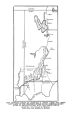
Show 8 THE UTAH HISTORICAL QUARTERLY our escape in the event of trouble. And in his silence thereafter concerning his intervention for our safety, we find in Moshoquop a delicacy of feeling in shielding us from any sense of obligation to him that is rare among civilized men. And such was the dual nature of the merciless leader of the Gunnison Massacre. FIRST SETTLEMENT OF SAN JUAN COUNTY, UTAH By Kumen Jones After Uncle Sam's "Blue Jackets" got through with their "trimming up" of the Navajos in Northeastern Arizona, along in the late "sixties," under the leadership of Kit Carson, the Indians were left in extremely hard circumstances with very little to live upon. Being a thrifty, resourceful people, many of them crossed the Colorado River to the Mormon frontier in search of something to replenish their wasted substance. Finding small scattered settlements and many lone ranches with sheep, cattle, horses, etc., the Indians without ceremony appropriated what they wanted, and made back in haste for their own country. This onesided traffic soon became unbearable, and the Mormon church authorities sent a number of missionaries over to the chief men of the Navajos. These missionaries succeeded in making peace, and they invited the leading men of the tribe to a council with the high officials of the church, where a regular treaty was made, followed by exchange of presents and the smoking of the sacred peace-pipe. Not long after this an event occurred which tested the strength of this peace compact, revealing to each party whether it was to be more than a "scrap of paper." The Navajos, assured by the terms of the treaty, crossed the. river on a friendly expedition, and after starting on their return trip they were caught in a heavy snow-storm in the Wasatch Mountains. In this delay, and their provisions exhausted, they killed a calf to eat, and the owners of the animal, happening on them about that time, opened fire without waiting for a word of explanation. Three of the four Navajos were killed, and the fourth, severely wounded, worried his way back to the Navajo country, a feat which an ordinary person would have perished in attempting. When the wounded Navajo reported among his people that their newly-made Mormon friends had treacherously broken the peace treaty, a wave of indignation swept quickly over them. The Indian who had been treated so roughly belonged to one of the influential families of the nation, and war to the death was immediately declared. Frenzied excitement prevailed, and all the white people on or near the western side of their reservation, were notified and ordered out of the way. The Mormons, leaders and people, were shocked and sur- FIRST SETTLEMENT OF SAN JUAN COUNTY, UTAH 9 prised when they heard of what was taking place. The church authorities immediately drafted their old Indian missionaries into service, and these missionaries, daring and obedient, faced the perilous situation to allay the danger threatening their people. What they accomplished by thus taking their lives in their hands has gone into Mormon history, and is good evidence of the diplomacy and wise policy of the Mormon leaders. It proves also the genuine stuff of which those old experienced scouts were made. These missionaries convinced the angry and excited Indians that the murdering of their people was not done, nor sanctioned by their Mormon friends, but that it was done by non-Mormons, hard characters, by whom the Mormons themselves were also being robbed. A party of representative Navajos were taken back to the place of the trouble, and were convinced of the fact that the former treaty had not been broken by the Mormons. And again they were loaded up with presents and given added assurance of the desire on our part to stand eternally by the treaty of friendship and peace. It was with these things in mind that the leaders of the church, in 1879, selected seventy-five or eighty young men, mostly married, to establish an outpost, and were given the mission of "cultivating and maintaining friendly relations with Indians whose homes were near the section where the state of Colorado, and the territories of Utah, New Mexico and Arizona corner together." In pursuance of the above arrangement, an exploring party was organized and started in April to find a way into the proposed region. It consisted of about twenty-five men, most of them young men, (I among them) under the leadership of Silas S. Smith, who proved to be a careful, wise and successful scout. From our starting point in Iron county in Southern Utah, we traveled south-east to Lee's Ferry, thence to Tuba City, and from there north-east through the Navajo country, reaching the San Juan river about twenty-eight miles below the "four corners." We spent three months exploring the country in every direction, and traveled on north by the Blue Mountains, crossing Grand River and Green River, returning home by way of central Utah. While our party were out on their exploring trip, another party was sent from Escalante to find a more direct route into the San Juan country. This outfit came down as far as the western brow of the Colorado river gorge, and looking down through the "Hole-in-the-rock" to the water of the river, and to a canyon leading out on this side to a flat looking country, went back and reported that it was all clear sailing for a wagon road to the San Juan. This report was prompted more by the desire to encourage travel through the little village of Escalante, than to find a feasible place for a permanent road. 10 THE UTAH HISTORICAL QUARTERLY By the latter part of October, 1879, the settlers selected for San Juan were on the road headed in that direction. They had all been advised to provide themselves with provisions for at least a year, and with clothing, seeds, tools and implements to begin farming, and to build places' of shelter from the elements and safety from the Indians. After the main body of the company had arrived at what is called Forty-mile Spring, the last camping place where sufficient water for so large a company is found, twenty miles from the river, exploring parties were sent out to see just what was ahead of us. The discovery was soon made that we had been led into a trap, as deep snows had fallen on the mountains back of us, and the next to impossible loomed up before us. The writer, then a young man, was one of three sent out for the purpose of returning with an official report. After eight days of exploring the report was made about as follows: One reported that the idea of making a way through by the "Hole-in-the-rock" was absolutely out of the question. The second scout reported that the way was quite feasible, and the men of the company could make a fairly good wagon road without much trouble. The third reported that by getting experienced men, tools, powder, etc., a way could be opened to get the outfit through the country, but there was no place in sight for a permanent wagon road. The latter report was accepted, and steps were taken to act upon it. Silas S. Smith returned and visited the Territorial Legislature, and the leading officials of the Mormon church, from both of whom he received appropriations for blasting a way across the river and over the broken country out to where Bluff, Utah, was afterwards located. In the company there were eight-two wagons^ and about that number of men and boys old enough to handle a team. The company put in about fifty days on the "Hole-in-the-rock," getting down with their outfits to the river, and they put in the greater part of three months getting across to where Bluff was begun. It was a severe winter, but the pilgrims enjoyed good health. Each Sabbath day was duly observed by all resting from their labors and holding services. Each night before retiring the bugle sounded as a signal for all to observe evening prayers. Dancing parties were frequently held on the flat bed rock, also singing, games, readings and other amusements. Three babies were born on the way, and with the assistance of two old-time nurses, and the blessing of the Good Father, all went well with mothers and children. And the Good Father had a kind watch care over our whole company of pilgrims, bringing us through without death or serious sickness or accident of any nature. Nearly everyone was helpful and kind and good-natured, and in very rough places men would rally to each other's help, FIRST WHITE MEN IN SAN JUAN COUNTY, UTAH 11 steadying the wagons down the slick rocks with long ropes, and pushing and pulling up the hills. With them was an old-timer named Barnes whose ponderous laugh echoing through camp would bring at least a good-natured smile to the face of all who heard. Looking back at it now, and considering how that large company, working and blasting their way through a country of that nature, and being there during six months of one of the severest winters, it looks to me as though there was something more than human power and wisdom associated with it. When that bedraggled company of tired pilgrims straggled into the present site of Bluff, many of their teams, which consisted of horses of all sizes and descriptions, as well as oxen, mules and burros, were unable to proceed farther; at least they would have to stop there for some time, and some of them remained there on that account. Most of the original settlers at Bluff, however, remained there from religious and conscientious motives. And under- the blessing and protection of a kind Providence, they were prospered and preserved to accomplish, at least in a large measure, the mission assigned them. For forty years there was but one of the original colony, a very dear friend of mine, killed or harmed by the Indians. And no Indian was killed by one of our party. A quiet, orderly Christian civilization was established in the midst of these Indian tribes: Utes, Piutes, Navajos, etc., many of whom were savage outlaws. Many children have grown up in our colony who are developing into good strong characters, and filling places of responsibility in the different communities of south-eastern Utah. During our stay of almost forty-five years in San Juan county, Utah, there has never been a suspicion of any social or moral laxity between our people and the Indians. FIRST WHITE MEN IN SAN JUAN COUNTY, UTAH By Albert R. Lyman After becoming interested in the first white man to explore a country, it is peculiarly interesting to learn of a still earlier explorer. For a long time it was believed by the historians of San Juan county that the first white men to find their way through its broken solitudes were the four scouts sent out from Hole-in-the-Rock by the Mormon pioneers in 1879. However, according to an account having the sound and appearance of truth, a company of ten white men found their way through this wild region in 1873, more than six years before the scouts from Hole-in-the-Rock. This early company, according to F. P. Brown, of Telluride, 12 THE UTAH HISTORICAL QUARTERLY Colorado, were in search of a mysterious mine. Brown and others from Fort Defiance in Arizona, had crossed the Navajo reservation in 1872, and crossing the San Juan River in Utah, had gone eastward in the mountains of Colorado perhaps to thirty miles of what is now Durango. But the Indians drove them back and they returned to Arizona without having found any gold, but with a still stronger belief that there was something rich in the great unexplored region. That winter in Prescott, a man name Charley Jones, declared he would pledge his life to anyone who would put up the money, to pilot a company to a rich mine in an unexplored region, and Brown and eight others prepared to follow him in the spring. With good equipment and a generous supply of provisions, this company of ten reached, in June, what is now called the mouth of Comb Wash. Ignorant of the quicksand of the river they narrowly escaped drowning in an attempt to ford it, but swimming it successfully, they followed a dim trail up through the lower alkali bottoms, and when the trail could no longer be found, they turned westward on what is now the Barton Range, following dim trails uncertainly towards Lower Grand Gulch. Knowing nothing of the gulch till they reached it, they prospected around a long time and at length, by hazarding many perilous twistb and turns, they reached the west side, only to find a lofty reef still frowning on them from the west. In these long days of hardship in the unknown it is difficult to figure out what will-o-the-wisp led Captain Jones on, but when he saw the high barrier he told his men they must get over it. It is probable they were south of Clay Hill Pass, and hunting along the rocky base to the north, they discovered the pass, climbed up into it and followed down what was six years later named Castle Wash. Somewhere south-east of the Redd Tank country they climbed out of the wash and got their first glimpse of the Henry Mountains. Jones informed them that the promised mine was in those mountains, and led off in that direction without mention of the great Colorado gorge cutting directly across their intended pathway. Going down over a long sand-slide they entered what was later called North Gulch, and following its devious course twenty or thirty miles they reached the river, only to look in vain for a landing at the base of the perpendicular wall on the opposite side. Turning back up the gulch they hunted a long time before they found a way to get out on the north side, and somewhere in the wild region below the mouth of Redd Canyon, they found a way down to the river where a landing could be made on the west side. FIRST WHITE MEN IN SAN JUAN COUNTY, UTAH 13 It is a long thrilling story with some hair-raising details, perhaps more than the "Quarterly" wishes to reproduce. Giving it very briefly, four of the company braved the river on a raft and succeeded in reaching the opposite side. Then for three days they followed Jones into the heart of the Henry Mountains where, as it became apparent he knew no more about it than any of them, he grew nervous lest the promised forfeit should be claimed. They found nothing, and in the darkness after the third day, Jones stole back alone to the part of the company waiting at the river, and being unable or unwilling to give any acceptable account of his three companions, they held him under guard till there was surprise all around by the return of the three. Omitting here more perils on the river, suffice it to say, most of the company decided Jones was unbalanced, and dividing the provisions, eanh man was left responsible for his own return. Five of them retraced their steps by Clay Hill and after being compelled to trd.de some of their horses for Navajo sheep to. keep from starving, reached Prescott in safety. The others, falling again under the leadership of Jones, who claimed to know the way to a Mormon settlement, found themselves hopelessly hemmed in and had to make a perilous return by way of Clay Hill, but fearing to cross the San Juan, they followed it into New Mexico before finding white men again. Note: Charles Baker, George Stroll and James White, are reported to have passed through this country in the late summer of 1867, prior to White's perilous journey on a raft through the Grand Canyon of the Colorado-according to Thomas F. Dawson in his publication, "First Through the Grand Canyon." - J . C. A. FEW NAVAJOES IN UTAH Properly speaking, the Navajo Indians do not live in Utah, although quite a number live on a strip of ground across the San Juan River, west of the 110th Meridian; and recently some of them have filed on land in order to maintain permanent sites. A very few Pah-Utes also lived there (north of the San Juan) part of the time. I am not very well posted on them, although it was at our Trading Post (near old Mexican Hat and Good-ridge) that Tse-Ne-Gat surrendered to General Hugh L. Scott in 1915; and a number of times later we experienced so-called Indian scares, the last in which Old Posey lost his life. I am more familiar with the Navajoes, as distance means little to an Indian, and we meet many of them as customers.-Mrs. A. H. Spencer, Spencer's Trading Post, via Bluff, Utah. |