| OCR Text |
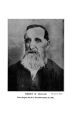
Show EARLY JUSTICE IN UTAH 87 EARLY JUSTICE IN UTAH Dictated by John Nebeker, in 1884 Born in Delaware, 1813. Arrived at Nauvoo the winter the people left that place. Came to Utah with the first company following the Pioneers to Council Bluffs in '47. Left Nauvoo in '46. Crossed the plains in Smoot's 100, Wallace's 50. The company consisted of 566 wagons. At Loop Fork we found a ford and 566 wagons crossed the same day; the next day the quicksands moved down stream some 200 yards and a crossing could not be effected without wetting the luggage and contents of wagons. In 1853 President Young and I raised the first apples-one each. Both were put together and Mrs. Nebeker made the first apple pie. Cut the first wheat in 1848, with a sickle. It was called May wheat. Yes, I had quite an experience with the crickets. They came from Arsenal Hill in great numbers. Channels were dug, and filled with water to prevent their travel, but they would throw themselves across; it was impossible to fight them back. While receiving word from his son that his corn in Hill Creek was in jeopardy, his attention was called to a dark cloud which proved to be a flock of gulls. They made a line for the crickets and remained half an hour until they cleaned them out. The farming land commenced near the Warm Springs, running thence northwest, thence south to Big Cottonwod. This was all fenced to keep out stock. The crickets covered all this land; they were most destructive in spots. The Indians got fat on them. They would gather them in baskets, then put them in willows and set fire to the willows; by the time the willows were burned the crickets would be cooked. That season a great number of Indians came to the Warm Springs suffering from measles. They died off about as fast as they went into the water. Some they buried and some they didn't bury. I helped to bury those that were left unburied. We buried 36 in one grave; and 44 dogs in another. Their custom was to kill their dogs when their masters died. This was the first time measles appeared here. It was a new disease to them, and they didn't know how to cure it, or where they got it. First "house (adobie) was built by Jesse Turpin in the 14th Ward. In the Spring of '49 they began to move out of the fort to live in wagons and to build log houses. The Council House, now destroyed by fire, was built in '49. This was the first public building of any importance. It stood on the north-east corner of the block south of the Temple Block. There was a small public building used as a post office and general business office before this. 88 • THE UTAH HISTORICAL QUARTERLY Some of our people were able to fit out teams and send to California. When they returned they brought large quantities of gold dust. John Kay, who came in '48 was appointed to coin hioney out of the dust as a matter of better convenience. He coined $2.50 pieces, $5.00 and $20.00 pieces. The Council House was commenced in '48 and finished in '49. The building was two-storey; the first storey of dressed rock; the second of adobie, plastered. It was about 40 feet square. It was used for general purposes, and afterward as Court House. We had been used to law; but when we came here in '47 we found none. Having no jails we instituted the Whipping Post. One or two were whipped. I had to chastise one in that way for stealing but there was very little of this, however. We had been forbidden to cut green timber except for certain purposes; certain fines was the penalty. We were required to use dead timber for fuel, and there was plenty of it, but some would not do it. These laws were made in '47 after President Young went back. John Taylor and Parley P. Pratt were left. Father John Smith was looked on as President of the Camp; but Taylor and Pratt took the lead and in fact were in charge. Through them this understanding about the'timber, etc., occurred. They and the leading men agreed upon them and the people concurred in them. These laws gradually died away by the time President Young returned. These laws provided for the office of public complainer. I was one of them. On one occasion I had to prosecute a case before the High Council, and also execute the judgment. The case was for stealing; the judgment was $10.00 fine or ten lashes. The article stolen was a lariat, and he was.caught at it. I volunteered myself to help him pay the fine, but he would not, so he was whipped. The Bell Post-a pole on which a public bell was hung to call the people together-was the place designated.. I proceeded to tie him, but he refused to be tied ; said it was not in the decision. C. C. Rich was appointed by the Council to see that the whipping was carried out in the spirit and meaning of the judgment. I appealed to him whether he should be tied or not. Rich decided that as the decision did not mention it and the man didn't want to be tied, it was his right to choose for himself inasmuch as he would stand to be whipped. He said he would stand up to it. He was then told to strip. He refused to on the ground that it was not in the decision. But his refusal would not count. He stripped and the lashes were administered in the presence of the public. The penalty for stealing in cases generally, in cases when people would promise to do better, was to make proper confessions and restore four fold, if the person upon whom the theft was committed required it. There was one case that created a great deal of fun. MATERIAL PROGRESS OF UTAH 89 A certain man persisted in keeping a dog. Now a dog would eat pretty much of what, under the circumstances, could be eaten by the people and therefore all could not afford to keep dogs. This dog stole some biscuits from a man and the fellow borrowed a shot gun and shot the dog. The case was brought before me for arbitration, and I gave the man who had lost the biscuits the full benefit of the law, namely, allowed him four fold-or 16 biscuits, which kept the fellow a whole week. MATERIAL PROGRESS OF UTAH Dictated by William Jennings, ex-Mayor of Salt Lake City in 1884 (Bancroft Library) One of the most important articles brought by the pioneer women were their looms. For many years homespun woolen lin-seys were all there was to wear. Brigham Young at one time decreed that the men mustn't dance with ony one in other than home-spun garments; this was to discourage vanities and extravagance and to encourage home manufacture's. They undertook to raise cotton in St. George, but it didn't pay. Considerable cotton was shipped about '58 or '60; still it was not a paying experiment. The freight upon it was lessened as they sent it in the otherwise empty wagons to Omaha on the Missouri, whence they had gone for the emigration for Utah. Sometimes as many as 500 wagons, and cattle would be sent out to meet them. In the spring of 1858, when Johnston's army entered Salt Lake, not a soul was to be seen-everybody had fled the city. It was not long before the clothing became exhausted; women were so scantily dressed as scarcely to cover their nakedness; barefooted and bleeding, too, with no means for supplying their needs. They dressed sometimes in sacking or with remnants of rag carpets thrown about them. There were cattle and sheep, however, in abundance. The railroad coming into Utah was a great blessing as an educator. It is impossible for a people to live by itself without communication more than once in six years with the outside world, without becoming narrow-minded a n d retrograding. Boys eighteen or twenty years old, sons of Brigham Young and other dignitaries, satisfied their highest ambition when they would ride about the town on horseback, dressed fantastically, with leathern leggings, Spanish spurs, soft slouch hat with fur twisted around it and hanging down like a coon's tail. A Bowie knife would be 90 THE UTAH HISTORICAL QUARTERLY stuck in his legging, and he would race about the place shouting and halloaing as he went. They were in no way above the cowboy of today and played the part of a Mexican or Spanish rough. The railroad brought higher civilization and education. Even greater attention to dress and fashion has its elevating influences, stimulating ambition and self-respect. The plague of grasshoppers has been a most serious matter. They would come suddenly, millions of them and eat every green thing in their way; even shawls or sheets thrown over plants or trees to protect them, would be quickly destroyed. They would be found among the skirts, under a muslin dress, eating and destroying everything. Every means was used for their, destruction ; they devastated hundreds of acres, and as they would rise and fly high in the air, the air would be darkened with them. They seemed to be massed together and to take but one direction, flying not more than 8 or 10 miles perhaps and then settling upon another field of action. The only exterminator seems to be the sea-gulls. They gorge themselves on this rich diet; they suddenly appear in the wake of the grasshoppers and will swallow them, throw them up and swallow them again. Mr. Jennings says he has seen them someiimes coming like a cloud and alighting apparently not knowing where; that on one occasion most of their number perhaps dropped into the Lake, and were blown on shore by the wind in rows of sometimes two feet deep for a distance of two miles. There was one place on the Weber, the first settlement there, where the crops were destroyed five years in succession. AMERICAN POSTS (Continued) By Edgar M. Ledyard Kearney, Fort. The first post here was built by a detachment of Missouri Volunteers. It was named Fort Childs in honor of their commanding officer. Fort Childs, also Fort Kearney, was made a depot by the Mormons while crossing the plains to Utah. In 1848, Colonel Phil Kearny arrived at the post with the Second United States Dragoons. The post was renamed in his honor, although the spelling is not the same as his family name, which was, however, spelled variously by different army officers. Colonel Kearny rebuilt the fort, planted shade trees and made other substantial improvements. The fort was located on the main overland road across the plains in the midst of powerful and hostile tribes of Indians. For that reason, it became the |