| OCR Text |
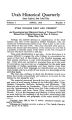
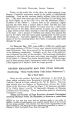
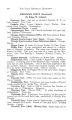
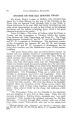
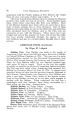
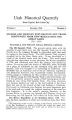
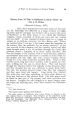
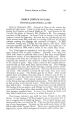
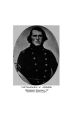
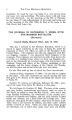
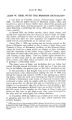
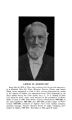
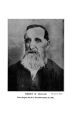
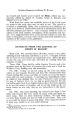
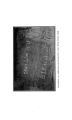
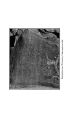
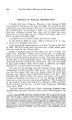
Show NATHANIEL. V. J O N ES SERGEANT COMPANY "D" MORMON BATTALION Utah Historical Quarterly State Capitol, Salt Lake City Volume 4 January, 1931 Number 1 EXTRACTS FROM THE LIFE SKETCH OF NATHANIEL V. JONES By his wife, Rebecca M. Jones Nathaniel Vary Jones, was born on the 13th of October, 1822, in the town of Brighton, Monroe County, New York. He was the son of Samuel and Lucinda Kingsley Jones. When he reached the age of seventeen years, he felt unaccountably drawn towards the western country, and although young and inexperienced, he made his way to Potosi, Wisconsin. He there became acquainted with Albert Carrington, in whose family he resided for many months. About this time a branch of the Church of Jesus Christ of Latter-day Saints was organized, and he became a member. He was baptized by Elder William O. Clark, and on April 6, 1842, was ordained a teacher under the hand of Zera H. Gurly and Albert Carrington. In the spring of 1843, he went to Nauvoo, Illinois, where he was ordained an elder on June 11, 1843, and was sent on a mission to Ohio. He left Nauvoo on the 19th of June in company with elder Robert T. Burton with whom he labored in the ministry until about the 15th of June, 1844, bringing a number into the church. From there he was sent to labor in Rochester, Monroe County, New York, where he held several meetings; visited his relations and friends, and bore a faithful testimony to them of the truth of the great Latter-day work. He was about this time afflicted with inflammation of the eyes, which was so severe that for several weeks he was blind; but through the blessing of the Lord he was able to get home to Nauvoo on the 17th of September. When his eyes were better he went to Potosi and remained until the following spring. He returned to Nauvoo, and on the 14th day of March was married to Rebecca M. Burton. He remained there about one year assisting on the temple, and acting as a guard or minute-man, until May, 1846, when he left with the Saints for Council Bluffs. 4' THE UTAH HISTORICAL QUARTERLY About the time of his arrival there the call was made for the Mormon Battalion and he was counselled to enlist, which he did, not yielding to his own feelings in the matter but desiring to obey the counsel of those who were placed at the head to direct. He performed the journey and reached California with his brethren. Just before his term of enlistment expired, he, with nine of his comrades, was chosen as a guard for Col. John C. Fremont, who was called to Washington owing to some difficulty. They reached the Missouri River on the 22nd of August, after a very hard and perilous journey. After finding his family safe in Atchison, Missouri, in the fall of 1847, he went to Ohio to visit his aged mother and brothers. He remained there during the winter and succeeded in getting two of his brothers to come west with him; one of whom was believing in the truths of the Gospel. But they were all obliged to stop in St. Joseph, Missouri, until the spring of 1849, when on the 8th day of May they started for the Salt Lake valley. During the journey, one brother accidently shot himself as he was preparing his gun to go hunting. This occurred at North Platte Forge, on the 4th of July. He was carried into the river on a sheet and baptised at his earnest request and died on the 8th. The other brother went to California. On the 8th of August Nathaniel reached Salt Lake, and on the 20th of November, 1850, he was elected to the office of First Lieutenant of Cavalry, in the Battalion of Life Guards of the Nauvoo Legion, and of the Militia of the Territory of Utah. In April, 1851, he was elected Alderman of Salt Lake City. On the 14th of September, 1852, he was ordained into the High Priests' Quorum, and was also ordained to the Bishopric, acting as Bishop of the 15th Ward. At a special conference held August 28, 1852, he was appointed to go on a mission to Hindostan. He started in company with a number of others October 19, and went southwest across the desert to San Bernardino, thence to San Pedro, and to San Francisco where they tarried until the 29th of January. They arrived at Calucutta on the 26th day of April, 1853. At a conference held there on the 29th of April, he was appointed president of that mission. He returned to Salt Lake via San Francisco on the morning of October 4, 1855, making his absence from home three years. In the spring of 1856, he was called to go to Las Vegas, New Mexico, for the purpose of manufacturing lead. He returned to this city in March, 1857, having accomplished all that he was desired to do. On the 9th day of April, 1857, he was elected LIFE SKETCH OF NATHANIEL V. JONES 5 Councilor of Great Salt Lake City by unanimous vote of the people. On the 1st of June he was required and authorized to carry the mail from this city as far east as Deer Creek, on the way to Independence, Missouri. About this time, the word came that the President of the United States was sending an army to Utah, in consequence of which on the 11th day of August, 1857, President Young advised Mr. Jones to come home. As soon as he reached home he was sent to Echo, and was acting Colonel during the Utah war; and in connection with his brethren, suffered many hardships and privations which told very much on his constitution. In the spring of 1858, when the city was vacated, he was one who was told to remain as guard over the property. On July 2, all things being settled, and peaceable, the families and friends began to return home together. But a constant watch had to be kept up day and night so that his duties did not slacken in the least, but he, in turn with his brethren, stood guard during the summer. At the election held on the 4th of August, 1858, he was elected Selectman for three years, in and for Salt Lake County. In the fall of 1859, he was called to go on a mission to England, where he labored faithfully until he was released. Shortly after he returned home in the fall of 1861, the subject of making iron was discussed, and Mr. Jones being of the opinion that it could be done, was sent to Iron County. He reached Parowan about the 12th of November, 1861, when he immediately set to work putting up the machinery and getting out the ore. By a letter and specimen sent to President Young, which reached here January 22, 1862, it was seen that he succeeded. The iron was handed to James Lawson of this city for examination. Mr. Lawson tested its qualities and found its tensile strength to be ten per cent better than the best quality of States iron. Mr. Lawson says, "Good cast steel can be manufactured from it." The ore was obtained near Pinto Creek." He spent the winter and until late in the spring before he suited himself in point of location, but about the 1st of June, he became located at Rocky Ford, Beaver County; put up some buildings and prepared for the coming winter. President Young thought that if he could find the same class of ore nearer Salt Lake City he had better put up works as near as practicable; as here was the principal demand. Accordingly, Mr. Jones came back and found the ore in two different localities, and it was decided that he return to this city. By the time he had brought his family back it was late in November and in going to the 6 THE UTAH HISTORICAL QUARTERLY mountains for wood he was over taken in a very severe storm and came very near perishing. He took a heavy cold and never felt well afterward. On the morning of the 8th of February he was taken ill with inflammation of the lungs and brain, and on the morning of the 15th, 1863, he died at his home in the 15th Ward, Salt Lake City. THE JOURNAL OF NATHANIEL V. JONES, WITH THE MORMON BATTALION (Extracted) Council Bluffs, Missouri River, July 16, 1846. This day I enlisted in the Mormon Battalion, which is to march to upper California by the way of Santa Fe, under the command of Lieut. Col. Allen, by order of the President of the United States. Our company was this day organized with Nelson Higgins, Captain. I was appointed third Sergeant of the Company. The Company was marched six miles from here to the river flat, to a trading house, where we drew our blankets, etc.; and on the nineteenth we received many rich instructions from Brigham Young and others of the Twelve, pertaining to this campaign, and the future designs of the Church. On Monday we left this place and moved down the river four miles. On the 22nd took up line of march for Fort Leavenworth. Arkansas River, September 17, 1846:-On the 16th we camped at this place. 17th still continued our march, leaving the road that goes to Ft. Benton to the right and taking the nearest road to Santa Fe. October 19; written at California, February 22, 1847:-Journal of the route from Santa Fe, Mexico to this place. We left Santa Fe October 19, 1846. The face of the country was very broken, mountainous and barren, until we came to Del Norte, or called by some the Rio Grande. Here was a very large Spanish Settlement, the inhabitants of the country are a mixture of Spanish and Indians, and are quite inferior in their habits and customs, and a little below the average -size. Their farms are very good for this country; they have no fences at all. Their land is all watered by ditches, and their cattle consists chiefly of herds of stock. There are some parts where grapes are abundant, out of which they make some wine and brandy. |