| OCR Text |
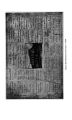
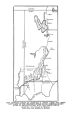
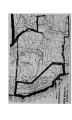
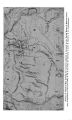
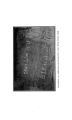
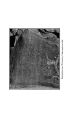
Show 90 UTAH HISTORICAL MAGAZINE acquainted with the Pueblo Indians of New Mexico; has visited them all once, and some of them many times. * * * There are a good many Navajo captives among the Mexican families; they make the best of servants. Some families abuse them, while others treat them like their own children. Most of the Mexican families have them; there are more than a thousand of them, perhaps two or three thousand. Part of these captives have been taken in war by the Mexicans, and part have been purchased from the Indians, such as the Utes, who are constantly at war with the Navajos. These slaves have been bought and sold in this manner for years, but of late the traffic has been greatly diminished through the agency of General Carleton, and also in a certain degree through that of other persons. AMERICAN POSTS (Continued) By Edgar M. Ledyard Halifax, Fort. Fort Halifax was built at the mouth of Armstrong Creek, about one-half mile above the town of Halifax by Colonel William Clapham, in 1756. This was one of a series of fortifications, erected by the Provincial Government, from 1752 to 1763, located between the Delaware and Potomac Rivers. Plans for Fort Halleck called for two hundred squared logs, each about 30 feet in length. Work on the fort was pushed as rapidly as possible on account of impending Indian hostilities. The site was first called Camp Armstrong and renamed Fort Halifax by Governor Morris on June 25, 1756. It appears from imperfect historical data that the garrison formerly stationed at Fort Hunter, Pennsylvania, was removed to Fort Halifax soon after it was built. Simon Girty, father of the famous outlaw, lived at Fort Halifax, or near it, at one time, while engaged in trading with the Indians. When completed, the fort was a quadrangle w|ith four bastions, these being surrounded by a ditch about ten feet deep. Pennsylvania. Halleck Battery, on Tybee Island. Georgia. Halleck Battery, at Fort Hancock. New Jersey. Halleck, Fort, at Columbus. Kentucky. Halleck, Fort, at Suffolk. Virginia. Hallet, Camp, at Cranston. Rhode Island. Halletts Point, Fort, at Fort Stevens. New York. Halliman, Fort. Latitude 29°, longitude 82°45". Florida. Halsey, Camp, Kashequa, McKean County. Pennsylvania. Halt Mond, Fort. New York. Hamer, Fort, temporary post, left bank of the Manatee River, about four miles east of Braden Creek; established in 1849. Florida. AMERICAN POSTS 91 Hamilton Battery, on Bird Island, Savannah River. Georgia. Hamilton, Camp, at Buckeyestown. Florida. Hamilton, Camp, at Lexington. Kentucky. Hamilton, Camp, at Columbia. Tennessee. Hamilton, Camp, near Fort Brown. Texas. Hamilton, Camp, near Fort Monroe. Virginia. Hamilton, Fort, north of Fort Standoff. Canada. Hamilton, Fort, temporary fort in Florida War, 3 mileis! southwest from Fort R. Jones and east of Fort Vose, on the Ocilla River. Florida. Hamilton, Fort, near Galena. Illinois. Hamilton, Fort, southwestern extremity of Long Island at the "Narrows" and on the east side of the entrance to New1 York Harbor. One of the principal defenses of New York City. This post was established in 1831. In 1914 the garrison consisted of five companies of Coast Artillery. Post located about seven and one-half miles from New York City. New York. Hamilton, Fort, at Hamilton, at the crossing of the Great Miami; built in 1791, by General Arthur St. Clair. Fort Washington and Fort Jefferson were nearby contemporary posts. Butler County. Ohio. Hamilton, Fort. Depredations by the Indians were committed on Big Creek, near which Fort Hamilton was founded in December, 1755, to avoid further attacks. James Hamilton and Benjamin Franklin were appointed as Commissioners by Governor Morris to provide defenses for this section of Pennsylvania. After looking over the ground, they decided to establish Fort Hamilton which was completed by the 20th of January, 1856. It was named for James Hamilton, one of the commissioners, above mentioned. Fort Hamilton was not so important a post as some of the other early forts of Pennsylvania since it stood in a sparsely settled country. Pennsylvania. Hamilton, Fort, Rhode Island, Narragansett Bay, opposite Newport. Rhode Island. Hamilton, Fort. Also called Hamilton's Fort. Southern part of Iron County, near Kanarraville, Utah. Hamilton, Fort, (now Wiota). Established during the Black Hawk War. On site of William S. Hamilton's Smelting Works. Wisconsin. Hamlin, Fort. Fort Hamlin, now abandoned, was located on the left bank of the Yukon River, about 90 miles northeast of Fairbanks and on the opposite side of the river from Shamans Village. Alaska. Hammond, Fort, at Allatoona Pass. Georgia. Hammond's Fort, on Arrowsic Island, mouth of Kennebec River. Maine. Hampton, Fort. Temporary work on the left bank of the 92 UTAH HISTORICAL MAGAZINE Elk River, east of Athens, in the vicinity of the Muscle Shoals of the Tennessee River. Alabama. Hampton, Fort, on present site of Fort Macon. North Carolina. Hancock Barracks, one mile north of Houlton, near the eastern boundary line of the State. Maine. Hancock, Camp, at Augusta. Georgia. Hancock, Camp, at Edwinton. North Dakota. Hancock, Camp, at Brandy Station. Virginia. Hancock, Camp, near Harper's Ferry. Virginia. Hancock, Fort. This post is situated on Sandy Hook, four miles from Highland Beach, New Jersey. The first use of Sandy Hook for military purposes was in 1807. Purchases, for military use, were made in 1817 and in 1892 the whole peninsula became the property of the Government. This post was named after Major General Winfield Scott Hancock. The present post was established in 1892. In 1914 six companies of Coast Artillery were stationed at Fort Hancock. New Jersey. Hancock, Fort. On west bank of Missouri River south of Fort Lincoln. North Dakota. Hancock, Fort. Fifty-three miles east of El Paso, now a town of that name. The site was first called Camp Rice. Texas. Hancock, Fort, at mouth of Columbia River. Washington. Hand, Fort, at Kittaning. Pennsylvania. Hanover, Fort at, in Luzerne County. Listed in Heitman's "Historical Register" but not, at least under "Fort Hanover", in "Frontier Forts of Pennsylvania." Pennsylvania. Hanson, Fort. Temporary fort in Florida War, a little east of the St. John's River, thirteen miles southwest from St. Augustine. Florida. Hanson, Camp, at Grayling, Crawford County. Michigan. Hardee, Camp, at Pitman's Ferry. Missouri. Hardin, Camp, at Sand Lake. New York. Hardy, Fort, on Hudson River, at Schuylerville. New York. Hareniger, Fort. Same as Fort Herkimer. New York. Harker, Fort. Formerly Fort Ellsworth. Left bank of Smoky Hill River, forty-five miles from Fort Zarah and one hundred miles above Fort Ripley, at Kanopolis, Ellsworth County. Kansas. Harlam, Camp, at Seventh Street Road. Washington, D. C. Harlee, Fort. Temporary fort on the right bank of the Santa Fe River, on the road from Newmansville to Fort Heilman, established in Florida War. Florida. Harmer, Fort. Built in 1785. West side of the mouth of the Muskingum, on the Ohio River and opposite Marietta. Ohio. Harney, Camp, at Belleville on Rio Grande. Texas. Harney, Fort, on Willamette Valley and Cascade Mountain AMERICAN POSTS 93 Military Road. First called Camp Steele. Present town of Harney lies north of Malheur Lake in Harney Valley, Harney County. Oregon. Harper's Ferry Armory. Harper's Ferry was named after Robert Harper, an English millwright who obtained a grant of land from the owner, Lord Fairfax, in 1748. Harper was not the founder, but he is buried at Harper's Ferry. George Washington, a friend of Lord Fairfax, surveyed it and personally selected it as a site of a National Armory in 1794. This was designated by Congress as the Southern National Armory. Spring-ville, Massachusetts, was selected during the same year as the site of a Northern National Armory. All the Government records of Harper's Ferry were destroyed when the Arsenal was burned on April 18, 1861. Jefferson Davis complained of and charged the Federal Army with destroying their own property in the face of the fact that it was their avowed purpose to possess and occupy property belonging to the United States. There are no records in the way of guns or notes which show that any arms were manufactured at Harper's Ferry prior to 1801, and Harper's Ferry first attracted attention as an armory when John M. Hall established himself there in 1816. John M. Hall was the inventor of Hall's Breech-Loading Flintlock Rifle, patented by William Thornton and John M. Hall on May 21, 1811. Hall's Rifle was the first breech-loading arm ever paten.ed in the United States, and the first breech-loader adopted and used by any army. Three of Hall's Breech-Loading Rifles, in the possession of the writer, show careful workmanship and unusual ingenuity. The Harper's Ferry Armory turned out from 1500 to 2000 guns a month under normal conditions and the rifles made there were considered the best in the world. No unusual event occurred at Harper's Ferry until the Arsenal was seized by John Brown on October 16, 1859. BroWn and his party fortified themselves in an engine house; with the exception of ten men, who were killed, Brown and the surviving members surrendered to Captain, afterwards General, Robert E. Lee, and were tried and executed at Charles Town, Virginia. Harper's Ferry was captured by the Confederates on April 18th, 1861, and the Arsenal destroyed. Some 16 or 17 thousand rifles and muskets and the carpenter shop were burned. A large part of the gun-making machinery and some unfinished material were saved and later sent to Winchester, from which point it was distributed to the Confederate Arsenals in Richmond, Virginia, and Fayetteville, North Carolina. These arsenals served to construct, alter and repair many of the arms used by the Southern Confederacy. In March, 1865, the machinery was removed from the Fayetteville Arsenal and secreted in Egypt, Chatam County, Virginia, at the site of large coal mines owned and operated before the war by Philadelphia capitalists. 94 UTAH HISTORICAL MAGAZINE In May, 1865, the United States Government, learning of the whereabouts of this machinery, sent ninety-six 6-mule teams there, who captured the machinery and removed it to Raleigh, from which point it was shipped on cars to Washington. Among other things recovered was the die with which the letters "U. S." and the "eagle" were stamped on the lock plate; the "U. S." had been cut out and "C. S. A." put in its place. Harper's Ferry is at the confluence of the Potomac and Shenandoah Rivers; three states, Maryland, Virginia and West Virginia "join" here, forming a scene of unsurpassed beauty of which Thomas Jefferson wrote as follows: "You stand on a very high point of land; on your right comes up the Shenandoah, having ranged along the foot of-the mountain a hundred miles to find a vent; on your left approaches the Potomac, in quest of a passage also. In the moment of their junction they rush together against the mountain, rend it asunder, and pass off to the sea. The scene is worth a voyage across the Atlantic." In addition to Fairfax and Washington and Jefferson and Lee and Brown and Hall, named above, the names of J. E. B. Stuart and Franz Sigel and Joe Johnston and "Stonewall" Jackson, and many other leaders of the Civil War are associated with its history. Lewis W. Washington, a great grand-nephew of George Washington, was held as a hostage by John Brown during his short siege. The Baltimore and Ohio Railroad has marked the site of many historical spots of this small town with its great and almost universally known history. West Virginia. Harrell, Fort, at head of Alcotopah River; temporary fort in Florida War. Florida. Harriett, Fort. Temporary fort established during the Florida War, at the source of the eastern tributary of the Sockohoppe River, seventeen miles northwest from St. Marks. Florida. Harriloliz, Fort, in Leon County. Florida. Harris, Fort. About the year 1705, John Harris, Senior, built a log house on the present site of Harrisburg. This building was later altered somewhat and became Fort Harris. His son, John Harris, founded the City of Harrisburg, formerly called Harris' Ferry. Early Pennsylvania records state that Indians were hostile around this post in 1755-56. Fort Harris was further strengthened at that time and provisions were laid in, anticipating a siege. The fort stood on the lower banks of the Susquehanna River. Pennsylvania. Harris, Fort. Confederate work; left bank of the Mississippi River, seven miles above Memphis. Tennessee. AMERICAN POSTS 95 Harrison, Camp. Six miles from Cincinnati. Ohio. Harrison, Fort. Temporary fort at Clear Water harbor, west of the head of Tampa Bay; established in Florida War. Florida. Harrison, Fort. Left bank of the Wabash River, three miles above Terre Haute. Indiana. Harrison, Fort Benjamin; ten miles northeast of Indianapolis. A United States Military Post named for Ex-President Benjamin Harrison. Lawrence. Indiana. Harrison, Fort William Henry. Six miles west of Helena. Montana. Harrison, Fort. North of Mohawk River, near Stone Arabia. New York. Harrison, Fort. On Narragansett Bay. Rhode Island. Harrison, Fort, on left bank of James River, near Richmond. Built by Confederates. Virginia. Harrod's Fort, at Harrodsburg. Kentucky. Hartford, Fort, at present site of Hartford. Connecticut. Hartsuff, Fort, on Pease Creek. Florida. Hartsuff, Fort, on Loup River, 76 miles from Grand Island. Nebraska. Harvie, Fort. Identical with Fort Myers. Temporary fort on Caloosahatchee Bay; established in the Florida War. Florida. Harvey, Camp. Present site of Milwaukee. Wisconsin. Haskell, Camp. Present site of Athens. Georgia. Haskell, Camp. Present site of Macon. Georgia. Haskell, Camp; about 30 miles from Warsaw. Missouri. Haskell, Fort. One of the Rebel defenses before Petersburg. Virginia. Haskin's Fort. In Benton County. Oregon. Hasting's, Camp, at Mount Gretna. Pennsylvania. Hatch, Camp. Later called Fort Concho. Texas. Hatch's Ranch. A post was maintained at the ranch for some time. Hatch's Ranch is about 65 miles from Fort Union. New Mexico. Hatteras, Fort, on Pambico Sound-Hatteras Inlet. Built by Confederates and captured by Federals in 1861. North Carolina. Haven, Camp, at Niantic. Connecticut. Haven, Fort. Said to have been located in Carson Valley, Utah. Probably a frontier post of Utah when Nevada was in: eluded in its boundaries. Nevada. Hawk's Fort, at Charlemont. Massachusetts. Hawkins, Fort, on left bank of the Ocmulgee in Jones County, above the mouth of Walnut Creek and opposite Macon. Now effaced. Georgia. Hawley, Fort, (1866-67). On right bank of Missouri River, 96 UTAH HISTORICAL MAGAZINE in eastern part of Chouteau County. Mail was dispatched from Malta, Valley County. Montana. Hawley, Camp, on present site of Galveston. Texas. Hawn, Fort, on Tombigbee River. Alabama. Hay, Camp John, at Baguio, Mountain Providence, Luzon, 171 miles from Manila. Summer camp of the Philippines, reached over Benguet Road built by Ex-President W. H. Taft. Philippine Islands. Hayes, Fort. Within corporate limits of Columbus. Ohio. Hays, Fort. First called Camp Fletcher. Forks of Big Creek, about four miles from its mouth on Smoky Hill River, 52 miles west of Fort Ellsworth. This post was in western Kansas on the Union Pacific, formerly Kansas Pacific Railroad; an important army post in early days. Many noted officers including Sheridan and Custer were stationed at the post or visited it officially. Now called Hays. Kansas. Hays, Fort Alexander. One of the defenses before Petersburg. Virginia. Hazelhurst Field, Mineola. New York. Head, Fort. Site of present Fort Sewall, Marblehead. Massachusetts. Head's Fort. North of Rocheport. Missouri. Heard, Fort. Also called Heard's Fort. On site of present town of Washington, Wilkes County. Built primarily as a defense for Augusta and was for a short time, during the Revolution, the temporary capital of Georgia. Georgia. Hearn, Camp Lawrence J. Fourteen miles south of San Diego, California, Palm City. California. Heath, Camp, at Morganton. North Carolina. Heath, Fort. Subpost of Fort Banks, four and one-half miles northeast of Boston. Massachusetts. Hedges, Fort, at Martinsburg. West Virginia. Heiman, Fort. On the Tennessee River, about 75 miles from Paducah. Kentucky. Heights of Quebec, The. The Citadel, Castle St. Louis. Canada. Heilman, Fort. Junction of the north and south forks of Black Creek, tributary to St. John's River, near Whitesville. Florida. Helen, Fort, on Tshugatshian Bay. Alaska. Hell, Fort. A facetious name for Fort Sedgwick which was located at Petersburg. Virginia. Hell Gate. Defenses of New York City 6n East River. New York. Helsinburg, Fort. Also called Elsinburg. On the Delaware River. New Jersey. • Hempstead, Fort, in Howard County. Missouri. Utah State Historical Society BOARD OF CONTROL (Terms Expiring April 1, 1933) J. CECIL ALTER, Salt Lake City JOiEL E. RICKS, Logan WM. R. PALMER, Cedar City PARLEY L. WILLIAMS, SalrLake City ALBERT F. PHILIPS, Salt Lake City (terms Expiring April 1, 1931) GEORGE E. FELLOWS, Salt Lake City WILLIAM J. SNOW, Provo HUGH RYAN, Salt Lake City LEVI E. YOUNG, Salt Lake City FRANK K. SEEGMILLER, Salt Lake City EXECUTIVE! OFFICERS 1930-1931 ALBERT F. PHILIPS, President J. CECIL ALTER, Secretary-Treasurer Librarian and Curator Editor in Chief WILLIAM ] . SNOW, Vice President All Members, Board of Control, Associate Editors MEMBERSHIP Paid memberships at the required fee of $2 a year, will include current subscriptions to the Utah Historical Quarterly. Non-members and institutions may receive the Quarterly at $1 a year or 35 cents per copy; but it is preferred that residents of the State become active members, and thus participate in the deliberations and achievements of the Society. Checks should be made payable to the Utah State Historical Society and mailed to the Secretary-Treasurer, 131 State Capitol, Salt Lake City, Utah. CONTRIBUTIONS The Society Was organized essentially to collect, disseminate and preserve important material pertaining to the history of the State. To effect this end, contributions of writings are solicited, such as old diaries, journals, letters and other writings of the pioneers; also original manuscripts by present day writers on any phase of early Utah history. Treasured papers or manuscripts may be printed in faithful detail in the Quarterly, without harm to them, and without permanently removing them from their possessors. Contributions and correspondence should be addressed to the Editor. Utah Historical Quarterly, 131 State Capitol, Salt Lake City, Utah. SCALE 1: I0O00OO GREAT SALT LAKE, MAPPED BY CAPT. JOHN C. FREMONT IN SEPTEMBER, 1843 (See page 111) |