| OCR Text |
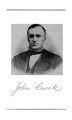
Show 110 THE UTAH HISTORICAL QUARTERLY her cabin where she had a little table set against the wall. Over the table she spread a clean cloth, set the table, using her own dishes. Then she brought up some boxes for chairs for us to sit on and announced that our meal was ready for us. She stood by in readiness for anything more she could do for us, not permitting anyone else in camp to turn a hand, showing her gratitude and loyalty to the whites. She seemed to think it quite an honor to be able to show us the kindness and friendship she had for us. She was quite old then. Above I spoke of a book written by Mrs. Ripley. One paragraph in the book tells of the early settlement of western Colorado. "One day Ouray and Chipeta were riding the hills. They came to a swollen stream and found some emigrants preparing to cross over. Ouray and Chipeta told them they could not cross and took them to another ford where they crossed in safety. A few days after this occasion another emigrant wagon came along and the family tried to cross the stream and all were lost. Ouray and Chipeta were not there to warn them of the danger." I read the above paragraph to Chipeta from the book and asked her if it were true and she said it was.1 'Besides the writers' knowing the Utes personally, the senior writer having been with them as a government official together with the time since his retirement, a total of some forty-three years, they have used as references the agency files both at Ouray and Fort Duchesne, Utah, the War Department records, and the various references to these Indians in "Handbook of American Indians," Bull. 30, parts 1 and 2, Bureau of American Ethnology, Washington, October 12, 1912. JOHN CROOK'S JOURNAL (Concluded) We commenced cutting logs this year to build houses on city lots, (in Heber.) Last week in August we harvested barley, Sept. 3rd began on the wheat. In 1861 we hauled 800 poles on sleds, also some for Jonathen Clegg and some for C. N. Carroll. About the first of April, 1861, we commenced plowing. Henry Luke and I joined teams and broke up land on 20 acres in section 31 of my homestead. May 17th plowing ditch for city lot. C. N. Carroll and I made ditch about five blocks east and tapped Spring creek where George Blakely's corral is now. Put in some garden and fenced it, also fenced city pasture lots and made water with Hy Luke and Patrick Carroll the balance of the month, since his retirement, a total of some forty-three years, they have used as ditches on Center creek meadow land. June, two days on road on Lake creek, working on house on city lot, and exchanged work JOHN CROOK'S JOURNAL 111 July, to Center creek hauling logs to saw mill for lumber for our house. 24th to 30th took some tithing to Salt Lake City, and got our endowments. August, this month we commenced harvesting barley on the 17th and wheat on Sept. 1st. Threshing extended until near Christmas. We threshed at Bishop J. L. Murdocks on the 13th, he having moved over from Midway early in the summer. Nov. 9th we moved into the house on the city lot, double log house. Oct. 27th militia organized by Bishop J. O. Duke, Col. and by Pace from Provo. And we had to haul our grain to Provo to grist mill, made two or three trips. About Christmas the canyon road washed out and there was no travel then. A John Vanwagoner was building a grist mill at Snake creek. I remember helping John Jordan get the buhr stones off the hills north of Heber City. And Wm. Reynold erected a small chopping mill turned by horse power of threshing machine. This was the show for bread after road washed away, and many had to boil wheat for food, could not grind fast enough to supply all the families. This chopper was running all winter until Van-wagoner got his grist mill running in June, 1862, at Midway. Broadhead and John Lee had a house warming on the hill Christmas day, old settlers there, coming on the running gears of wagons, two feet of snow. 1861, Christmas week, snow and rain, all gone by Jan. 1st, 1862. Road washed out in Provo canyon. Wm. A. Giles and Strong here with buggy on a visit, had to go back riding horses. Jan. 1st. 1862, field all bare of snow and cattle all out in the field. But the month was stormy, snow and rain. I had to haul willows from river for wood, been a fire and burned the willows, made good wood, snow very deep. March. County Court organized, J. W. Witt, Judge, Charles Shelton, Clerk. March 2nd people voting for County officers of Wasatch county. April 2nd started on foot to Conference at Salt Lake City and was gone one week. I went down Provo canyon and back the same way. Brought home some apple seed from Tuckers and planted them. The next winter we organized a dramatic company, Elisha Averett read. May 7th, 1862, commenced plowing and I cut my foot and Joseph Taylor took my farm on shares this year. June, put in oats with Hy Luke up to 21st. 22nd commenced quarrying rock for a Theatre House, quarrying and hauling until the last of July, finished the building ready for roof. We found the need of a drainage outlet, the river being very high. In some places it was one-half mile wide so we went to work and built a bridge about five miles north across the Provo River. J. Vanwagoner got his grist mill running about the time of high water and could not cross with wagons. So a boat was built and we took grain over 112 THE UTAH HISTORICAL QUARTERLY on that. Harvest was late this year, 17th of Sept. was the first cutting. Oats were standing up to the middle of October, threshing lasted nearly all winter, having to shovel snow for threshing floor the biggest part of the time. August 8th and 9th, 1863, two days conference, Brigham Young, Heber C. Kimball and others here. Held meetings in the bowery by log meeting house. October 22nd to Nov. 10th to Green River with oats for the overland stage line with two yoke of cattle. July one week and one week in Sept. hauling logs from Snake creek to saw mill to make lumber intended for Theatre building. Sept., peeling bark, C. N. Carroll and I. Each hauled a load of bark to the tannery at Provo City. Feb. dug the first well in Heber in the corner of my lot. Brigham Young said it was the best water he had ever tasted. 1863, this spring was late, being about the first of May before plowing began, though we raised splendid grain this year. June, grass-hoppers made their appearance in great numbers and we took chickens to the field.* * * * March, 1864, this month we commenced a canal on the side hills, east and north of Heber, to supply Heber and bench land south of the city. I worked to the amount of over $50.00 and had charge of one division of said canal. * * * I had a man named Herbert Horsley to help on the farm this summer. We spent several days digging and plowing out pot rock. * * * August 20 to 22nd Brigham Young and others here holding meetings again. * * * July we commenced to build rock schoolhouse westward. 1 was hauling rock most of this month and one of the trustees also. Oct. hauled some sandstone for graves to Jones, Salt Lake City. * * * Sept. 9th snow fell 4 inches deep and laid our grain flat, making a slow harvest. George Carlyle went with teams to Missouri for emigrants. (The journal subsequently consists of brief mention of daily occupational tasks of little general or historical value. Ed.) Utah State Historical Society BOARD OF CONTROL (Terms Expiring April 1, 1937) J. CECIL ALTER, Salt Lake City JOEL E. RICKS, Logan WM. R. PALMER, Cedar City PARLEY L. WILLIAMS, Salt Lake City ALBERT F. PHILIPS, Salt Lake City (Terms Expiring April 1, 1935) GEORGE E. FELLOWS, Salt Lake City WILLIAM J. SNOW, Provo HUGH RYAN, Salt Lake City LEVI E. YOUNG, Salt Lake City FRANK K. SEEGMILLER, Salt Lake City EXECUTIVE OFFICERS 1932-1933 ALBERT F. PHILIPS, President Emeritus WILLIAM J. SNOW, President J. CECIL ALTER, Secretary-Treasurer-Librarian HUGH RYAN, Vice President Editor in Chief All Members, Board of Control, Associate Editors MEMBERSHIP Paid memberships at the required fee of $2 a year, will include current subscriptions to the Utah Historical Quarterly. Non-members and institutions may receive the Quarterly at $1 a year or 35 cents per copy; but it is preferred that residents of the State become active members, and thus participate in the deliberations and achievements of the Society. Checks should be made payable to the Utah State Historical Society and mailed to the Secretary-Treasurer, 131 State Capitol, Salt Lake City, Utah. CONTRIBUTIONS The Society was organized essentially to collect, disseminate and preserve important material pertaining to the history of the State. To effect this end, contributions of writings are solicited, such as old diaries, journals, letters and other writings of the pioneers; also original manuscripts by present day writers on any phase of early Utah history. Treasured papers or manuscripts may be printed in faithful detail in the Quarterly, without harm to them, and without permanently removing them from their possessors. Contributions and correspondence should be addressed to the Editor. Utah Historical Quarterly, 131 State Capitol, Salt Lake City, Utah. |