| OCR Text |
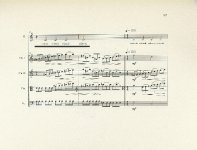
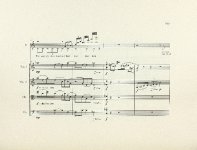
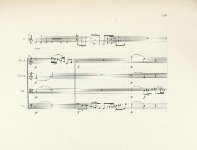
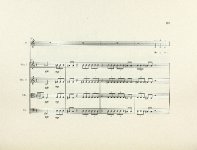
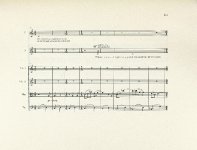
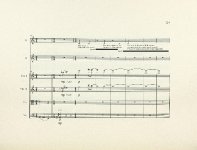
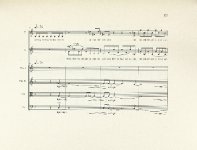
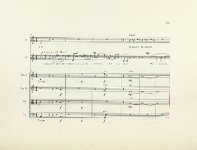
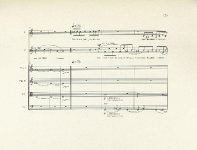
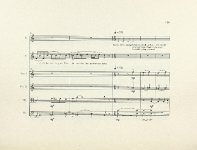
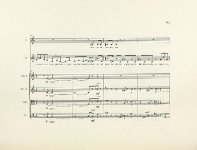
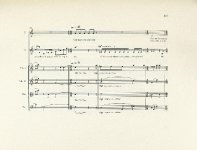
Show 46 only "a pile of bricks with no cement.t''" The text will be considered more closely within the context of the musical analysis below. The score contains no dynamic markings, but instead a series of emotion-related expression markings. Anhalt and Halfyard have created a categorization of these words, such as "tense," "anxious," "distant," "frantic," and "nervous," in order to distill the range of emotions and vocal colors of the piece." The score instructions describe the function of the descriptive words, saying the words may inspire facial and body gestures, but the singer should not pantomime the words, allow them to let the cues" ... act as a spontaneous conditioning factor to her vocal action (mainly the color stress and intonation aspects) and body attitudes. The processes involved in this conditioning are not conventionalized; they must be experimented with by the performer herself according to her own emotional code, her vocal flexibility and her 'dramaturgy.t'r" Berio was obviously more interested in the singer's resulting interpretation of the score than in a specific realization of a series of traditional dynamic markings. The best access Berio had to such a broad spectrum of vocal colors was through the emotions associated with them. He realized that every performer's "emotional code" would be . unique, and every musical nuance would be tailored to the performer's emotional experiences and to her voice. Each recording of Sequenza III is a personalized interpretation rather than the presentation of a standardized work. Although the piece was written for Berberian and she was the definitive 38 performer of the piece for several Janet Halfyard, "Provoking Acts, The Theater of Be rio's Sequenzas" in Berio's Sequenzas ed. Janet Halfyard (Burlington, VT and Hampshire: Ashgate, 2007), 170. 39 Anhalt, 35-36; Halfyard, "Provoking Acts," 107. 40 Luciano Berio, Sequenza III, words by Markus Kutter (London: Universal Edition, 1968), score instructions, last page. |