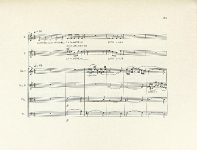
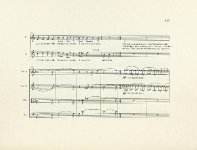
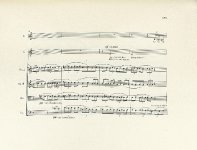
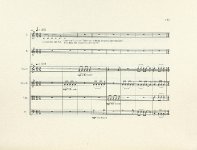
| OCR Text |
Show CHAPTER 4 ANALYSIS OF BERIO'S SEQUENZA III In traditional Western music, specifically music that has been identified as being organic and formally unified, a composer makes decisions on the order of events in a work based on the relationships between combinations of pitches and rhythms, or through the spinning out of a motive. This kind of organicism is also evident in Berio' s Sequenza III, but the traditional analytical tools of pitch and rhythm fail to provide an adequate description of the musical material. A motive can be identified in an EVT piece such as Sequenza III not primarily by pitch, rhythm or interval, but by its specific combinations of various vocal sounds. In extended vocal music, these vocal sounds can be described using phonation, phonetics, placement, register, intensity and production location. Pitch and rhythm still playa roll in the identification of a motive in EVT analysis, but instead of standing as the supreme identifiers, they now are on an equal footing with aspects of the voice's timbre. The simultaneous examination of pitch, rhythm, and timbre will unveil how motives are developed in this analysis of Berio's Sequenza III. The timbral aspects of this piece will be described in terms of the specific physiologically based categories that were discussed earlier in this dissertaiton. For music in which timbre is a key element, such as electronic music, Schaeffer and others have employed spectrographic analysis. While use of a spectrograph provides great insight into tape pieces, it is less effective in an analysis of Sequenza III for a few |