| OCR Text |
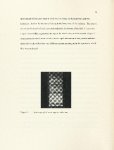
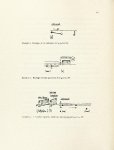
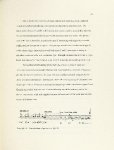
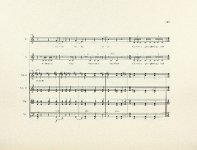
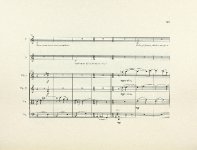
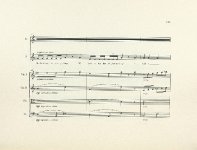
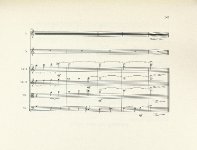
Show 7 Although composers around this time were expanding the sonic capabilities of orchestral instruments, composers continued to write for the voice traditionally, as a melodious conveyer of text. Perhaps one reason for the slow development of vocal extended techniques is that the voice is the most personal and intimate of all instruments. The composer and vocalist Meredith Monk has said of the voice "It has so much nuance and yet a very direct connection to the center of each person.t" Meaning is conveyed through the voice with language and with nonverbal human sounds common to all people. Perhaps the personal nature of the voice made it less aesthetically pliable than its instrumental counterparts during the late nineteenth and the early twentieth centuries. EVT executed for ornamental reasons can be found in Western music before the twentieth century. Some folk songs contain animal sound imitations, utilizing non- singing techniques such as "Old McDonald" or "I Had Me a Cat." Even in art music, there were special effects such as the Baroque ornament called a "tremolando" or "tremulando," a kind of measured repetition that was used by composers to represent shivering, among other things. Henry Purcell used vocal tremolando in the Frost Scene of his King Arthur (see Example 1) and, earlier, Jean Baptiste Lully used it in the winter scene of his ululation. 6 Isis.? The Baroque tremolando is comparable to the technique we now call 8 Edward Strickland, "VoiceslVisions: An interview with Meredith Monk," Fanfare 11 (January-February 1988) : 360. ? Lionel Sawkins, "Trembleurs and Cold People: How Should They Shiver?" in Performing the Music ofHenry Purcell, ed. Michael Burden (Oxford: Clarendon Press, 1996),247. 8 See the Appendix for a description of "ululation." |