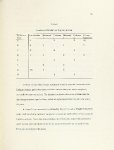
| OCR Text |
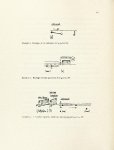
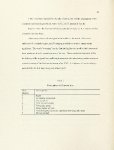
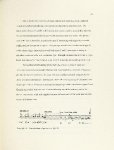
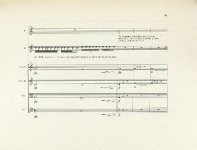
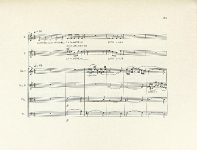
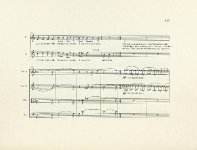
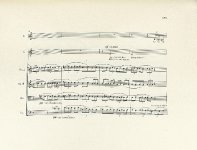
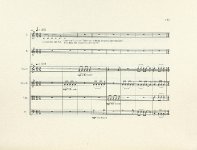
Show 38 Air turbulence noises are those made without a specific oscillator, but by pushing (or pulling) air through the vocal tract in specific ways including breathing, panting, whispering, and teeth whistles (audio example 30). Some consonants such as s, sh, f, and h, are made distinctly by sustaining air friction. Other consonants are made by shorter bursts of air friction (k, t, p). Sustained sand sh are called teeth whistles. Unlunged or semilunged noises are those that are created by snapping or squishing air pockets created along the vocal tract. Audio example 31 demonstrates seven different pulses in the same order listed in the Appendix. Like other sustainable sounds not created by the vocal folds, pulses may be combined with the vocal folds. Several of the categories may be multiplexed (rapidly alternated) or combined according to the availability of filters, oscillators and airflow. The vocal techniques listed above can be divided into five category groups: vocal fold sounds (speech, singing, ululation, reinforced harmonics, chant), buccopharynx oscillators (lip flutter, tongue flutter, cheek flutters), nonvocal fold laryngopharynx oscillators (glottal clicks, glottal over-pressure, forced blo;vn), air turbulence, and unlunged noises. Sequnza III uses vocal techniques from only three of the five groups: vocal fold sounds, air turbulence and unlunged noises. In the piece, air turbulence often signals the end of a section and is otherwise used ornamentally. Example 2 is an instance of air turbulence and occurs at about 1 '42". After a very busy introduction, Berio includes this sigh to signal the end of the first section. Like air turbulence, unlunged noises are not used as parts of motives. They are instead used when introducing new sounds or are used transitionally. The unlunged noise |