| OCR Text |
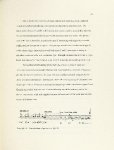
Show 16 After lecturing with John Cage (1912-1992) at Darmstadt during the summer of 1958, Berio invited Cage to come work in the studio in Milan. Cage accepted and worked on his Fontana Mix at the studio in Milan and spent much of his time at the Berio residence. Berberian had been living "in a world obsessed by epics of tape montage. In response, she had developed her own form of 'domestic clowning': a one-woman simulacrum of rapid tape editing that leapt from one type of voice to another, but maintained the expressive integrity of each.'?" Cage saw the potential of her "domestic clowning" and wrote a piece for her that involved ten singing styles, which he called Aria. Berberian imitated vocal tape pieces, which Cage then turned back into a vocal piece. For many composers, Cage's Aria changed what could be expected of the voice. Two composers who would see Aria performed and take particular notice of Berberian's unique vocal capacities were Sylvano Bussotti and Berio himself. Berio's first response to Cage'sAria was an electronic and voice piece entitled Visage. The precomposition of Visage would influence Berio's vocal writing for the rest of his life .• During two or three hour recording sessions, Berberian would improvise in an emotional pseudo-language. Berio gave vague suggestions, and provoked Berberian until he heard what he wanted. According to Berberian, "Berio wanted to work within a parabola from the failure of communication, through trivial conversation, to serious emotion, and ultimately to song.'?' One entire session was spent exploring different types of laughter, after which Berberian claimed her diaphragm was bruised. These hours of recording were then cut, spliced and layered with other electronic material to create Visage, which contains virtually no traditional singing, but instead whispers, 20 21 Osmond-Smith, 5. Osmond-Smith, 8. |