| OCR Text |
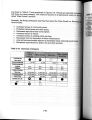
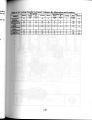
Show ommon categories include education, families and youth, crime and safety, housing, land c transportation and mobility, recreation, equity, civic engagement and health. One of the most important qualities that lead to effective indicators is that they measure outcomes or conditions of a system or resource and not the activities, effort or money spent to affect those conditions. The Use of Indicators Indicators are like report cards to the community. They can tell us where we are doing well and where we need to focus our energies to improve. First, measurements are collected and produced for an indicator to establish a "baseline" of conditions in the community. In order to distinguish a good grade from a poor one, results need to be interpreted and given meaning before they are reported. Interpretation involves comparing measurements over time as well as placing them in a larger context. For example, reporting that median household income was $38,000 for a given year does not tell us much. On the other hand, if median household income is shown to have increased five percent in a given period then we can begin to determine whether that indicates progress or not. A comparison overtime does not tell us everything. We still need to provide some context in order to understand more fully what measurements mean. What if, in the median household income example, inflation increased in the same period by ten percent? What if median household income increased faster or slower in comparable communities, or in the state or nation as a whole? An effective indicator report should include this kind of analysis and comparisons whenever possible. Proposed Indicators The consultant team and a Task Force have identified the following set of draft indicators. ¦ Percentage of residential units in urbanized areas built at densities greater than or equal to 3.5 units per acre. ¦ Percentage of non-residential development in urbanized areas built at greater than or equal to 0.25 Floor Area Ratio (FAR). ¦ Percentage of 40-acre urban cells that are contiguous part of the largest unbroken grouping of urban development in the study area. ¦ Percentage of residential development that is concentrated in areas where residential uses are at least 25 percent of the land area. ¦ At least three-fourths of new residential development should occur within the first three rings of urban development. ¦ Employment growth (number of jobs) in and around high-density employment centers. ¦ Jobs per housing balance per census tract. " Number of mixed-use developments constructed annually. ¦ Connectivity refers to the number of road connections or "nodes" within subdivisions. 2-79 |