| OCR Text |
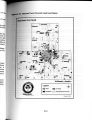
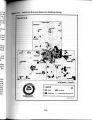
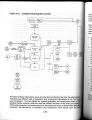
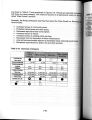
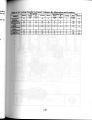
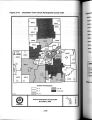
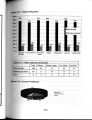
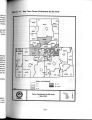
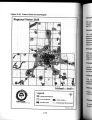
Show • Consistent and, to the extent possible, quantifiable methodologies for the analysis and evaluation of the alternatives. ¦ • Methods to evaluate the alternatives leading to selection of a Preferred Alternative land use vision for the region. Each of these objectives was reviewed by an Impacts and Alternatives Task Force, the Stakeholder's Committee and the Steering Committee to obtain feedback and comment. The alternatives and their analyses were also presented to the public in a series of public forums in December of 2002. Scenario Development, Methodology and Results Population/Employment Forecasts and Zoning Accurate portrayal of the land use scenarios requires a reasonable estimate of the amount of development that can be expected. On this matter, population and employment forecasts can be utilized to estimate the amount of development expected by a certain date. It is noteworthy that the scenarios contained significant input that came from outside of the scope of the Regional Growth Study. In particular, under a separate contract, the TCRPC had prepared two sets of population and employment forecasts, one based on existing development trends in the three-county area, the other based on the build out of existing zoning districts for all local governments in the region to their maximum allowable density. Scenario-building Process In June of 2001, the project team met with the Steering Committee to discuss the methodology for building the alternatives and to preliminarily identify scenarios. By this time, the population and employment projections developed separately were available and it was agreed that these projections would serve as a primary input into the scenarios. The projections were developed at the level of Traffic Analysis Zones (TAZ), small geographic planning areas whose size ranges from a city block in heavily urbanized areas to an entire township in rural areas. Since the boundaries of TAZ's do not overlap, and since the entire three-county study region has been subdivided into TAZ's, adding up the projections at the TAZ level provides regional totals for forecasted population and employment. The two sets of projections at the TAZ level (one for the adopted trend forecasts, the other for build out based on existing zoning) would define two of the scenarios. Other scenarios would be developed that would contain different distributions of population and employment, but utilize the same control totals for the region as these two forecasts. 2-48 |