| OCR Text |
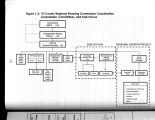
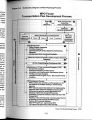
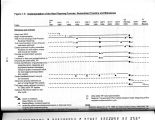
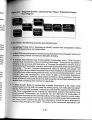
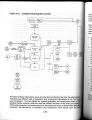
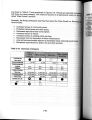
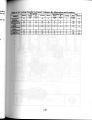
Show Planning Process Redesign Also in 1998, TCRPC and MDOT executed a new Memorandum Of Understanding (MOU) defining the roles of the state, MPO's and our federal funding partners in completing federally required transportation planning and programming responsibilities. This process redesign MOU generally calls for establishing local and statewide transportation goals and objectives, developing statewide revenue assessments, identifying evaluation tools for needs assessment, identifying project categories and a program structure which prioritizes project categories based on local revenue forecasts developed cooperatively by the state, the MPO and local public transit agencies. These factors are then to be used as a basis for identifying long term investment strategies, a twenty year project list and a series of agreed upon five-year investment strategies to guide programming decisions over the first five years of the plan. Implicit in this approach is greater detail on projects identified in this first five year period of the plan so they can be used to provide a basis for monitoring success at achieving our investment strategies, and that the entire process be conducted by the partners within an active framework of public involvement and participation. A flow diagram of relationships between these elements of the new planning process is shown in Figure 1-4. Immediately upon successfully negotiating agreement with MDOT on the approach described in the summary above and contained in this Memorandum of Understanding, TCRPC and its advisory committees initiated an aggressive approach to implementing the new planning process described above. Existing goals and objectives from the adopted Regional 2015 Transportation Plan were grouped into initial program categories. Committees worked diligently to develop an initial matrix showing analytical tools to be used for needs assessment in each project category and prepared initial drafts of long range (twenty year) investment strategies and draft five year investment strategies for the region. Committees of staff members of MDOT and Michigan MPO's began working to identify agreed upon approaches to developing statewide revenue assessments and local revenue forecasts. TCRPC and MDOT then tested these new approaches in successfully completing the 2000-2002 Transportation Improvement Program, consistent with an implementation schedule depicted in the adopted FY 2000 Work Program and shown as Figure 1-5. Interim Regional 2020 Transportation Plan, June 2000 In June, 2000 TCRPC adopted the Interim Regional 2020 Transportation Plan which both reaffirmed and updated the Regional 2015 Transportation Plan adopted by the Tri-County Regional Planning Commission in May of 1995 for Clinton, Eaton and Ingham Counties and the Lansing, Michigan metropolitan area. Federal regulations require Metropolitan Planning Organizations to develop a long range plan which has a minimum twenty year planning horizon. While TCRPC had intended to complete a major plan update in FY 2000, the relationship between the update and TCRPC's "Regional Growth: Choices for the Future" project, the complex contracting process for that project, along with delays by consultants in developing new socio-demographic data and finalizing calibration of TCRPC's new travel demand model to a 1-3 |